Shows
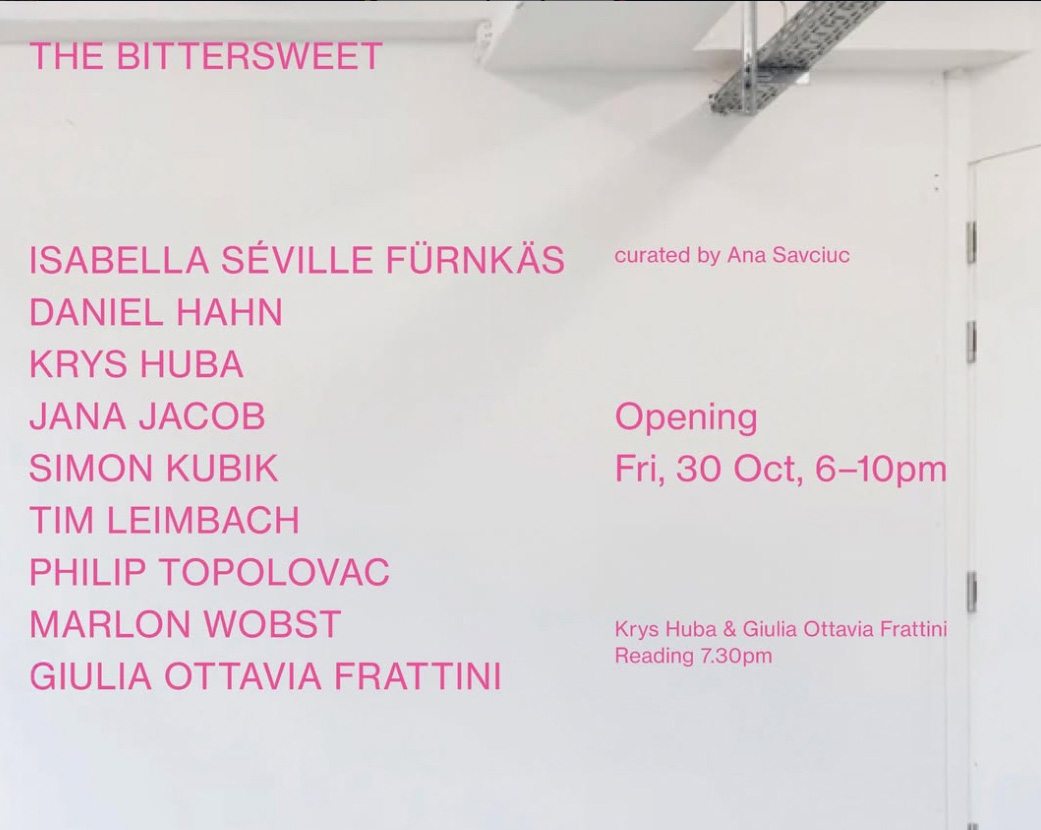


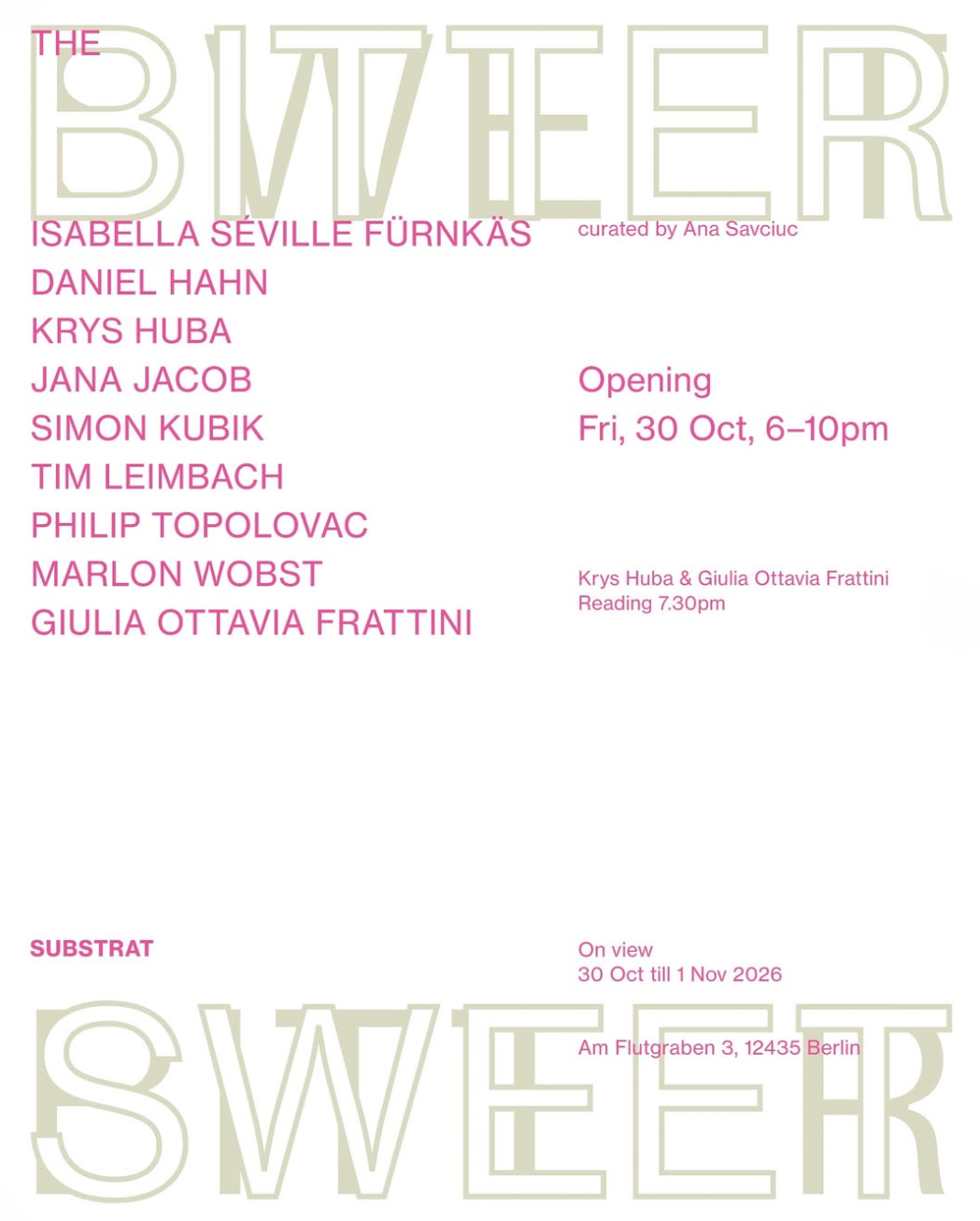
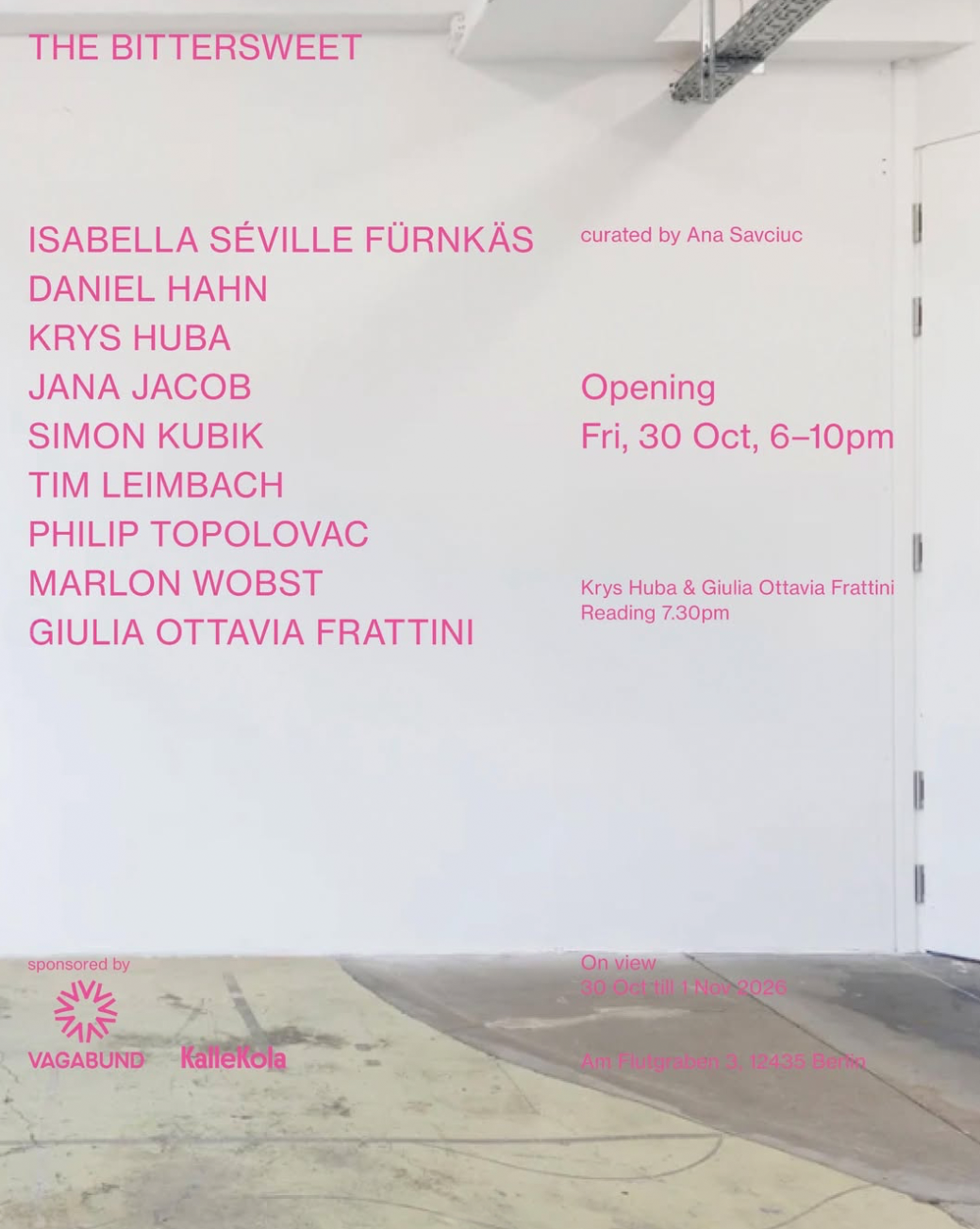
The Bittersweet
Place: Flutgraben, Berlin
Date: -
Artists: Isabella Séville Fürnkäs, Daniel Hahn, Krys Huba, Jana Jacob, Simon Kubik, Tim Leimbach, Philip Topolovac, Marlon Wobst
Curated by: Ana Savciuc
First coined by Sappho to describe the contradictory nature of desire, the word "bittersweet" [from the Greek γλυκύπικρον, literally "sweet-bitter"] captures the strange way in which attraction and pain exist at once. Holding sweetness and bitterness within a single feeling, it reflects how the ancient Greeks viewed desire: a state born out of lack, where wanting thrives precisely because its object remains beyond reach. This idea runs through ancient stories, from Orpheus losing Eurydice at the very moment he turns to see her, to Homer’s Odyssey, where the longing for home sustains a journey across years.
A similar tension between longing and fulfillment extends beyond these ancient stories and into the way we experience art. What remains out of reach can be just as powerful as what is present before us. Jean-François Lyotard explored how art can sustain desire rather than satisfy it, while Walter Benjamin understood beauty as something that emerges through the interplay of what is revealed and what remains concealed. For Benjamin, beauty lies neither in the veil nor in what it covers, but in the two together.
We stay focused on what resists total exposure. An image, a sound, or an outline comes close enough to touch, then pulls back. That withdrawal leaves an afterimage behind that shifts in the mind and returns later in a different context. Closeness and distance stop being opposites: what is withheld carries as much weight as what is shown, allowing the work to keep unfolding long after you leave the room.
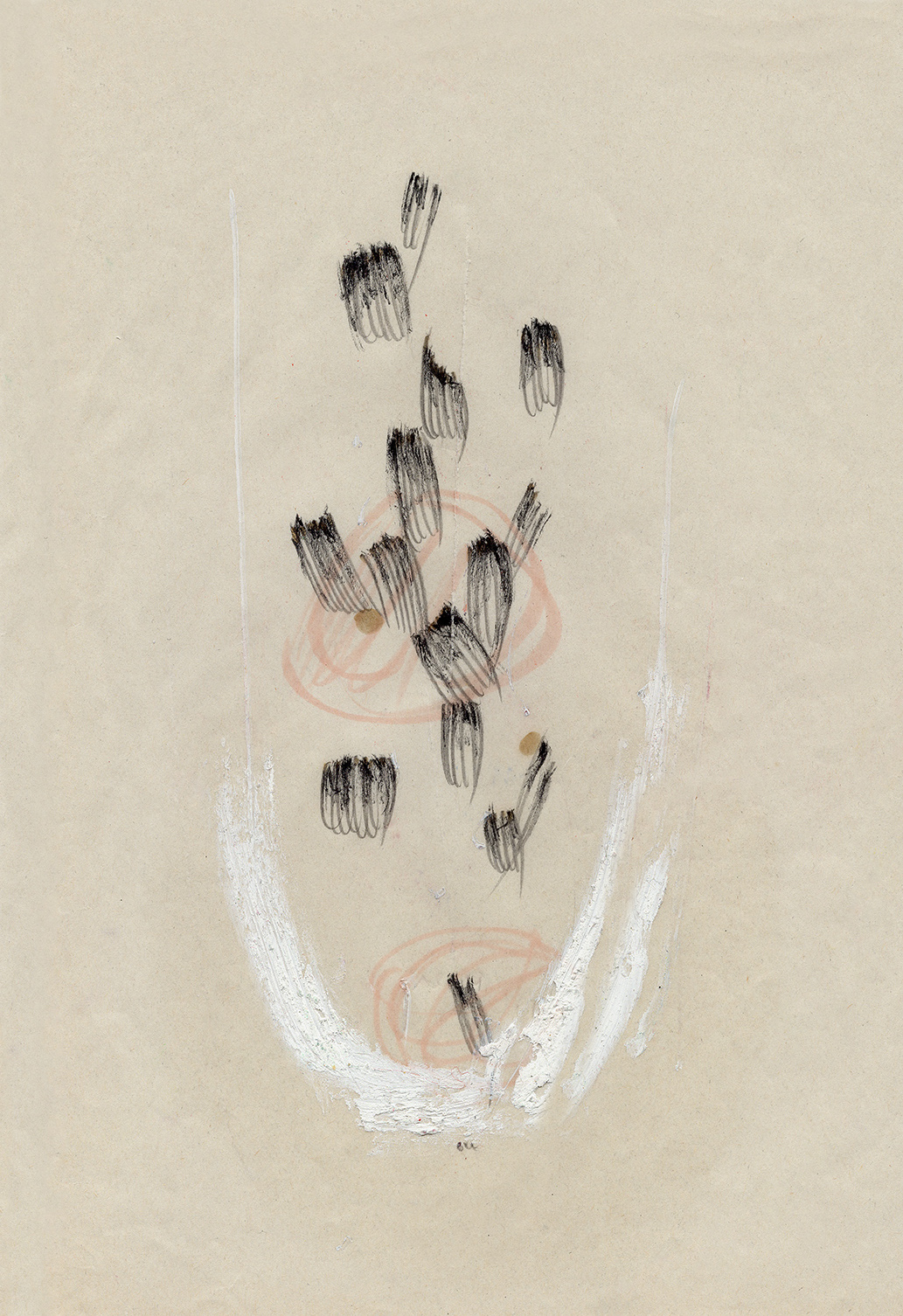
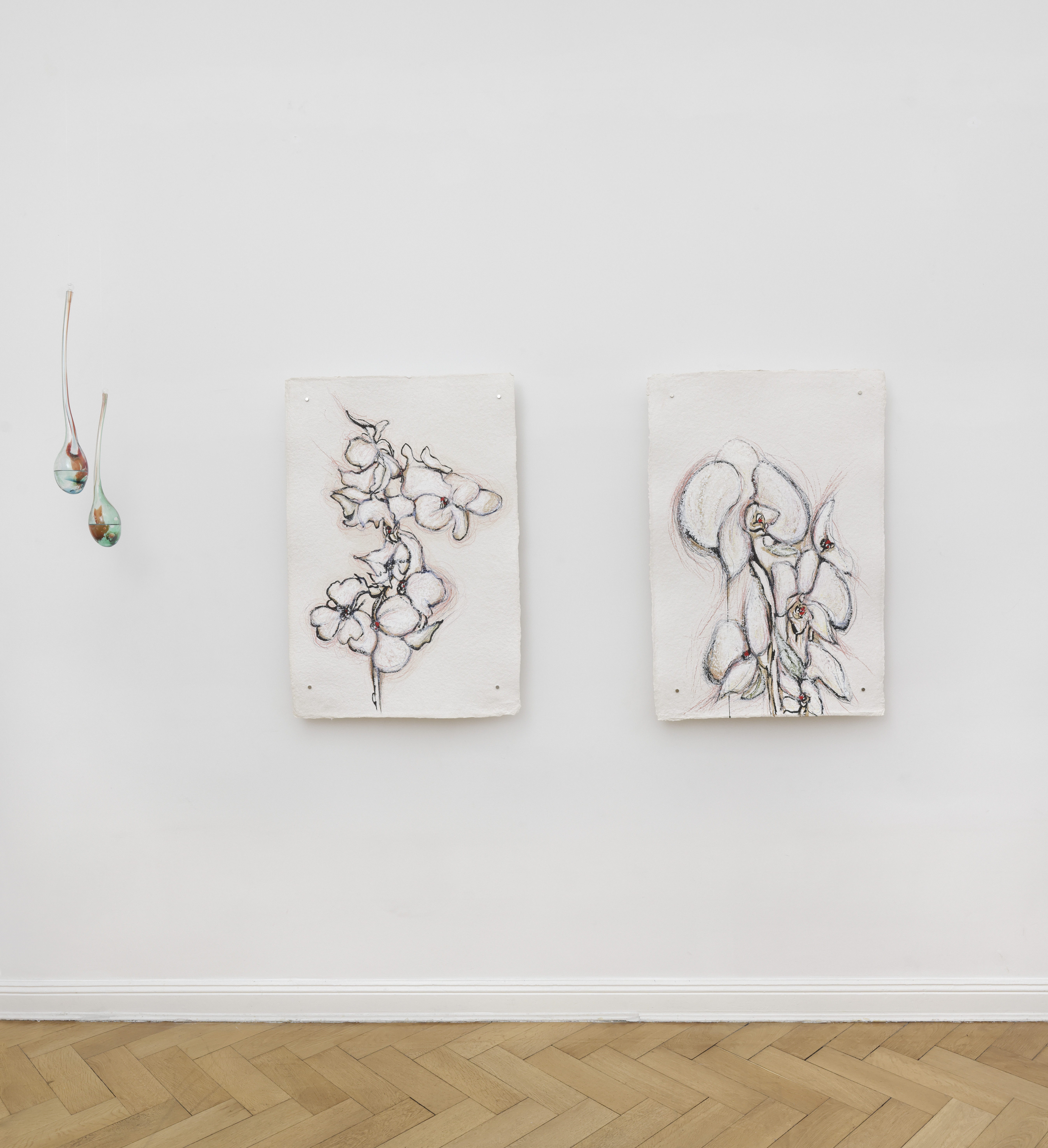
The exhibition brings together works by Isabella Séville Fürnkäs, Daniel Hahn, Krys Huba, Jana Jacob, Tim Leimbach, Simon Kubik, Philip Topolovac, and Marlon Wobst, operating between what can be seen, heard, or felt, and what remains just beyond perception. Rather than offering fixed meanings or immediate resolution, the works leave room for uncertainty, anticipation, and the possibility of something still to come. They explore how desire can persist through distance and delay, and how what is withheld can become as compelling as what is revealed.