Shows
-1.jpg)

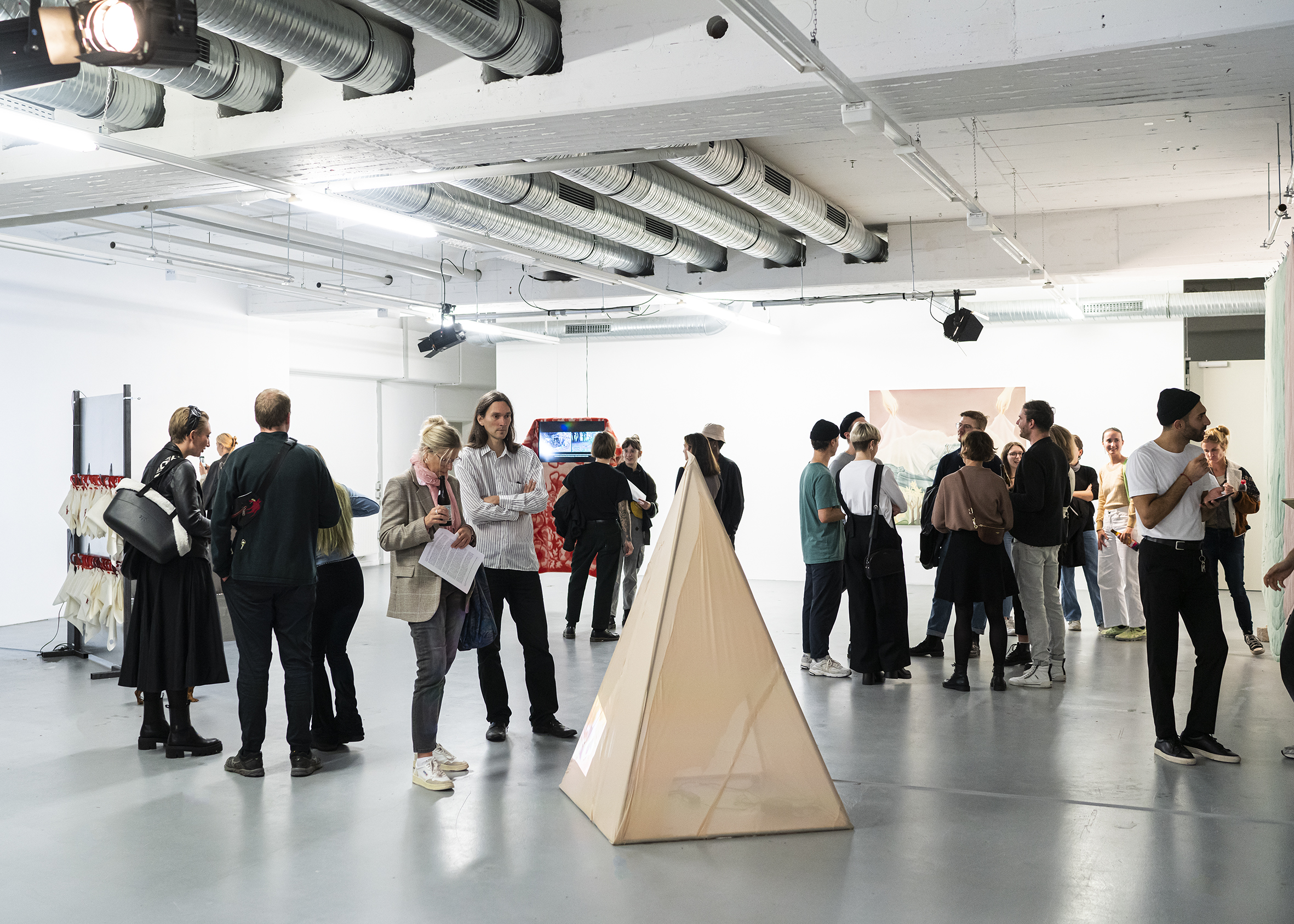
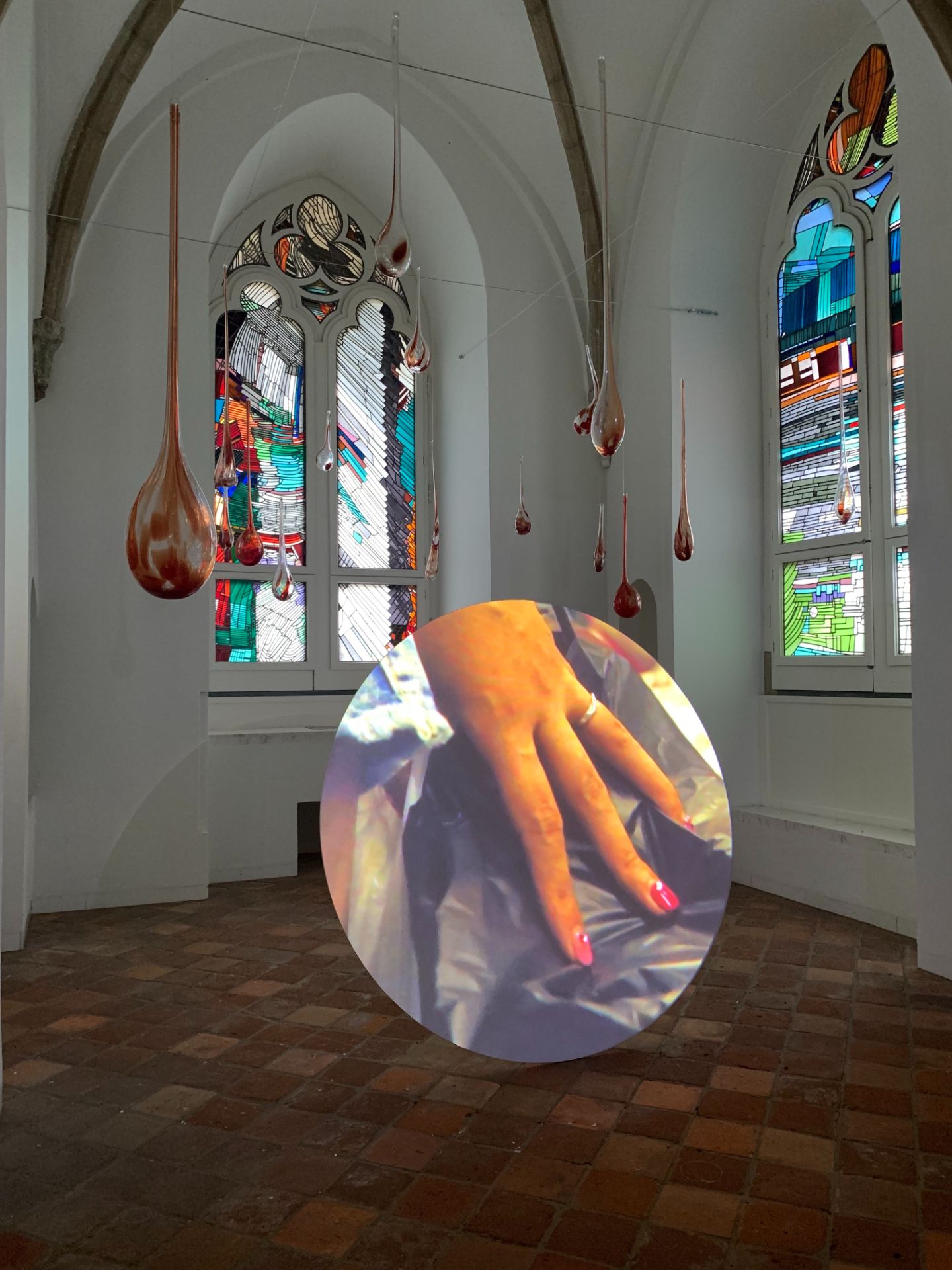
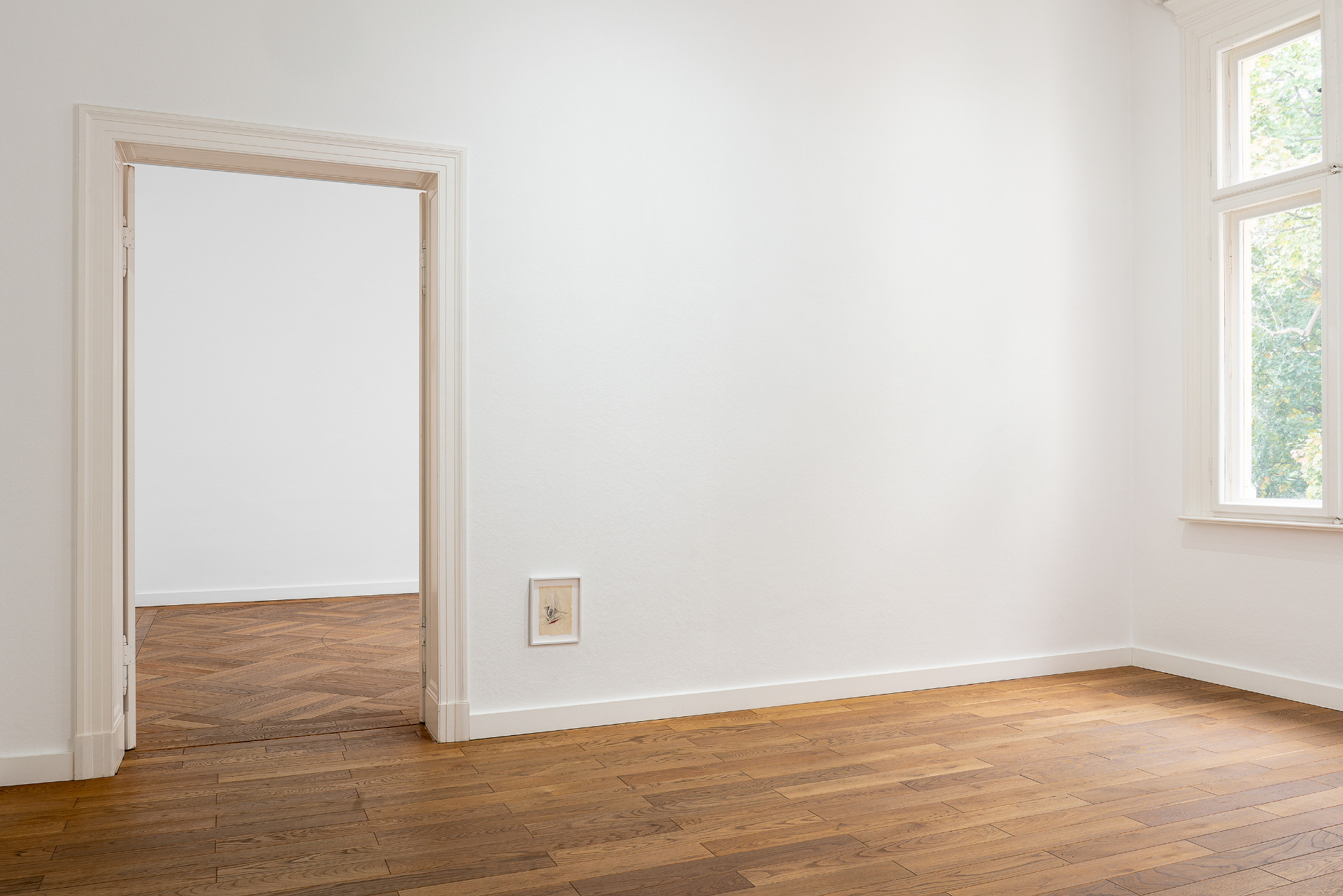
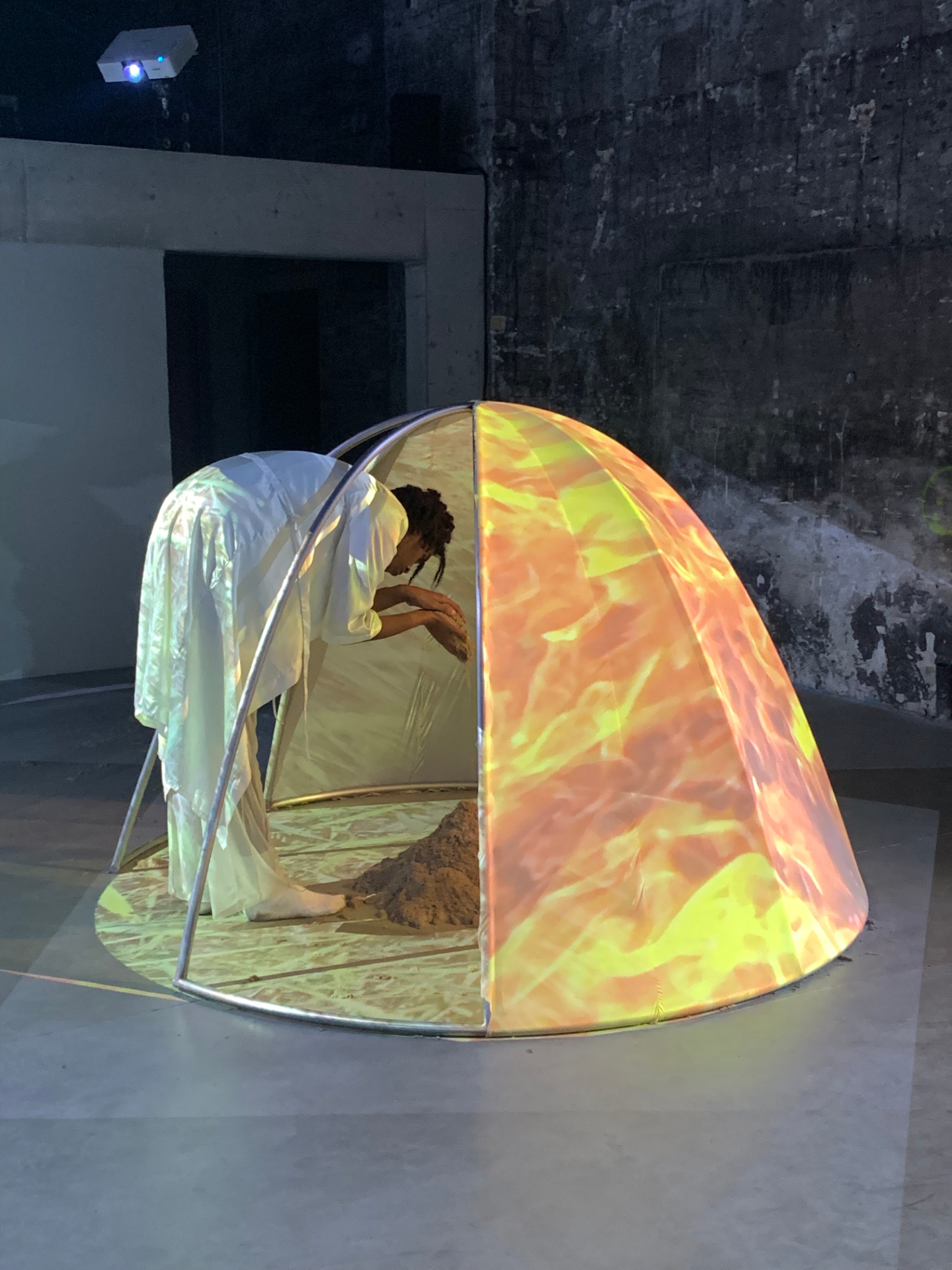

![Metamorphoses of Control [Catalogue launch]](https://media.isabellafuernkaes.com/Isabella_Fuernkaes_Mouches_Volantes_Metamorphoses_of_Control_2022_00001.jpg)





definitively_Goeben_Berlin_2020_00003.JPG)






Von fremden Ländern in eigenen Städten
Place: MAP Projekte, Düsseldorf
Date: -
Artists: Maximiliane Baumgartner / Alex Wissel, Neïl Beloufa, Ines Doujak, Isabella Fürnkäs, Manuel Graf, Natascha Sadr Haghighian, Jan Hoeft, Christine und Irene Hohenbüchler, Mira Mann / Sean Mullan, John Miller, Christian Odzuck, Fari Shams, Andreas Siekmann, Katharina Sieverding, Pola Sieverding, Palina Vetter, Paloma Varga Weisz
Curated by: Markus Ambach
Works: Unpredictable Liars
Introduction
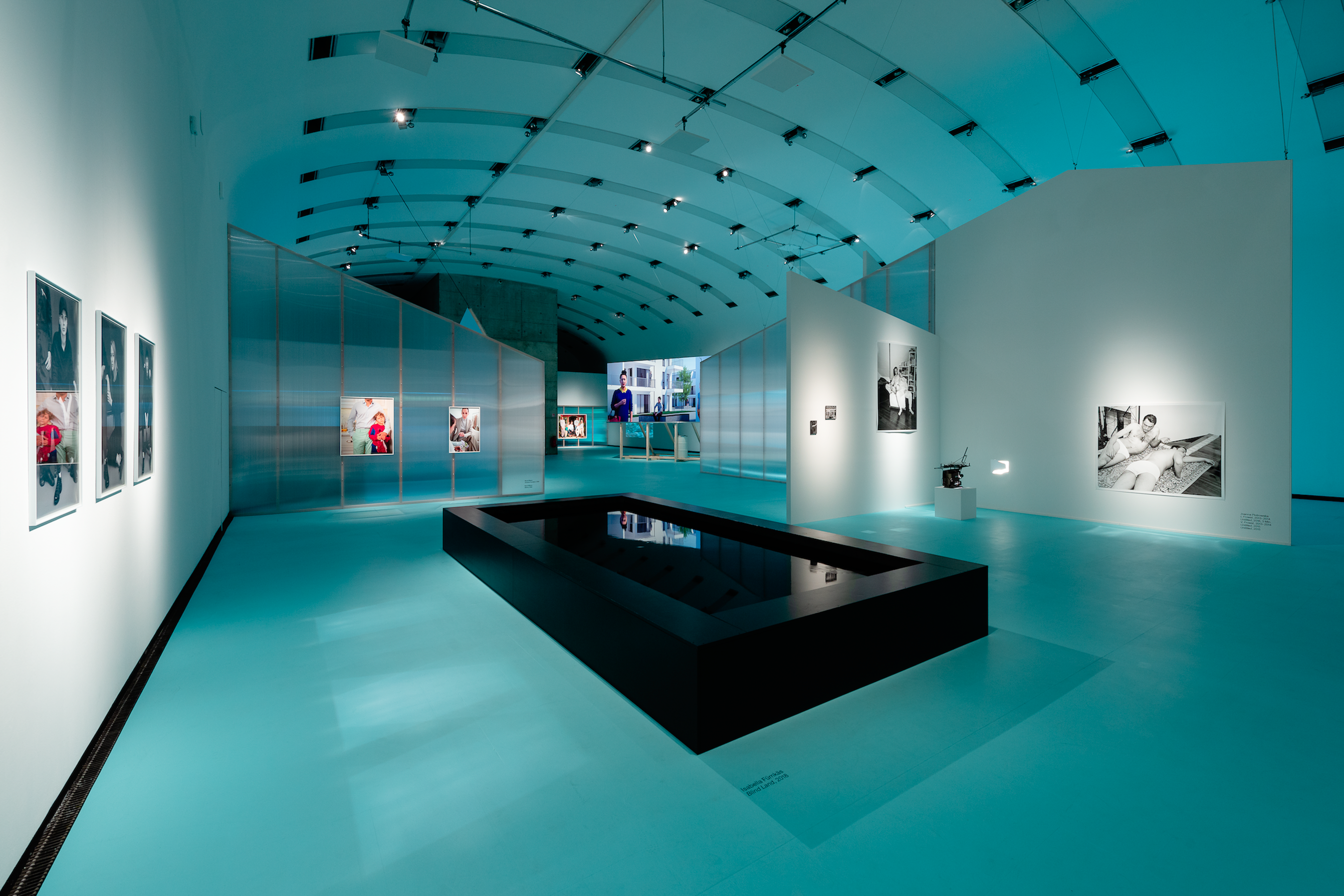
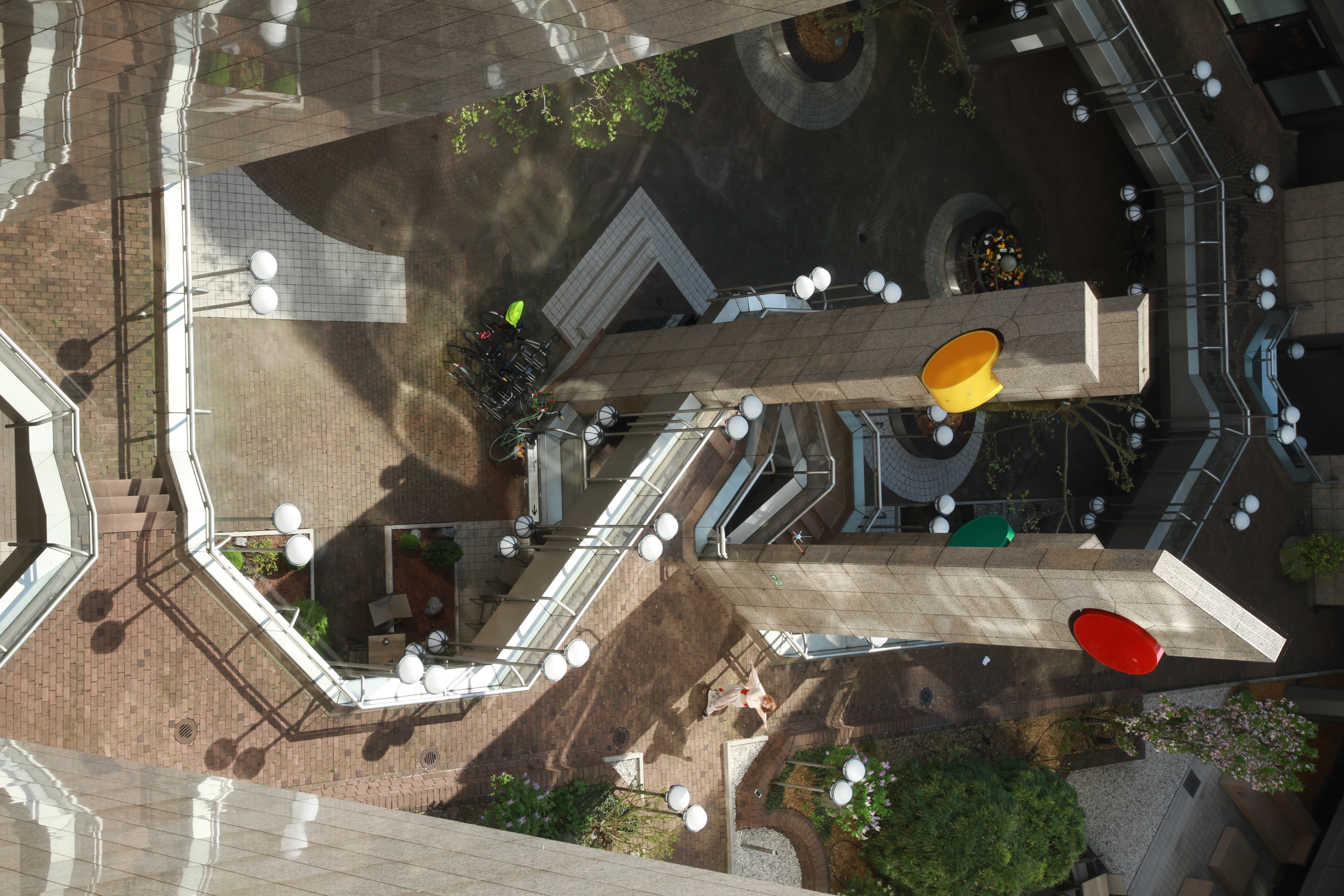
Around Düsseldorf Hauptbahnof (central station), one last moment of urban life is being realized in all its harshness, heterogeneity, and beauty. The district is considered the last unexplored urban space in the city, and is currently seeking its own future. As a central point for welcoming guests and as a virulent interface between the wider world, locality, and the individual, the quarter is characterized by dysfunctional urban spaces, non-pedestrian-friendly transportation concepts, and 1980s architecture lacking any sense of a human dimension. It is here that countless hidden cultures and subcultures have reluctantly, subversively, and stubbornly settled. As a major interdisciplinary art and cultural project with participants from the fields of visual art, theater, dance, film, and music, but even more importantly with residents and active voices from the neighborhood, the project Von fremden Ländern in eigenen Städten (From Foreign Lands in Our Own Cities) searched for its future, which is currently being determined by major urban planning transformation processes.
Unpredictable Liars
Hotels are unusual as “other spaces”[1] in the dense, symbolic fabric of the city. They are locations without a location, where, for a short while, we can escape ourselves. Hotel guests reside in the no man's land between worlds, between their notions about themselves and all the characters they can only dare to dream of.
In contrast, it’s rare to enter a hotel in one’s own city. For residents of a city, the rooms of a hotel, with their mirrored exteriors, remain closed, although their doors are always open. The empty rooms watch the city like a hidden panopticon.
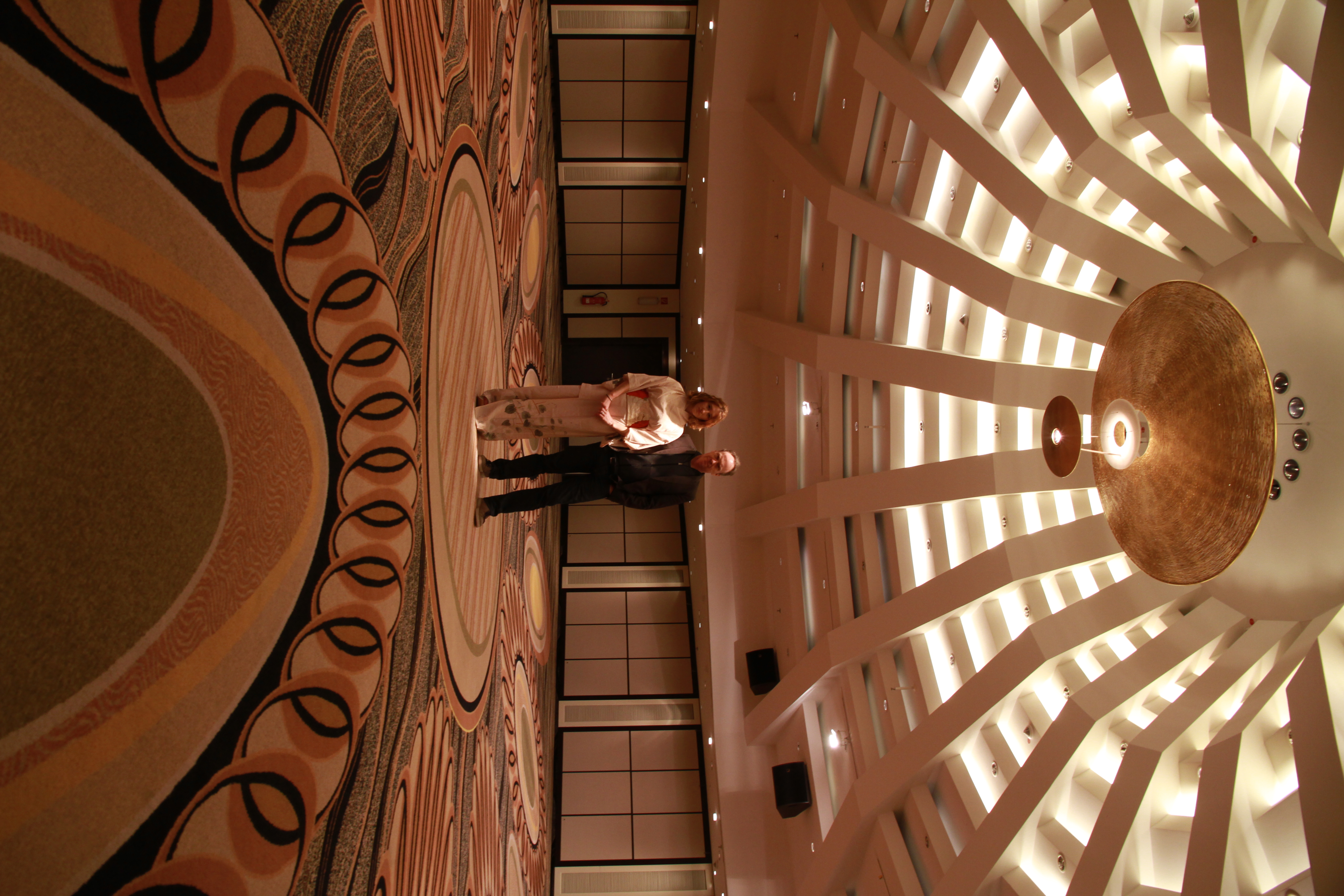
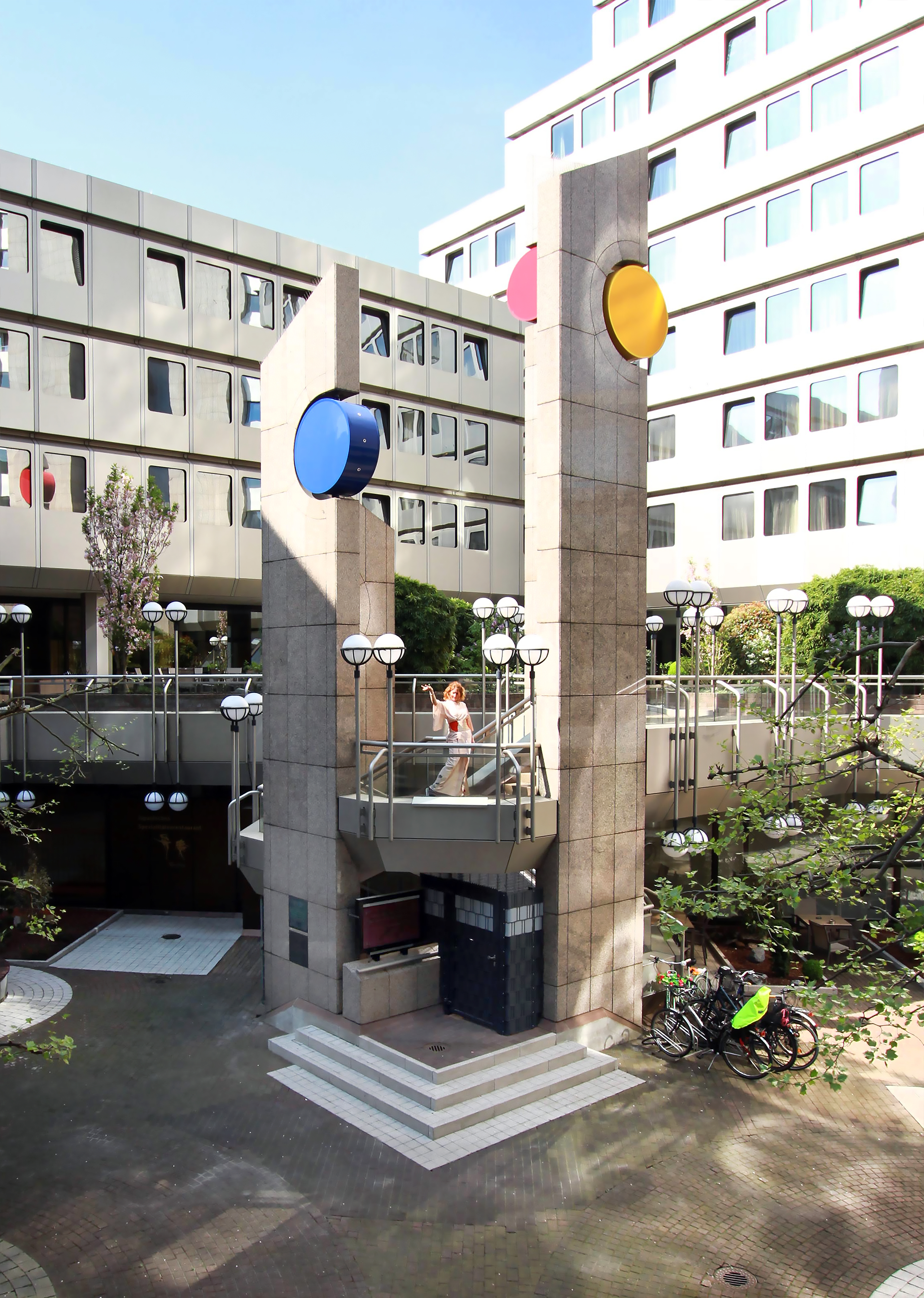
At Hotel Nikko, a unique bathing room floats high above the city, a fictional residence in real space, where scantily clad guests languidly watch the daily bustle of the city dwellers below. The explanatory texts on the window panes scale down the room to an inverted display cabinet and the city to an exhibit. With the misty entity crowning the tower-like building, the Nikko uniquely occupies the hotel’s spatial and psychological coordinates and its nimbus as a Japanese incunabulum of the 1970s.
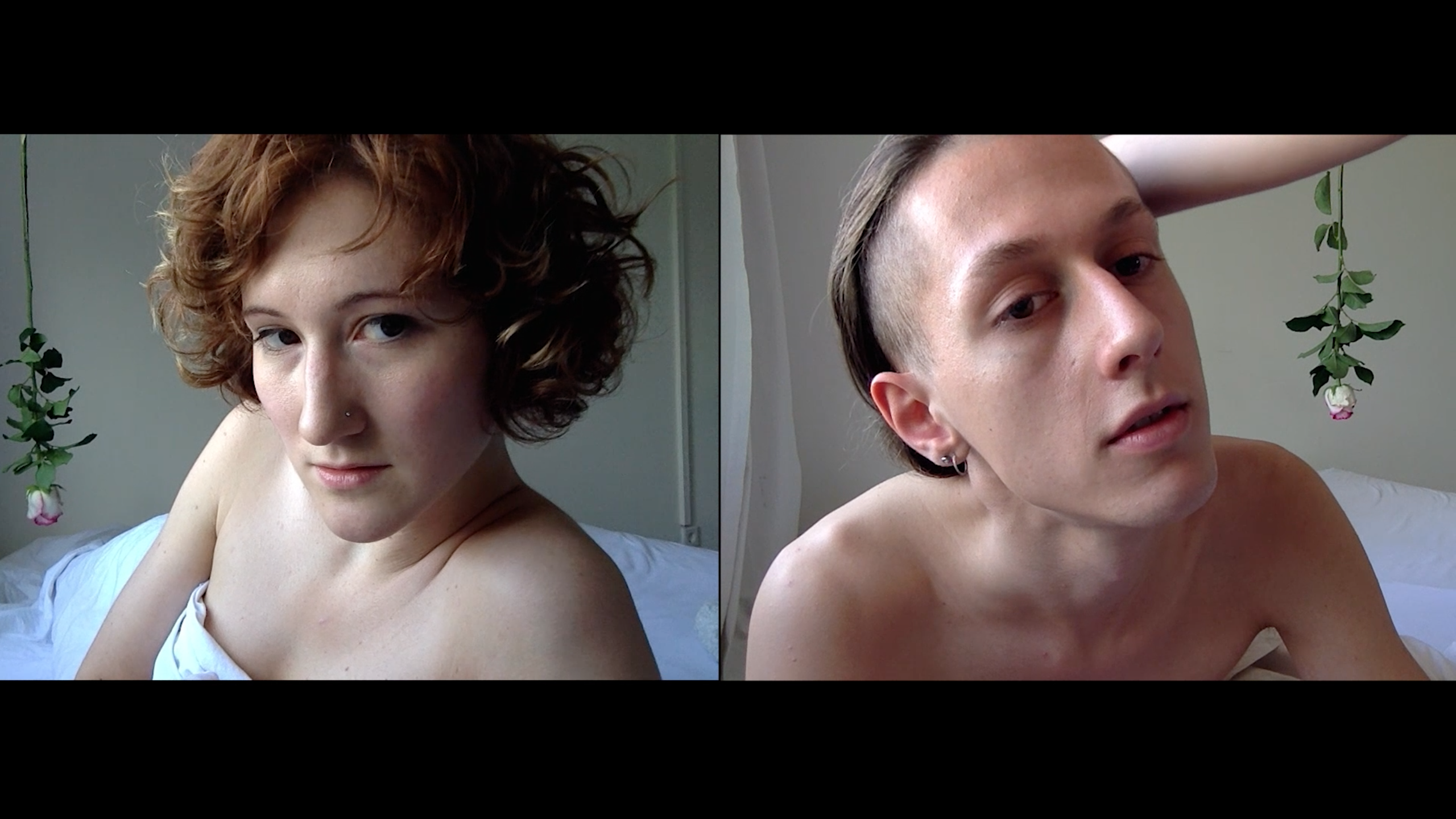
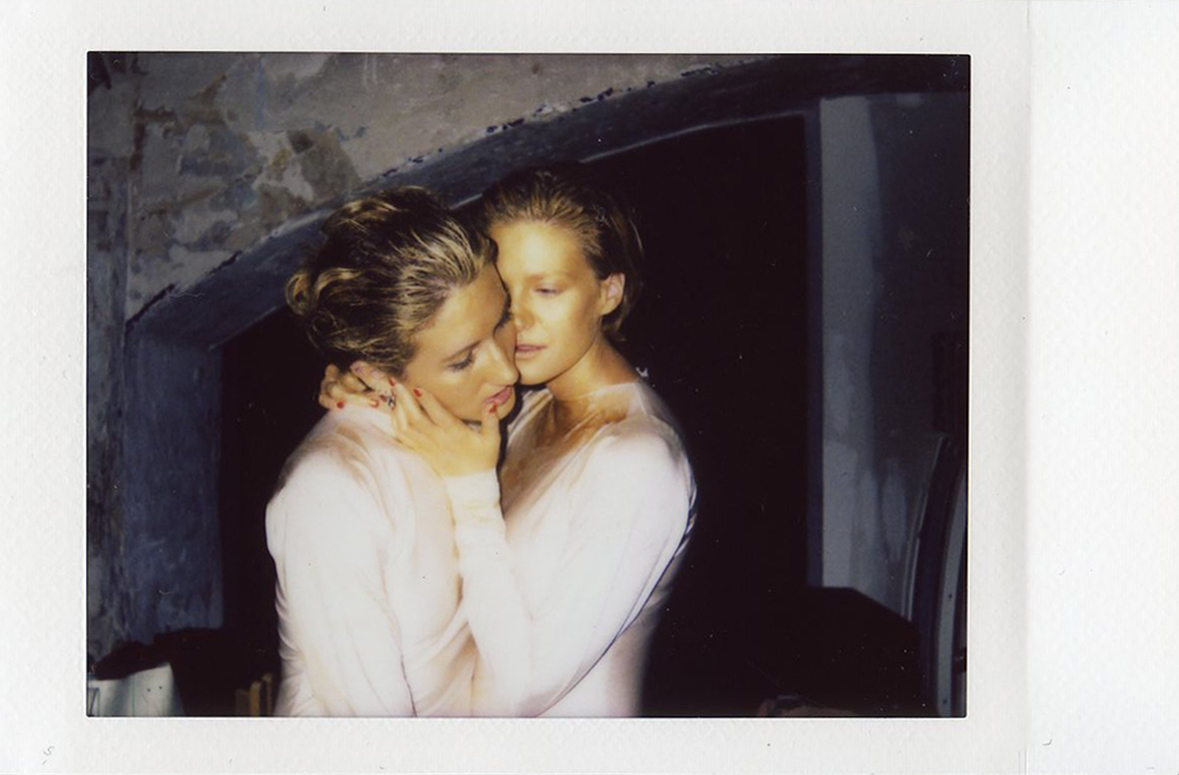
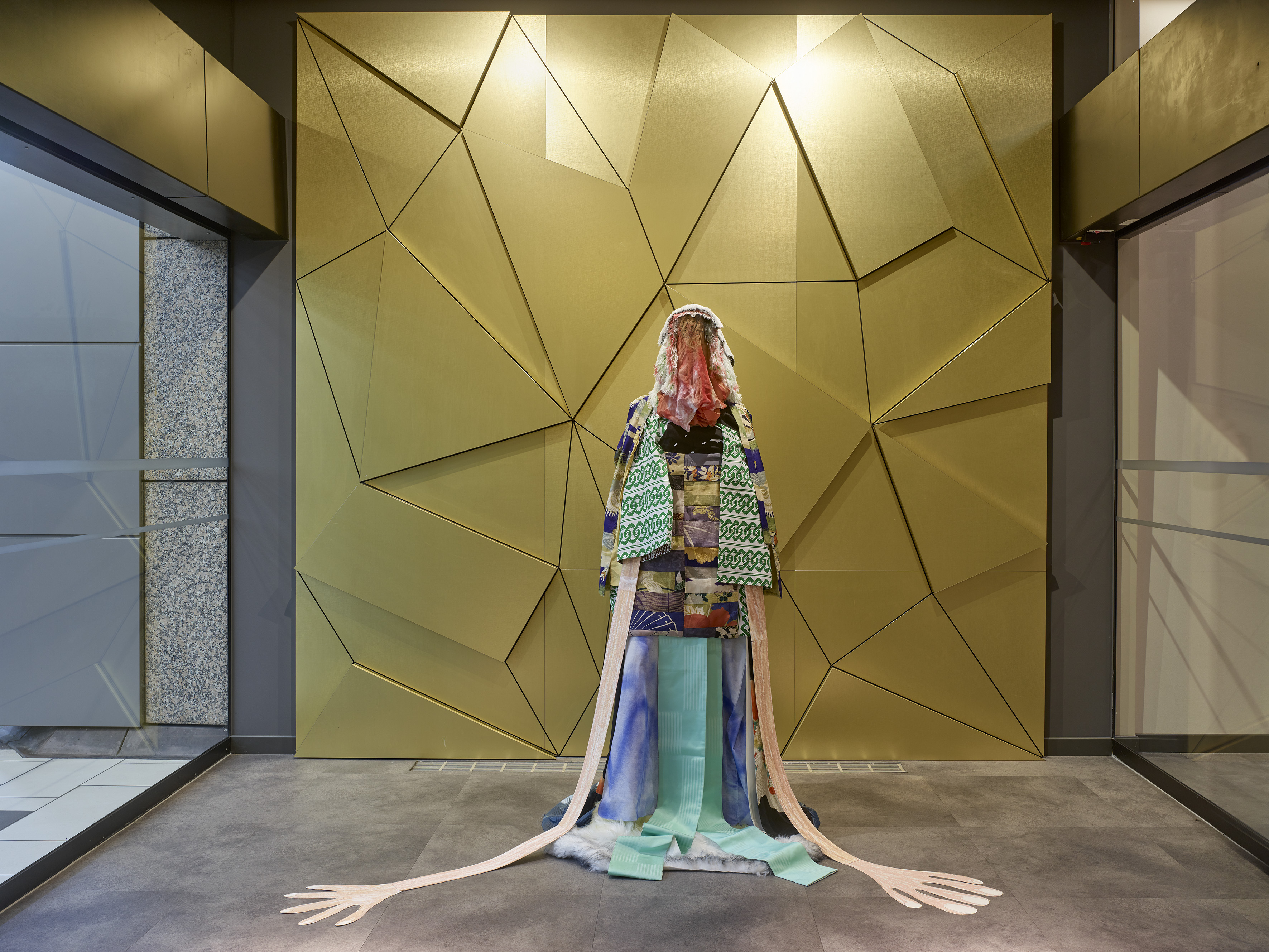
Perhaps we need an artist born in Japan to take us on a journey to one of the most visible yet most hidden places in the city. For the exhibition, Isabella Fürnkäs uncovers the magical, mystical space of the hotel as a stage for the performance of a subtle puppet theater, a staging of the fictional in the turbulence of the real.
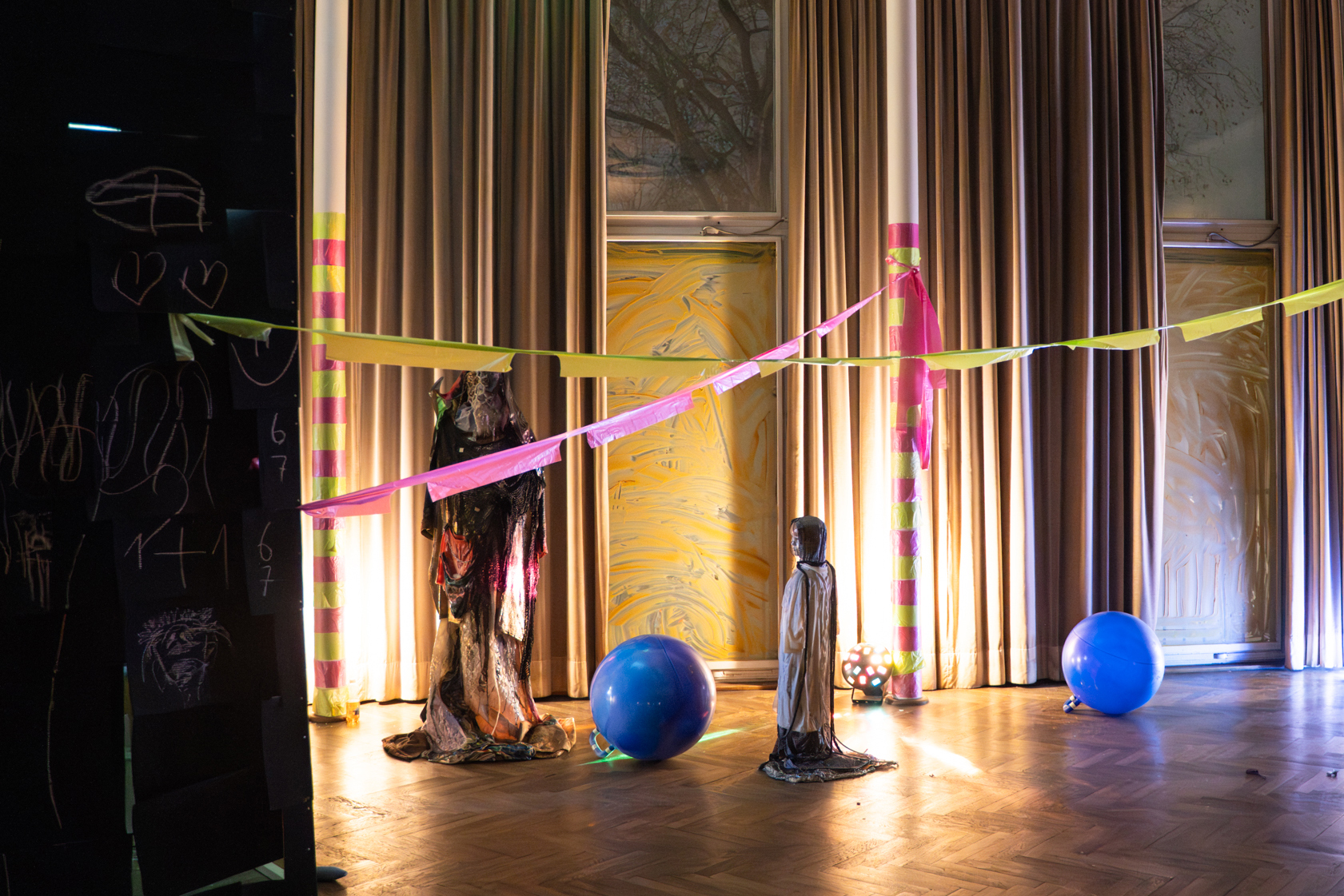
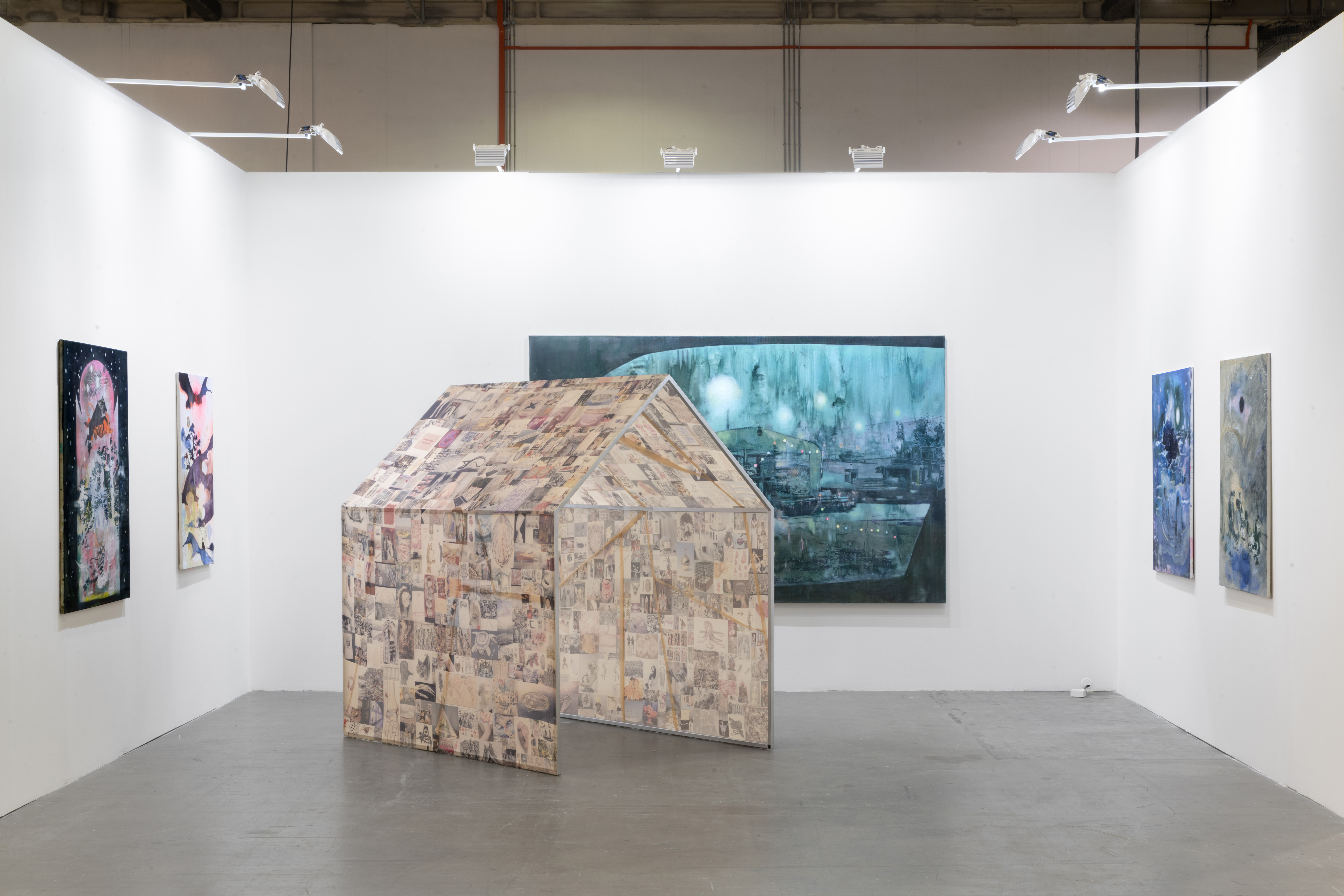
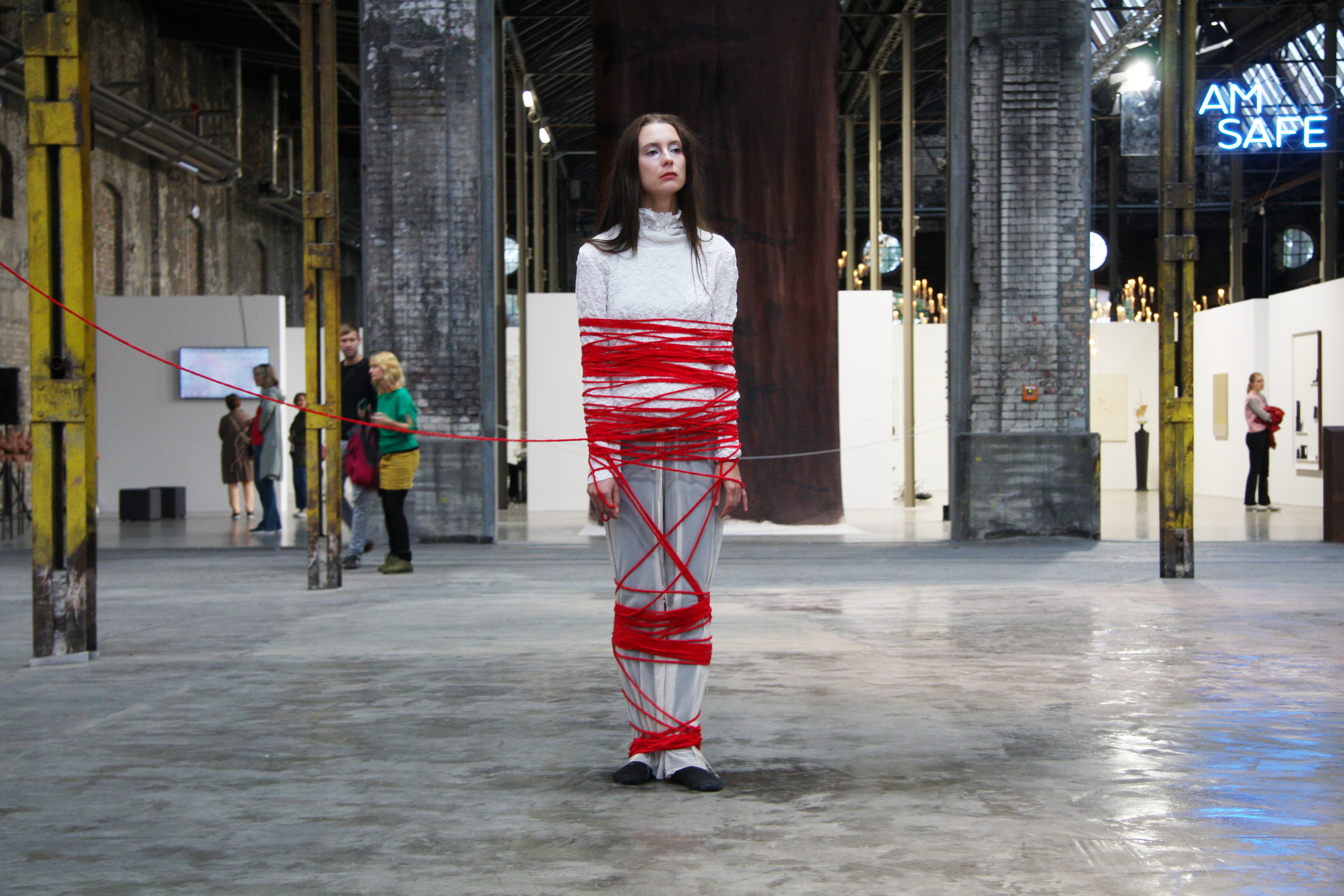
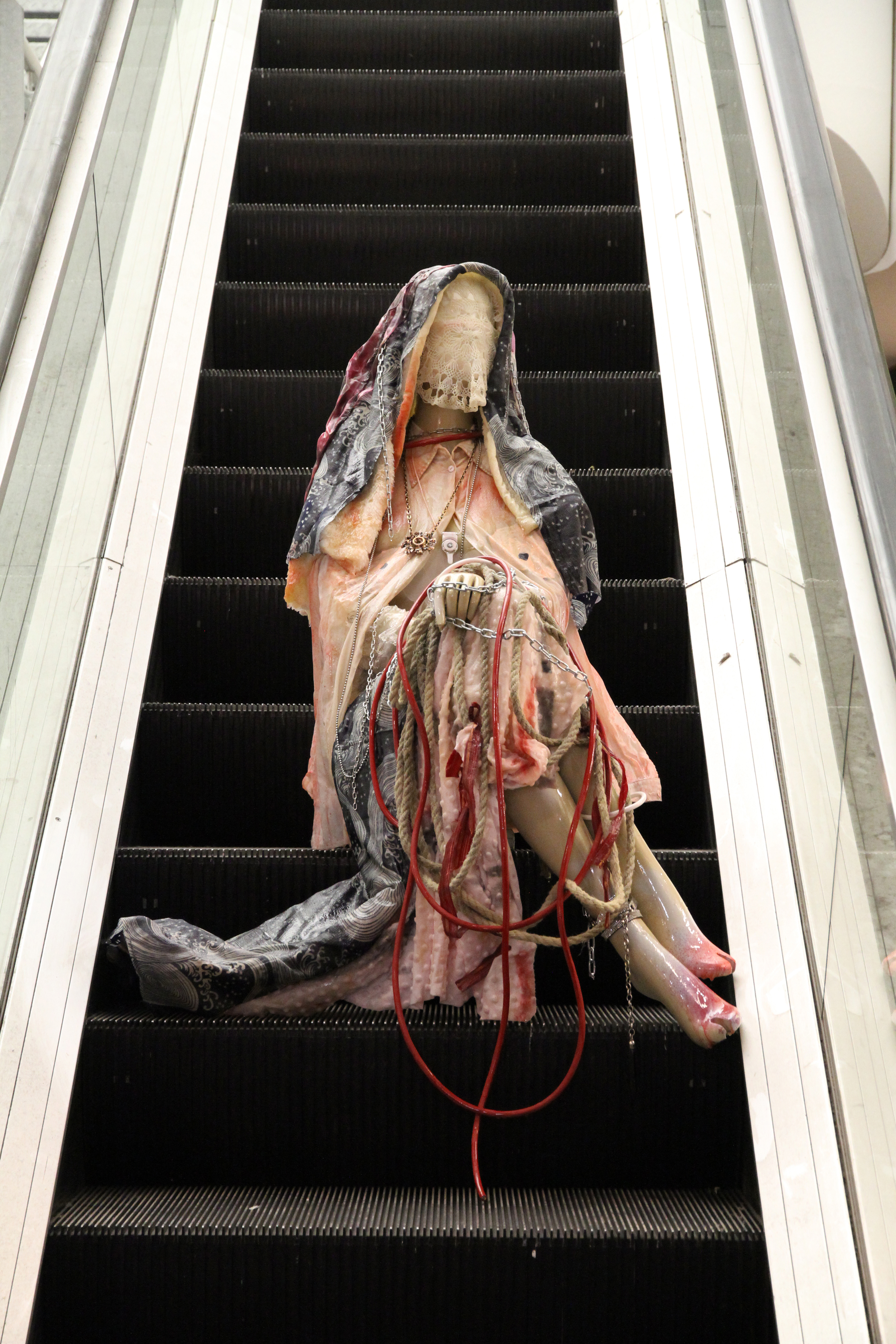
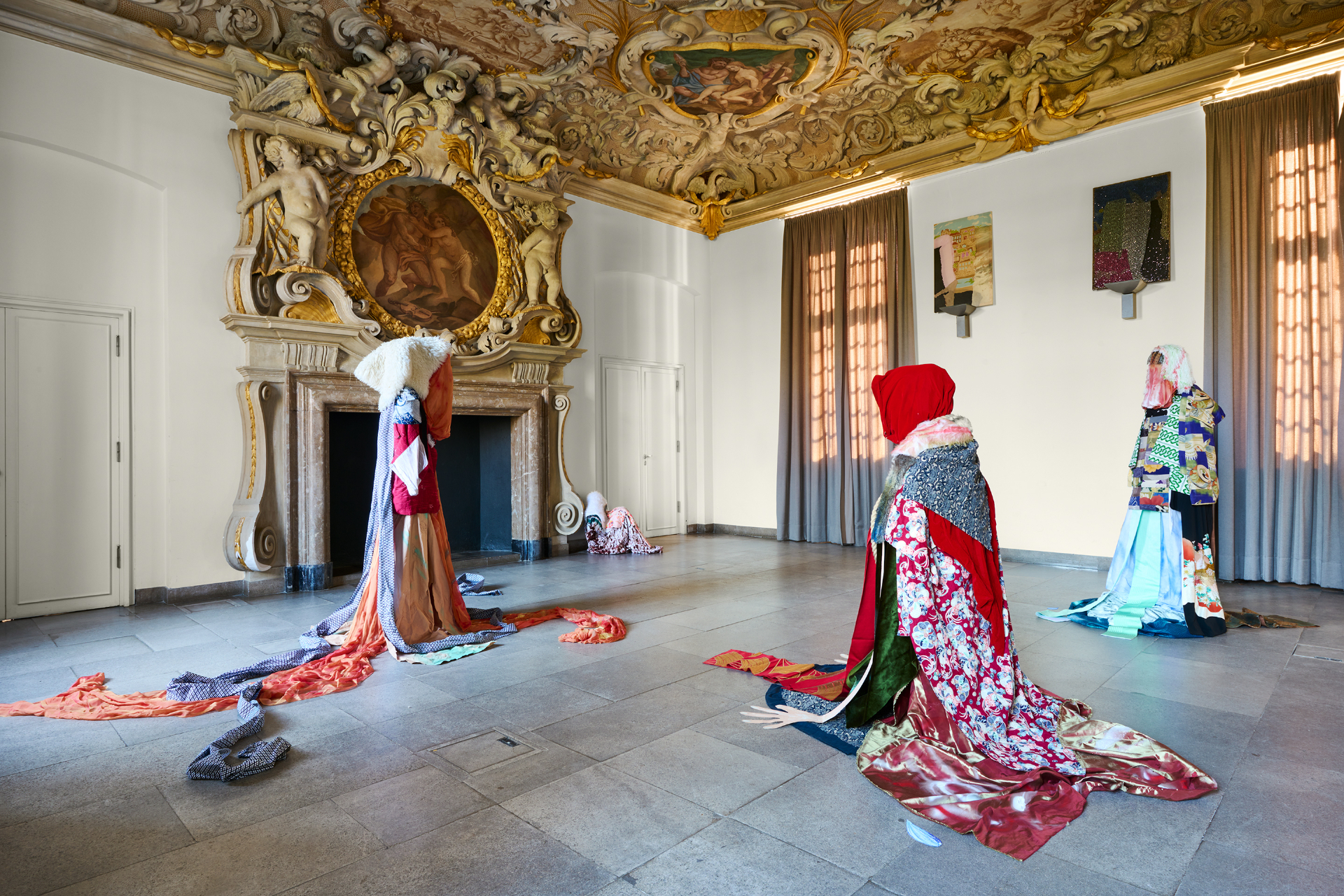
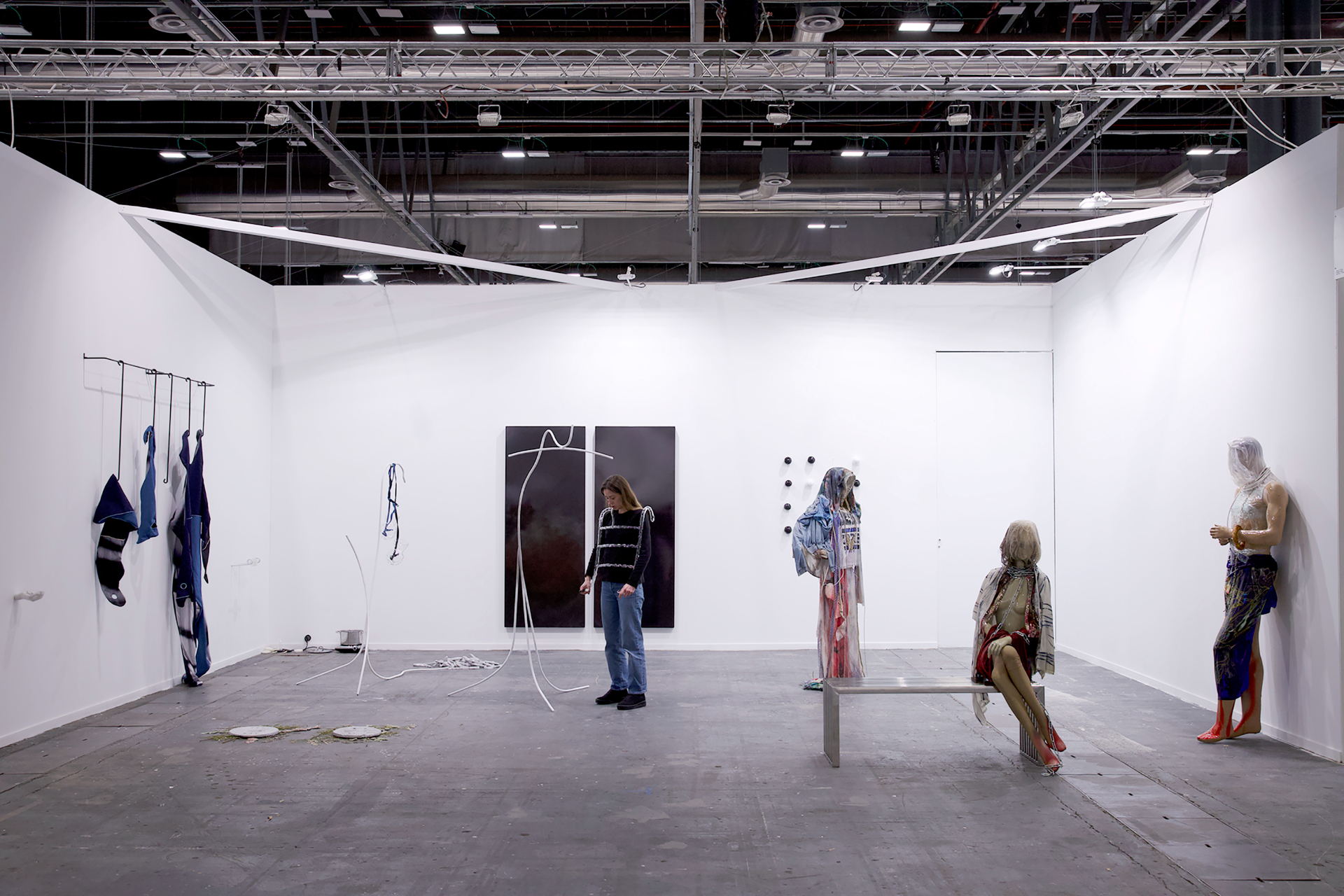
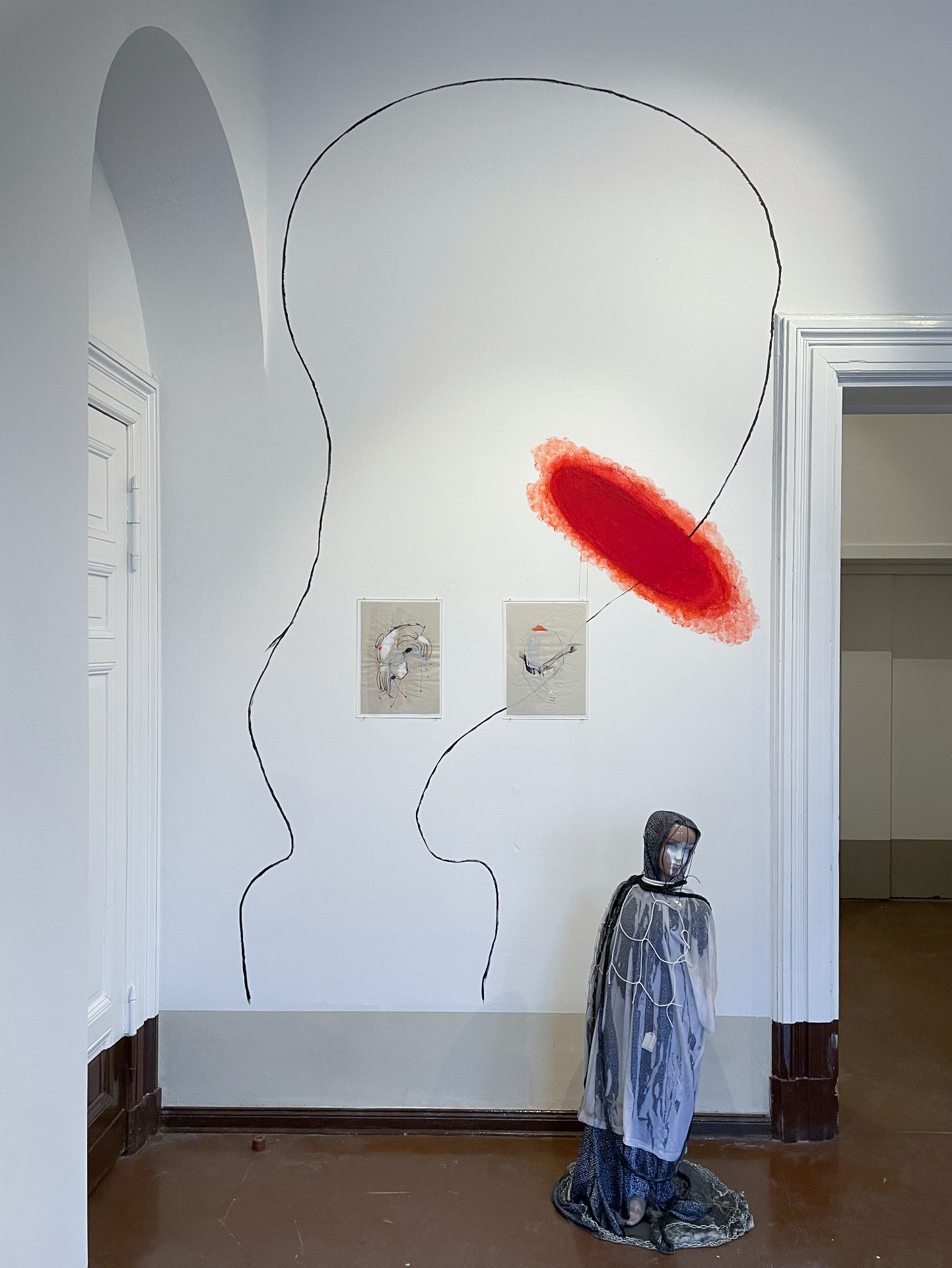
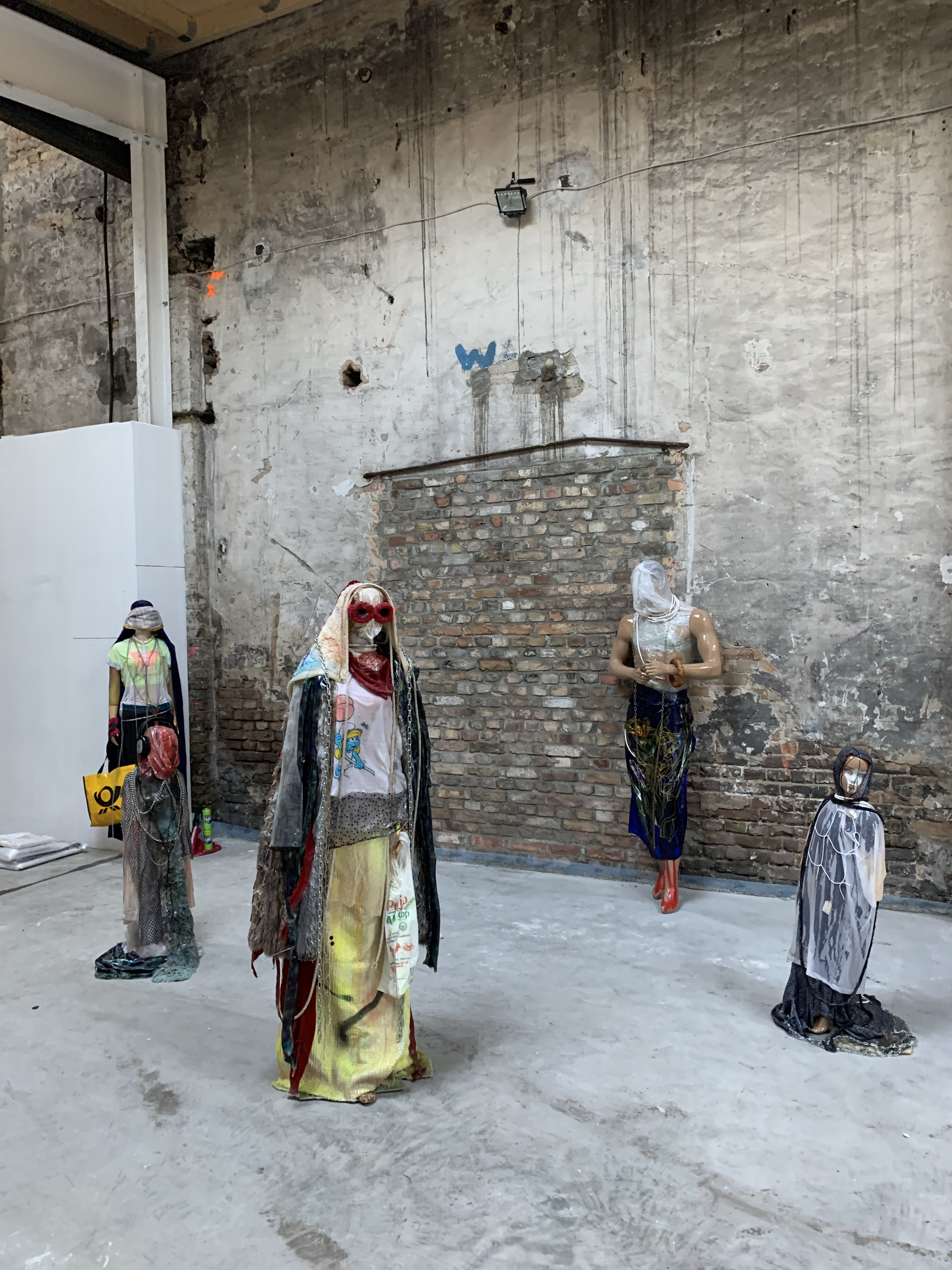
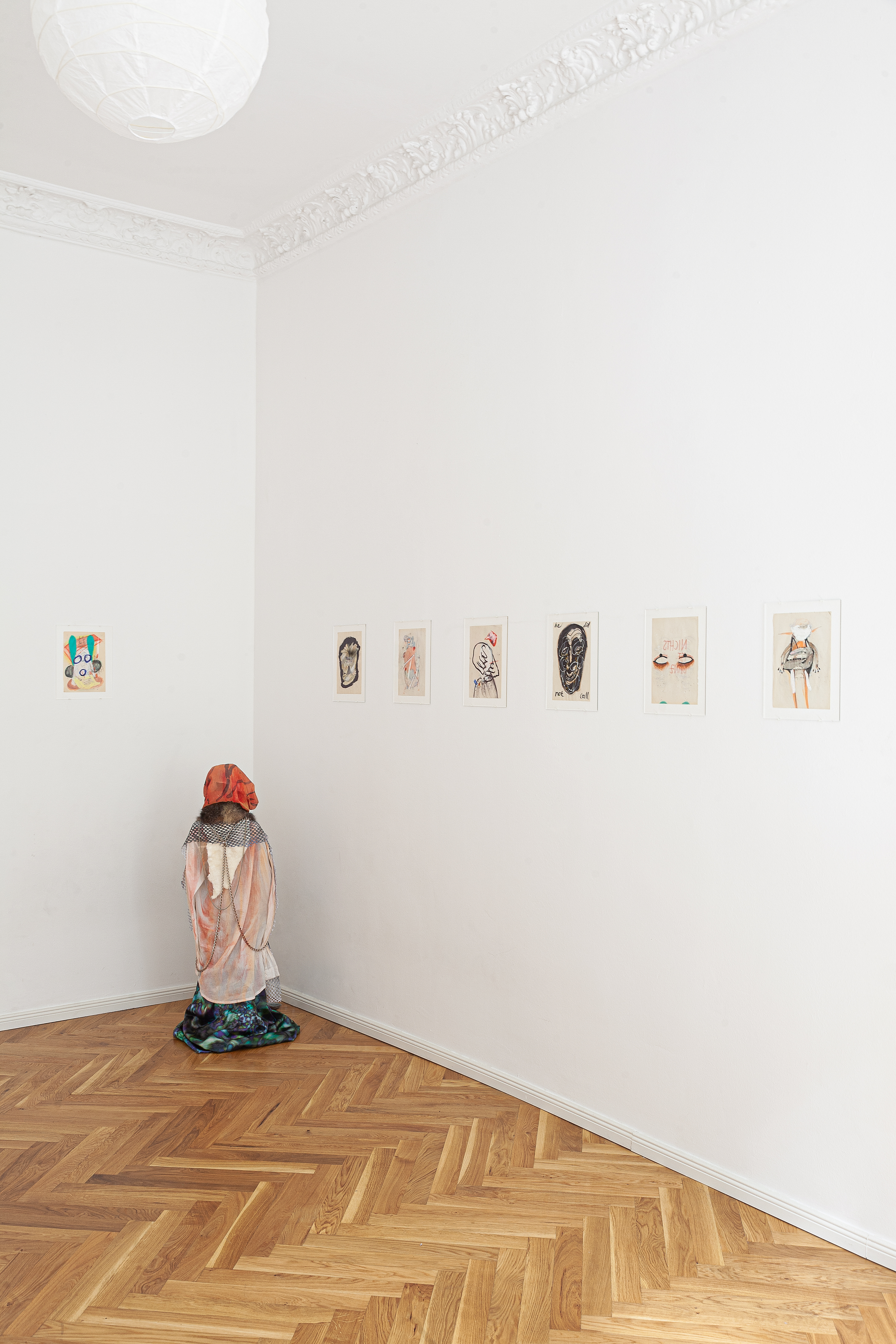
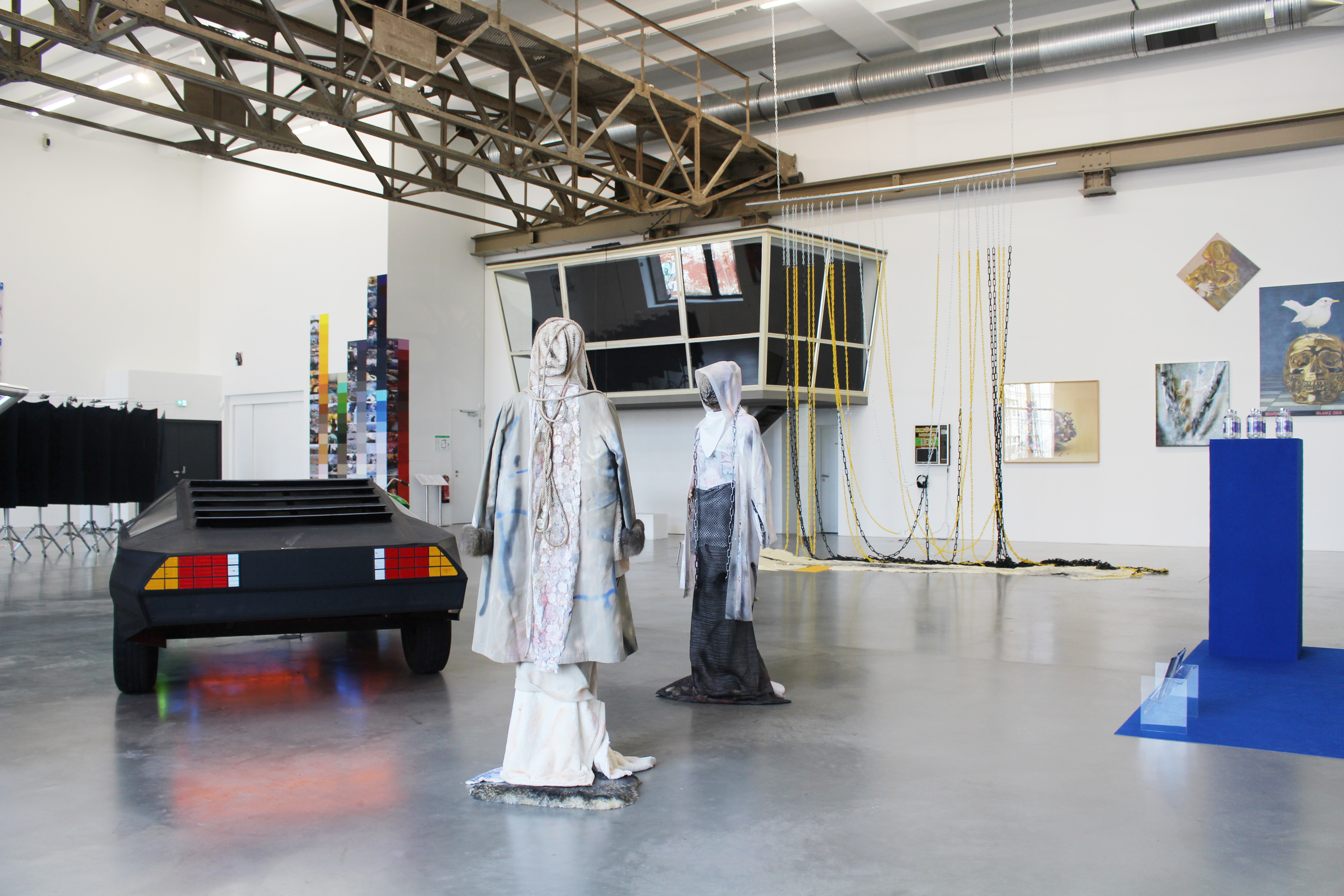
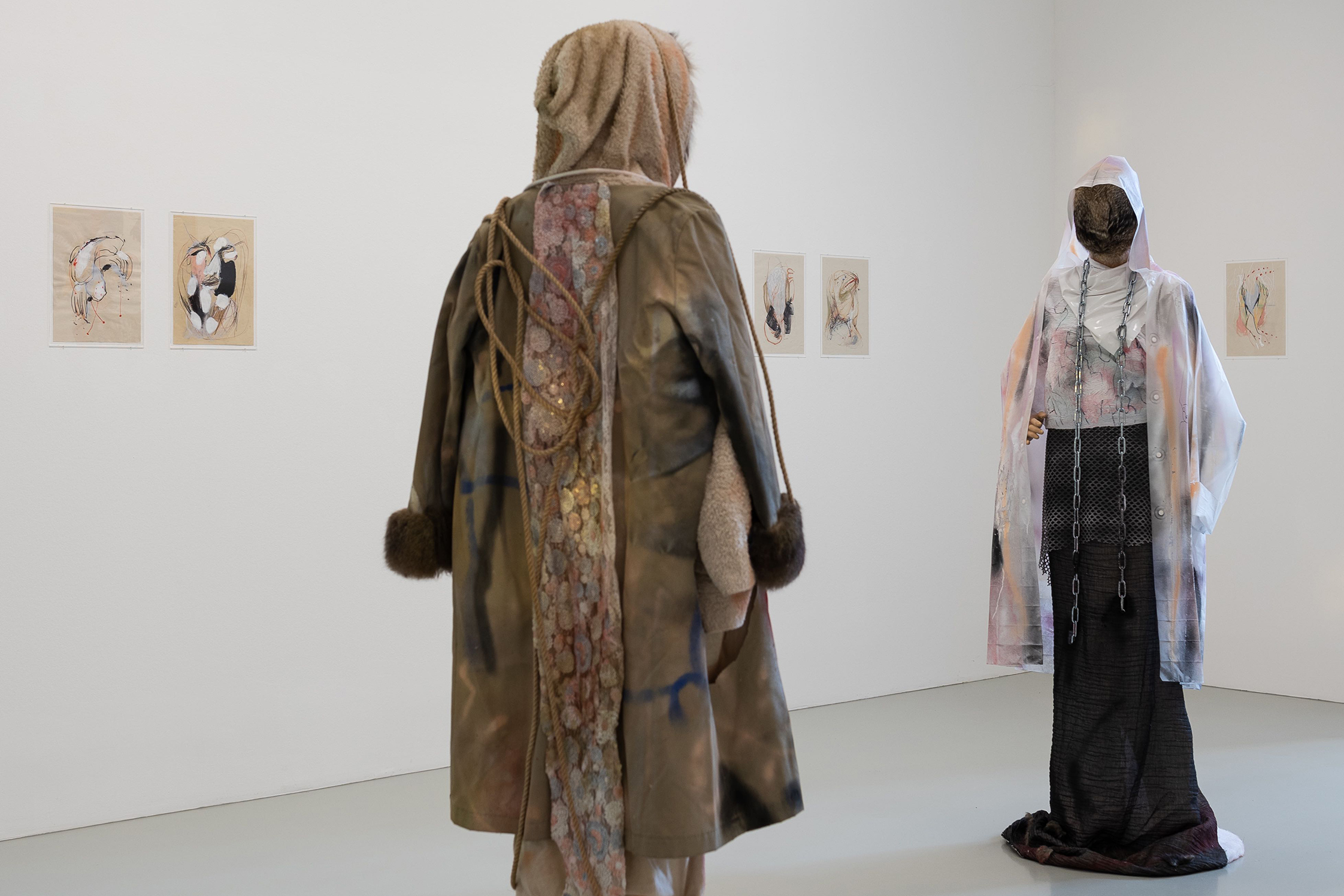
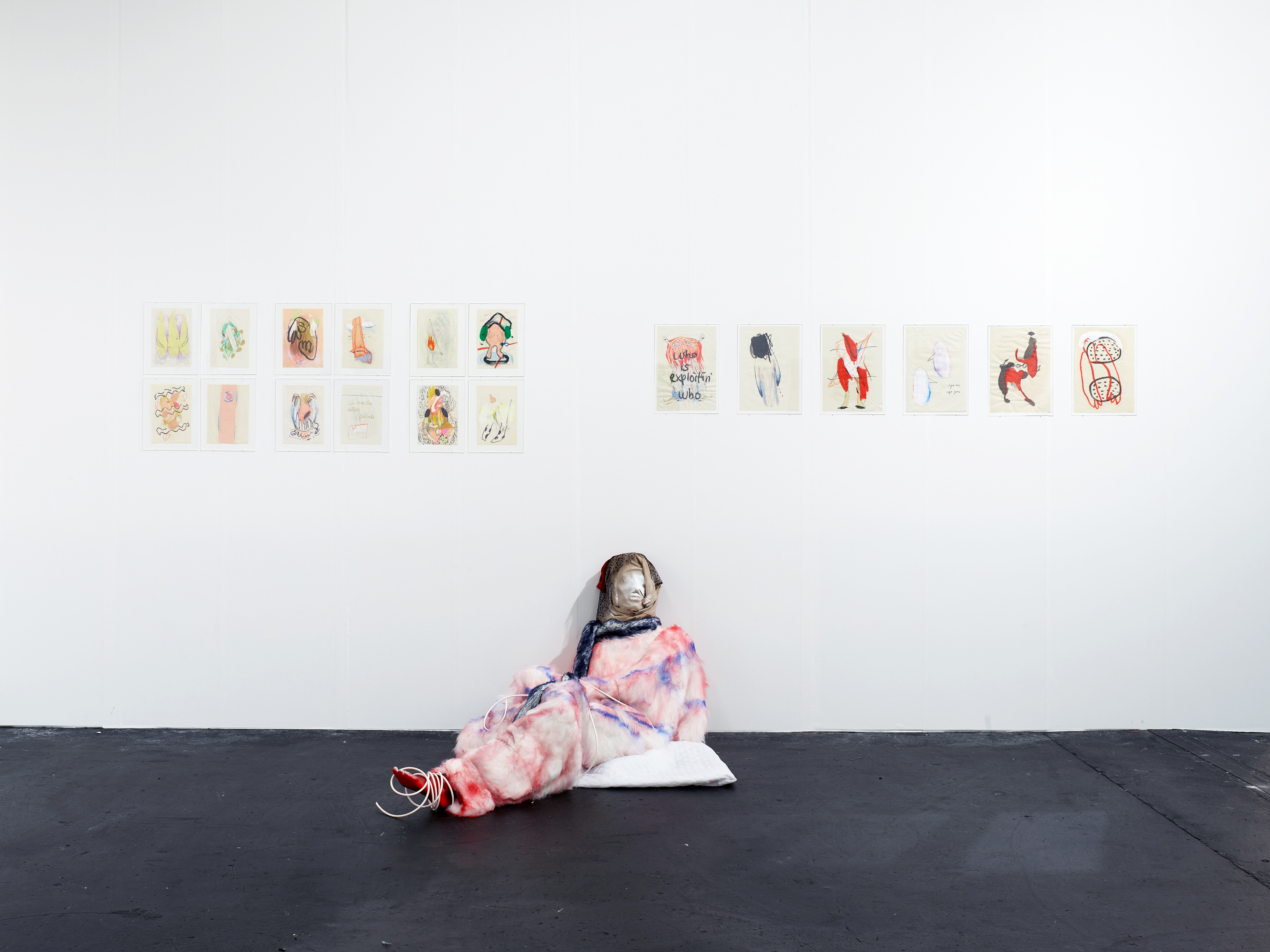
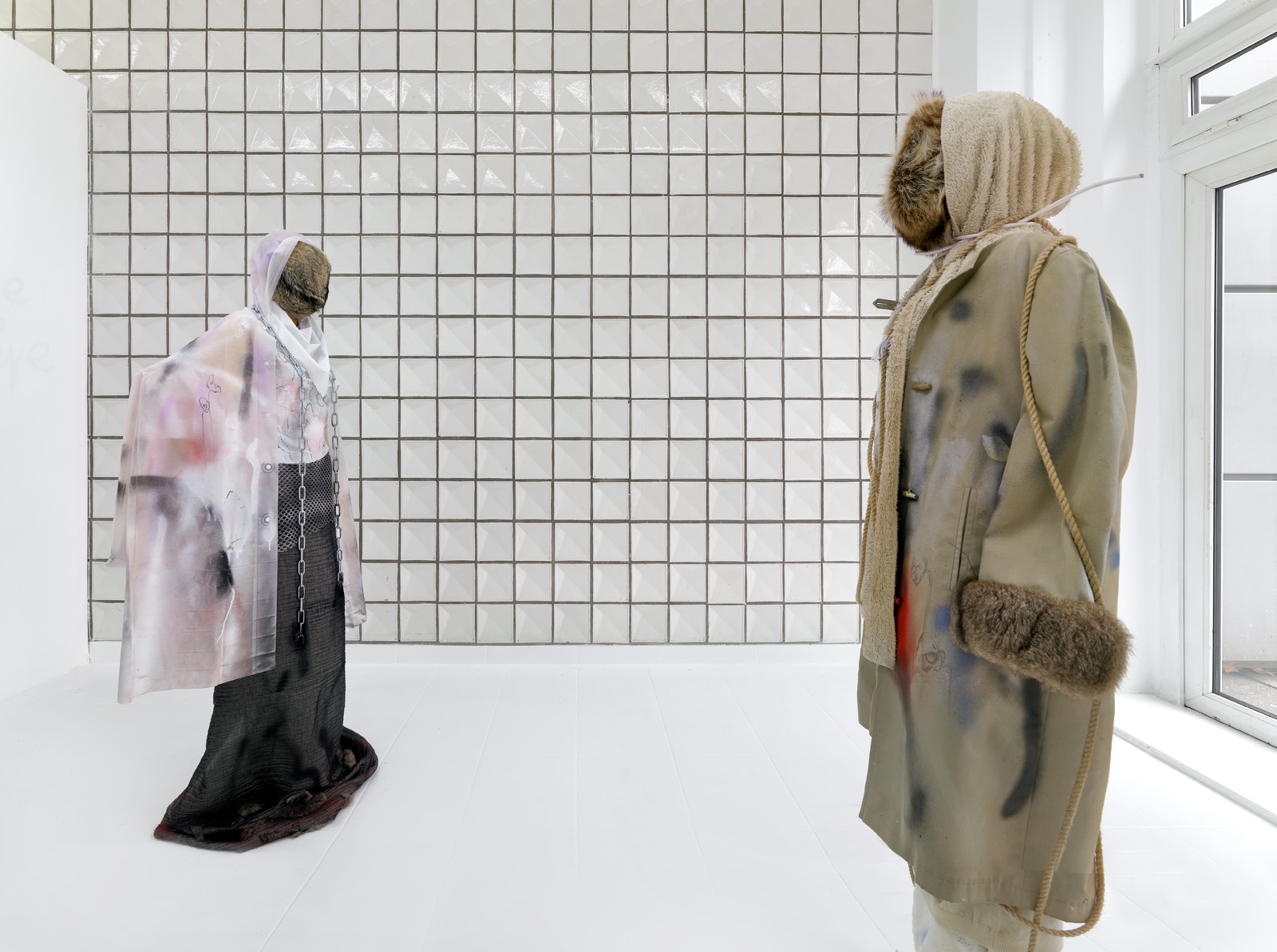
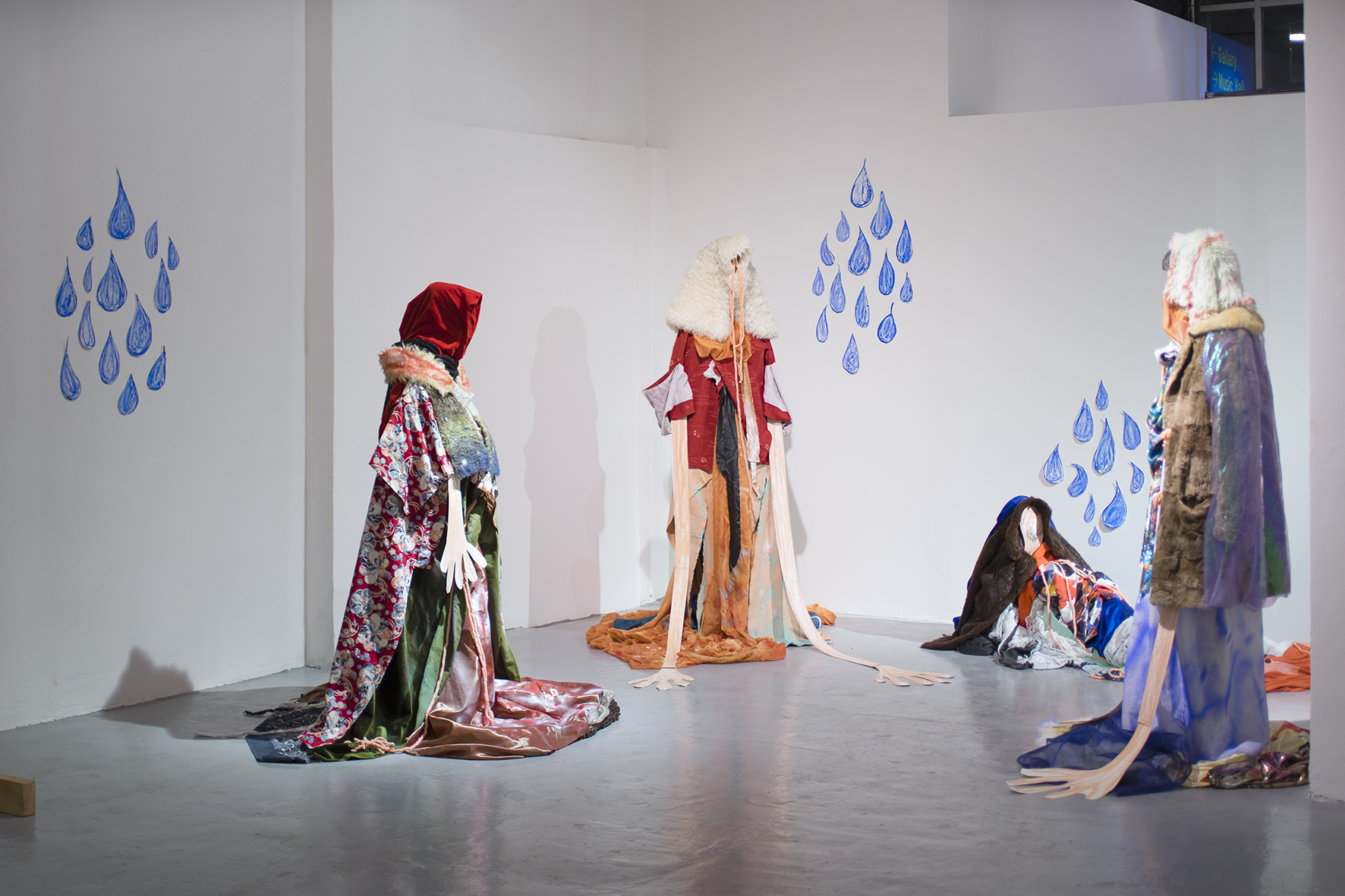
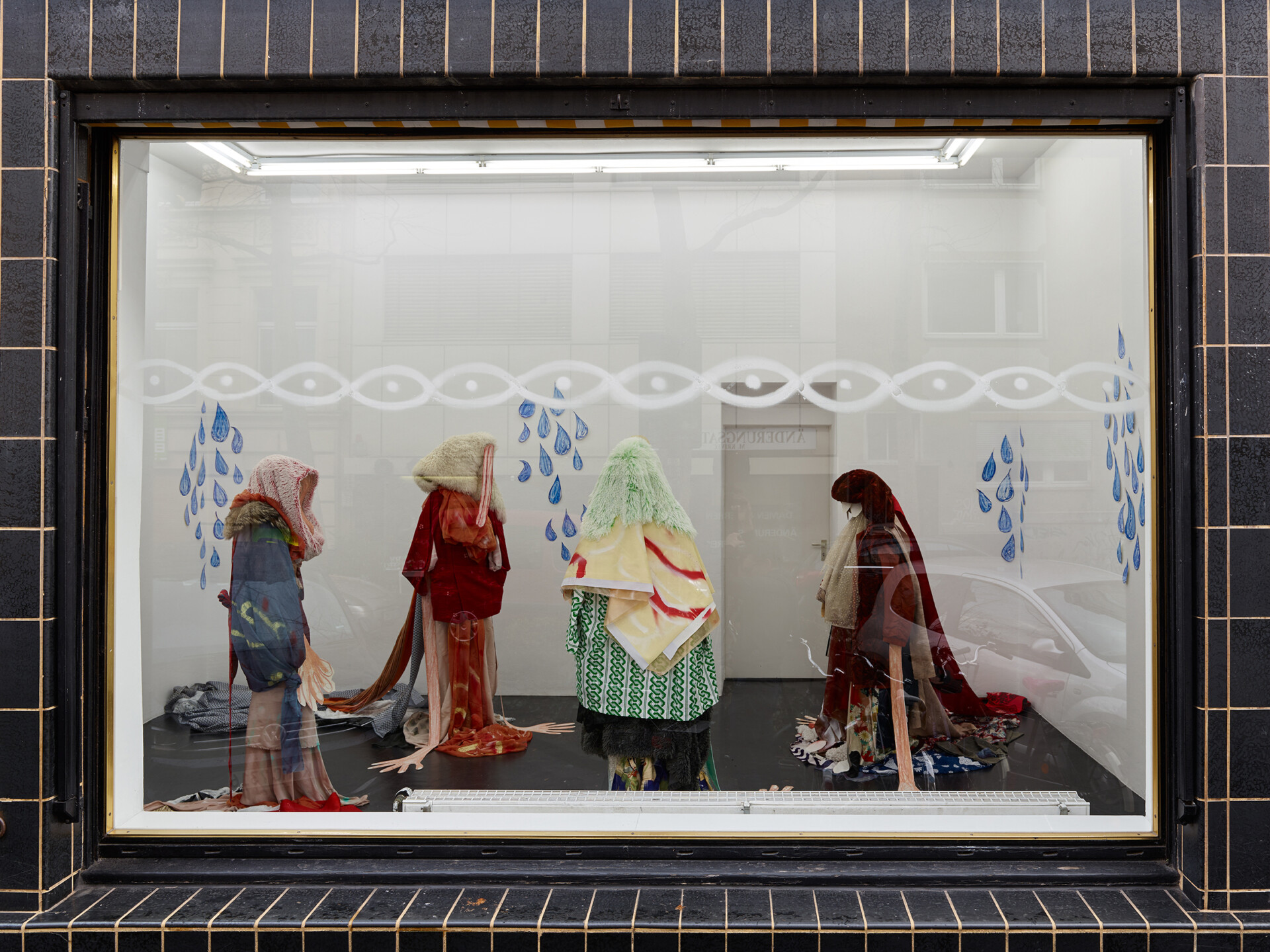
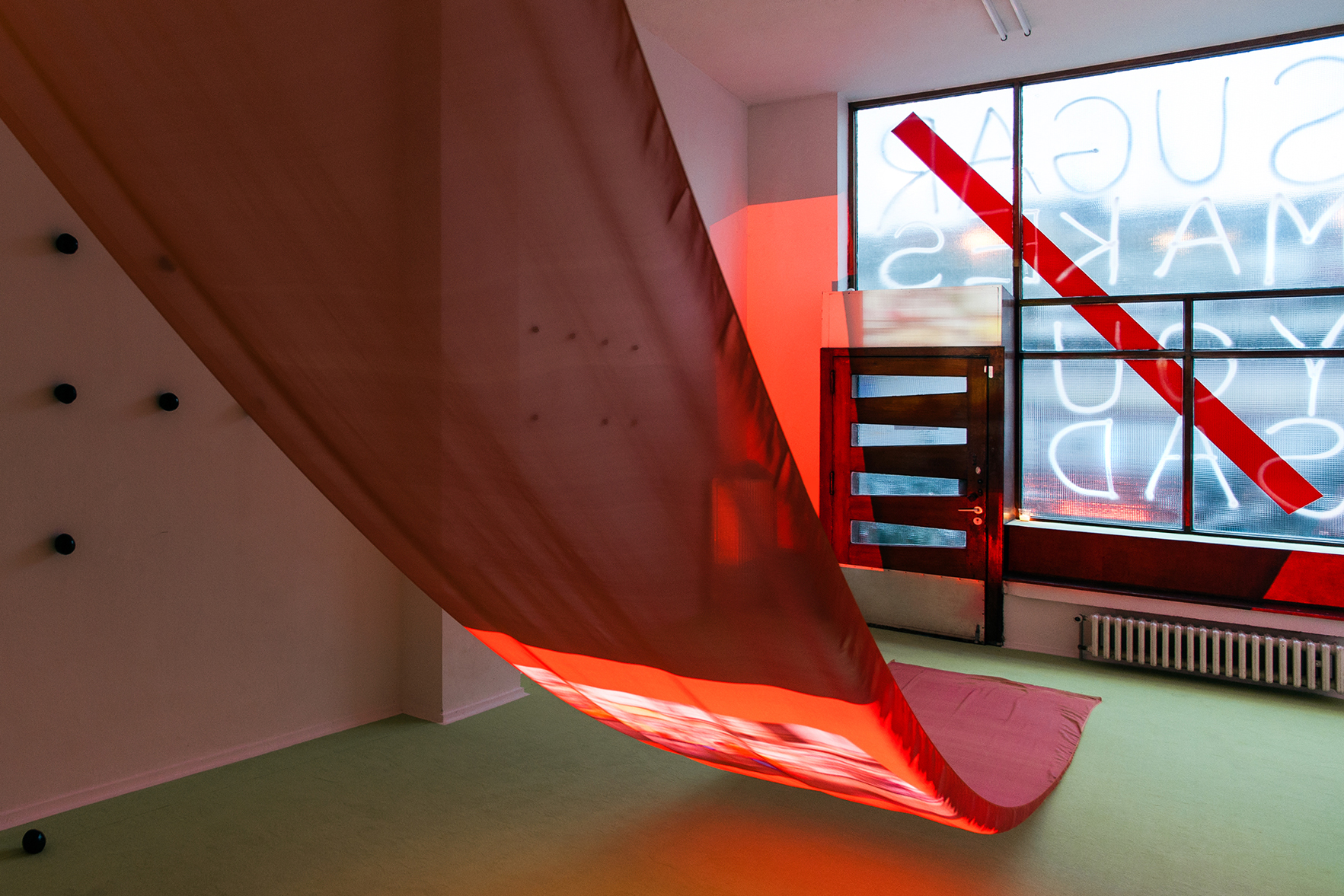
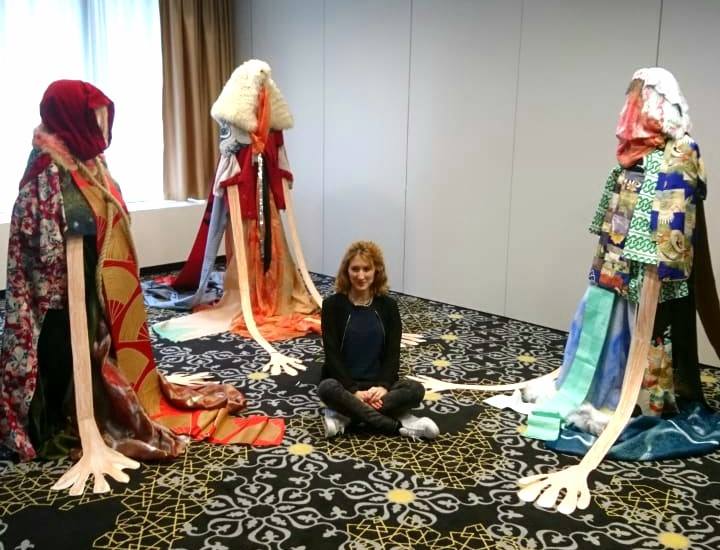
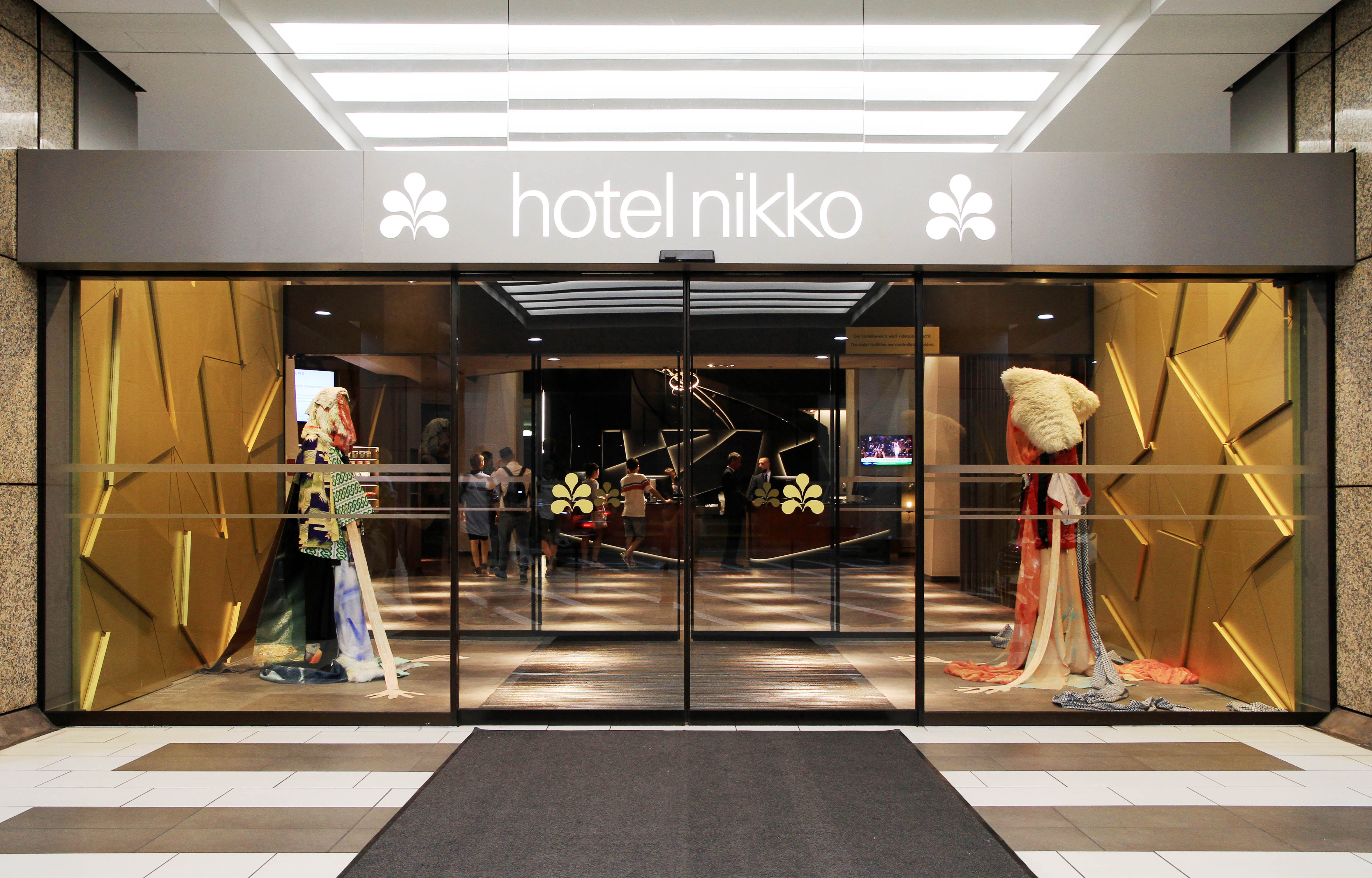
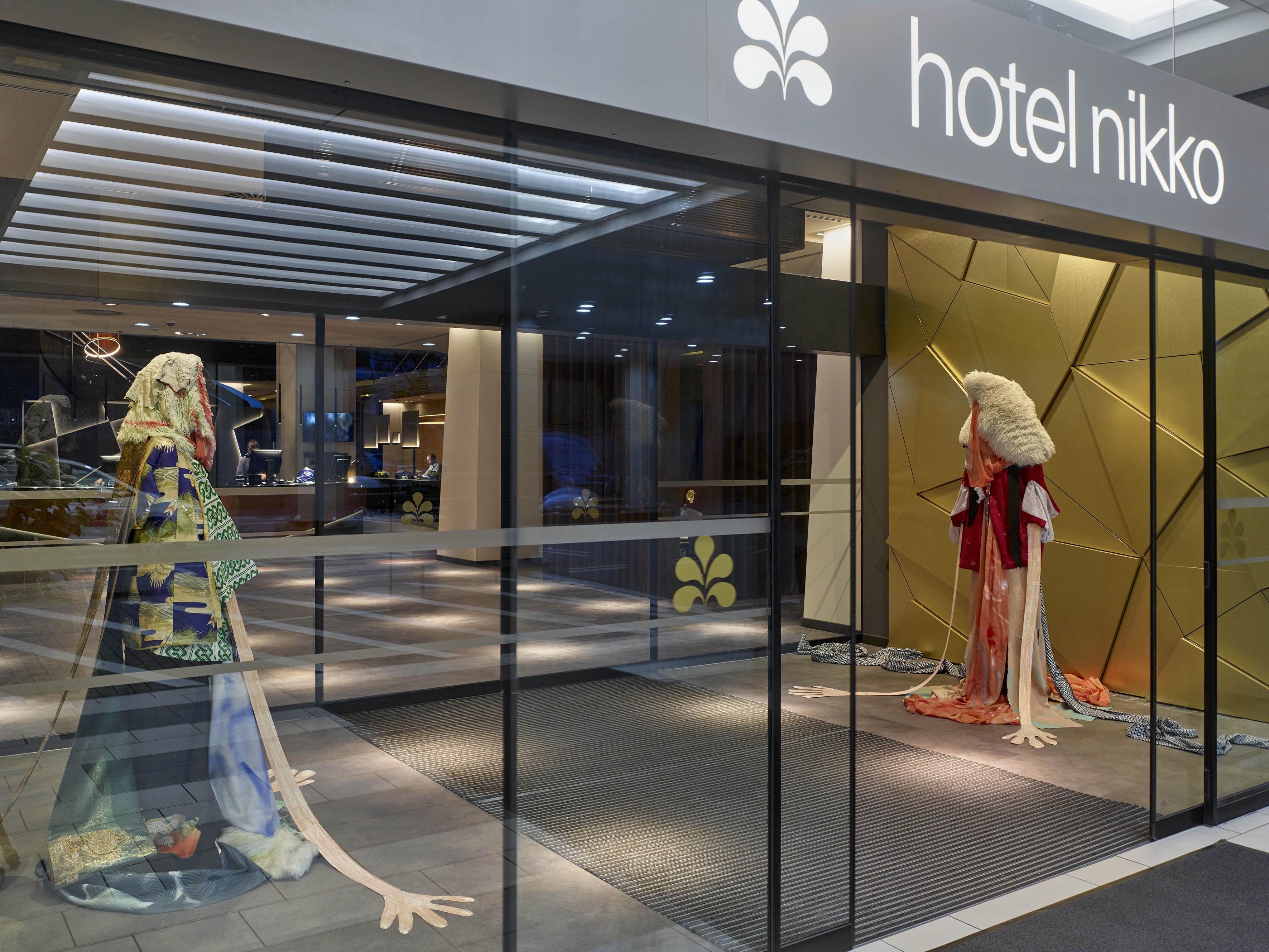
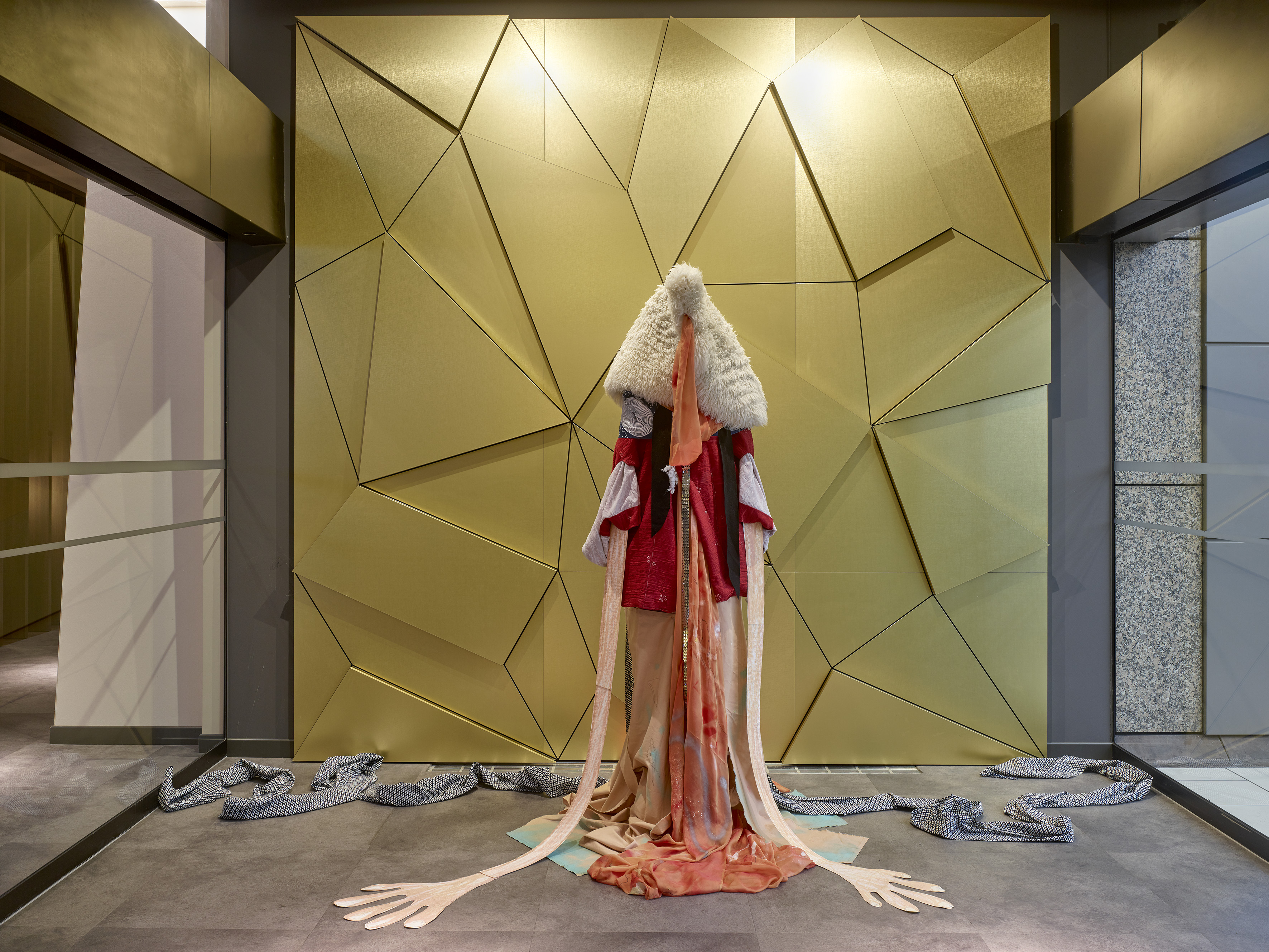
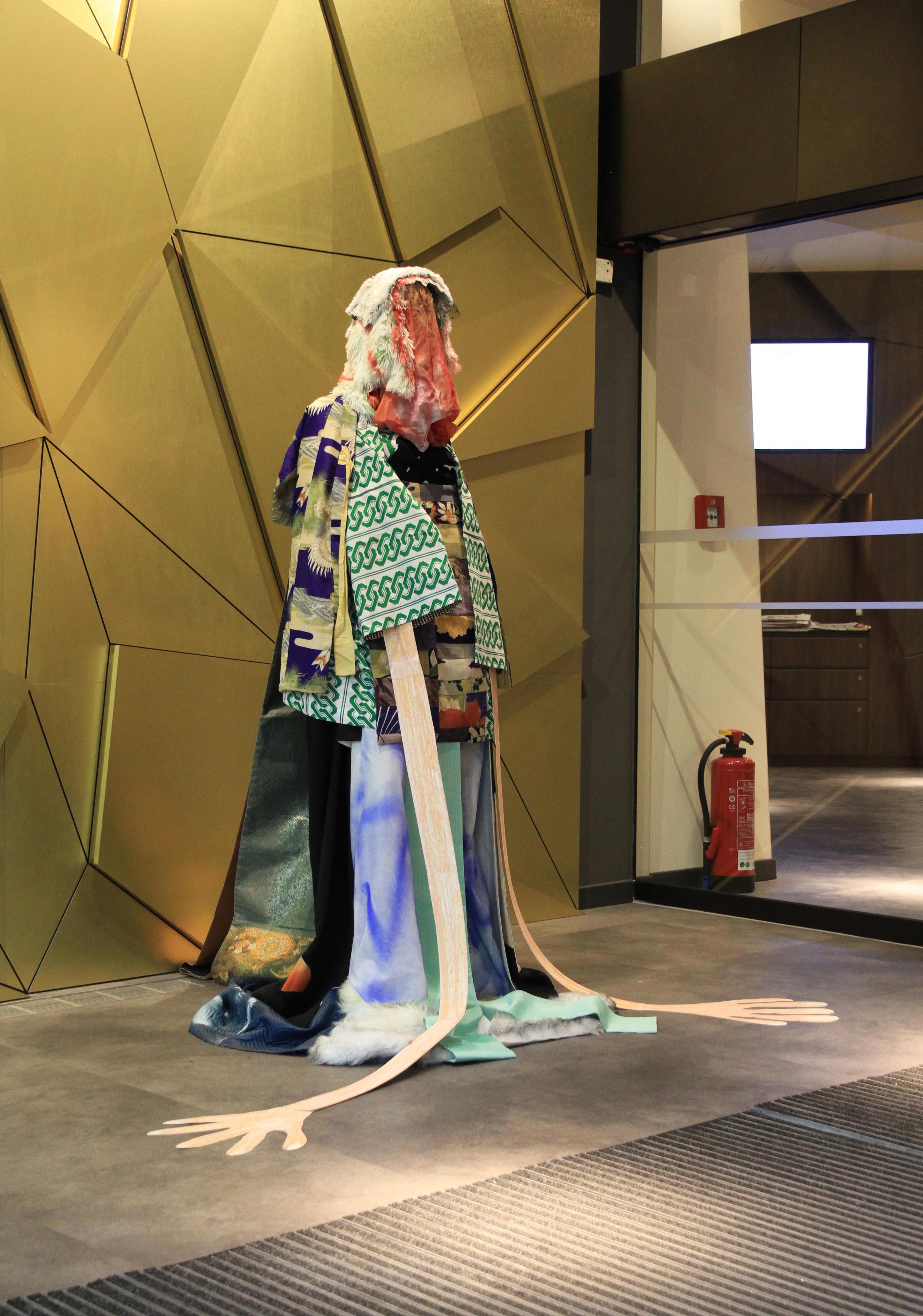
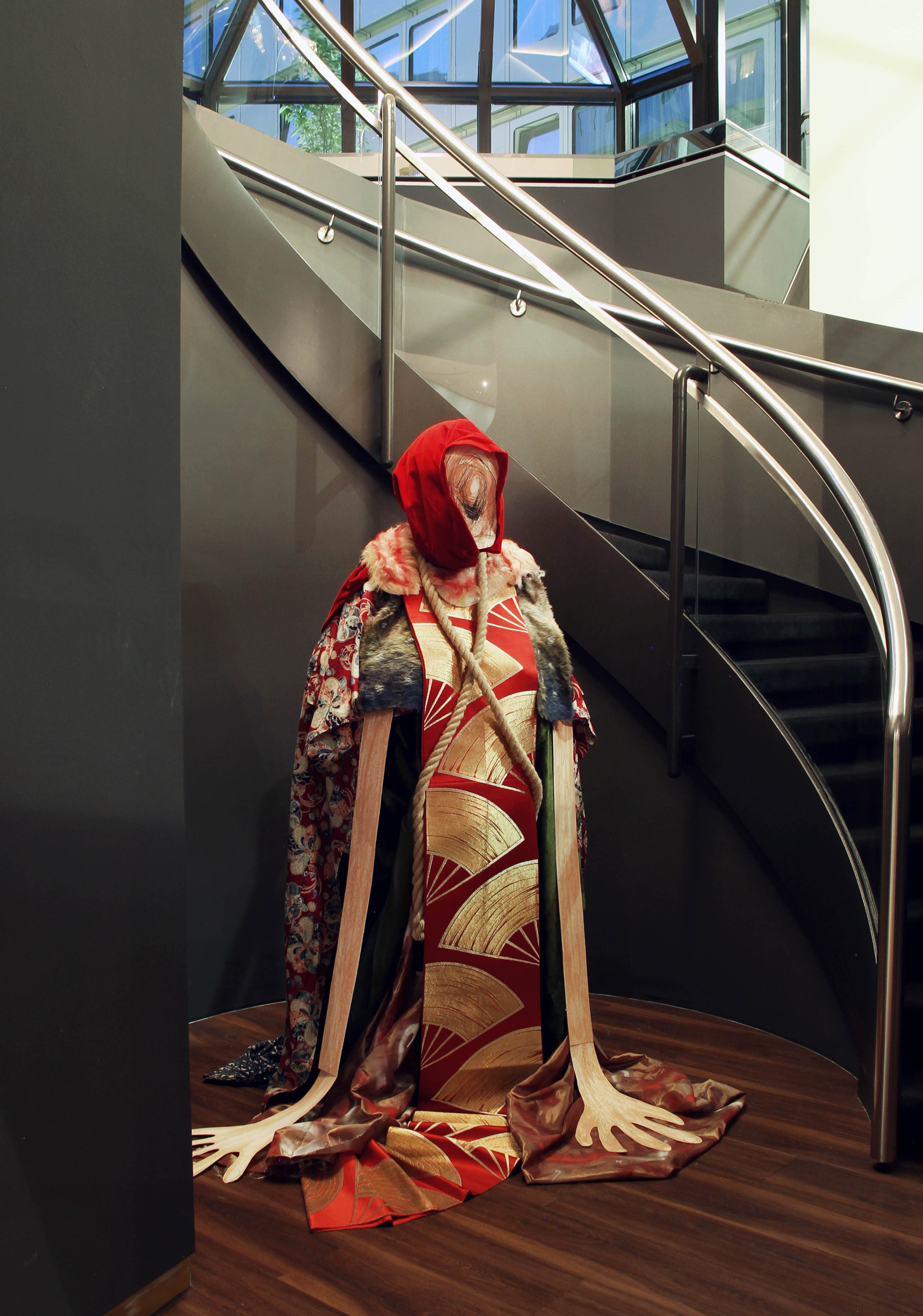
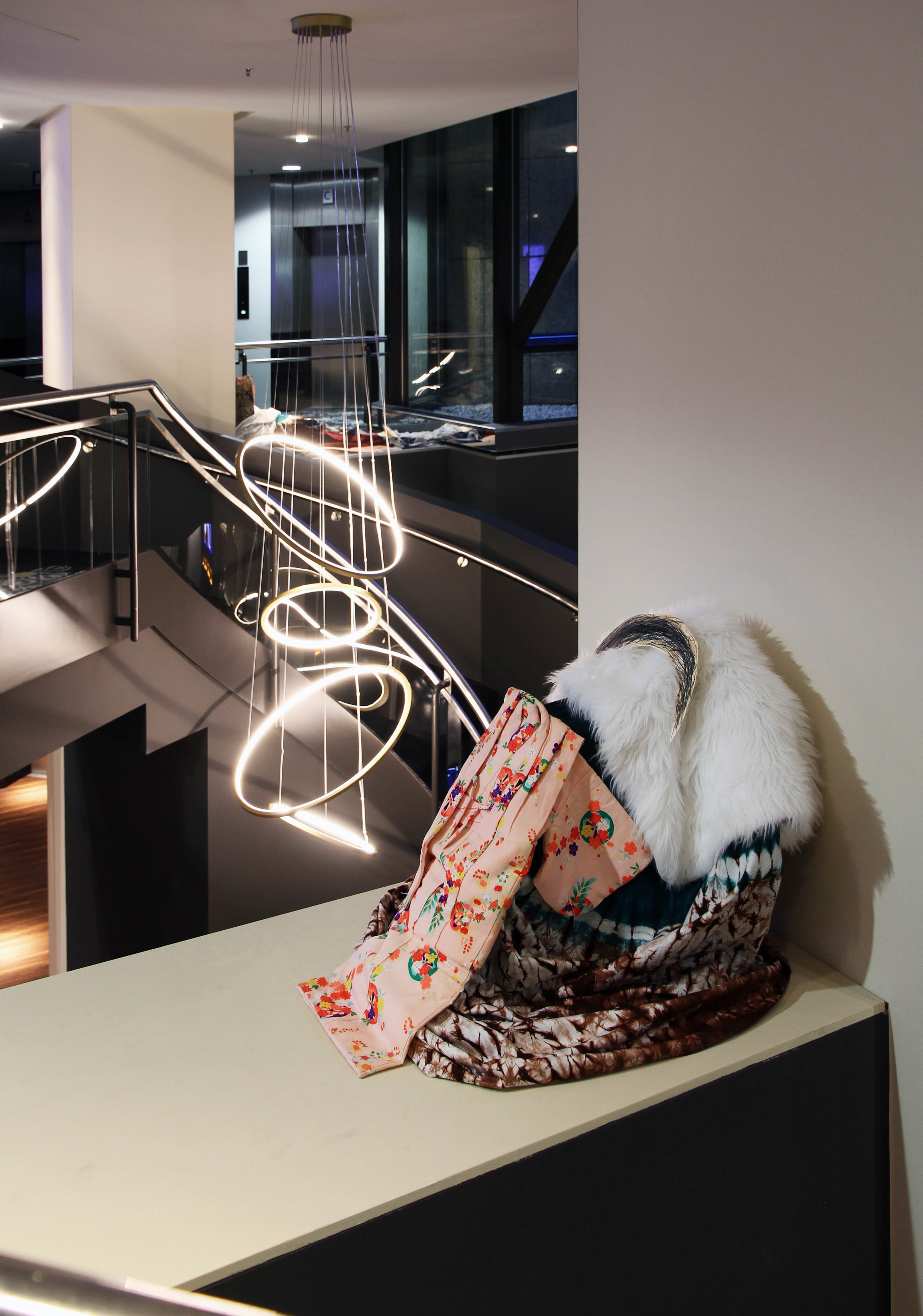
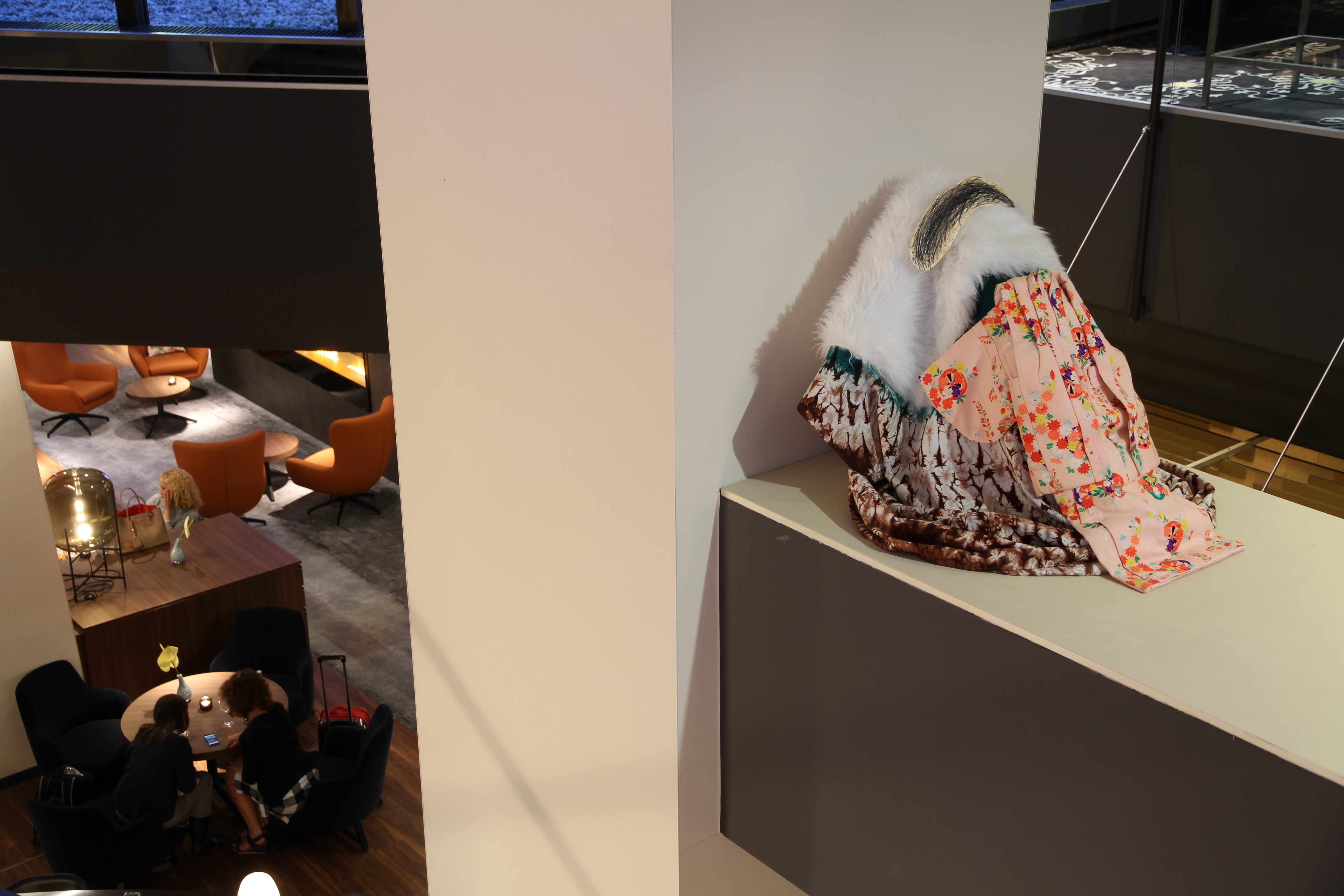
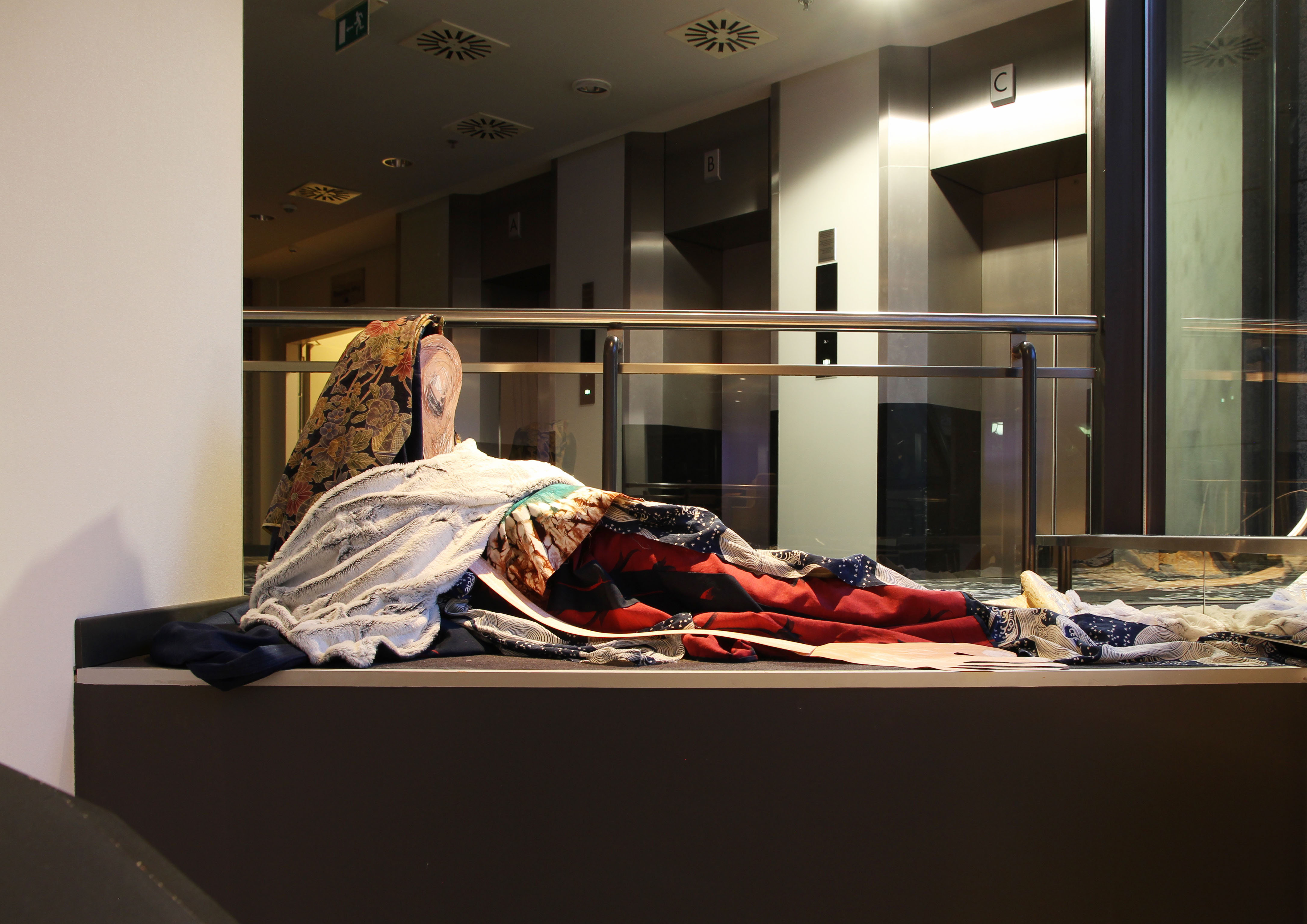
Her characters, only vaguely outlined as figures with fabrics, furs, and textiles, somewhere between haute couture and an old clothing collection, welcome the hotel guest in the entrance lobby, whose glass doors open and close as if by magic. From here, where the artist creates an oppressive opponent, draped with blood-red tulle and shriveled furs, she accompanies the visitor with her five works up the stairs just behind the reception desk above the bar, where she places an ambivalent observer beside the lonely guest at the counter.
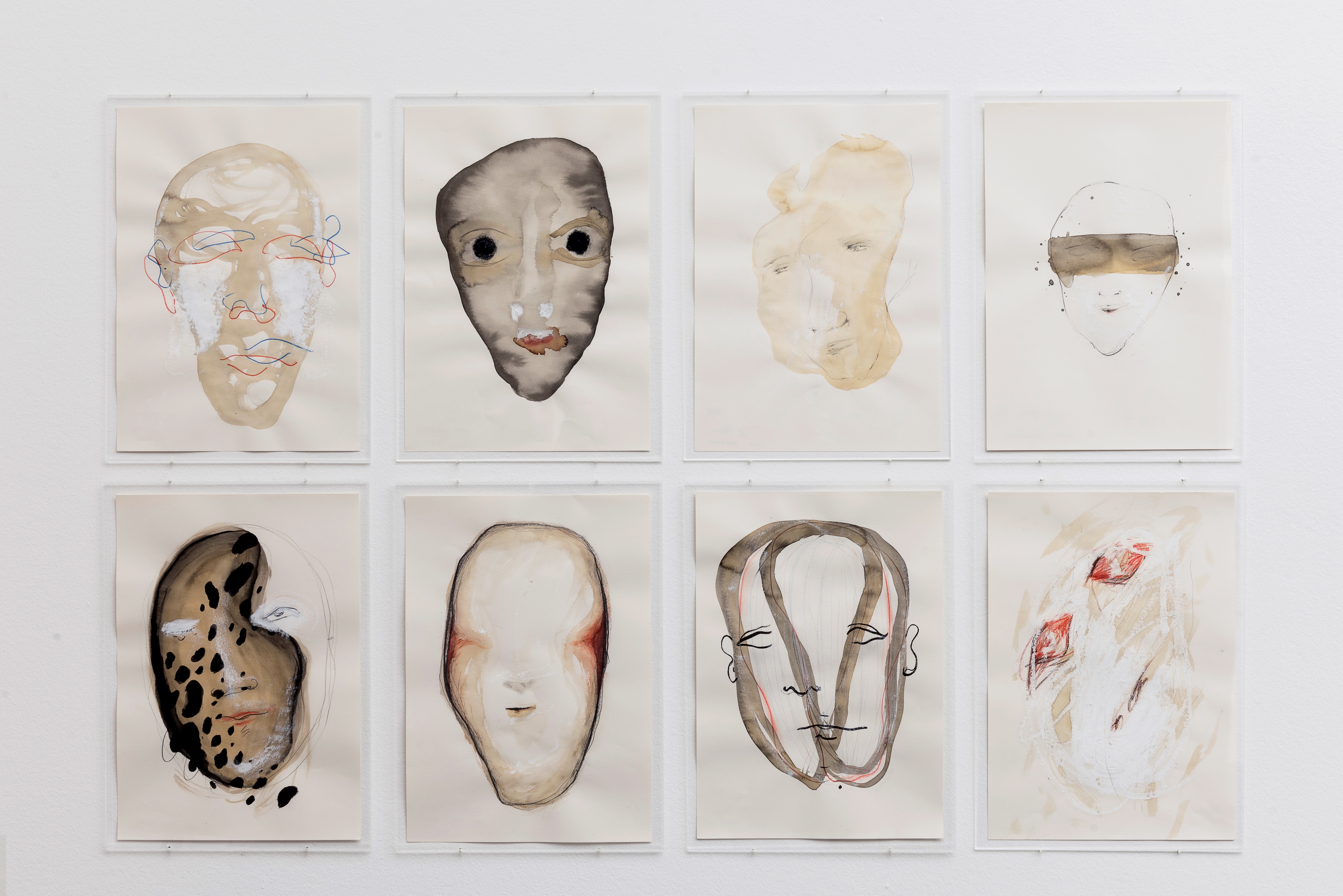
Related to the Japanese Nō theater, the assemblages, made from Asian fabrics as well as mundane everyday clothes or strong ropes, turn the establishment into a conjectural narrative, a theatrical choreography of subspaces, and speculations. Like the guests whose avatars appear mirrored in the works, the faces and limbs of the silent observers only pass by in quickly jotted sketches. Just as in Nō theater, where specific events are formalized in masks, costumes, and narratives handed down over centuries, any individuality is eradicated from the characters. They remain anonymous despite their narrative physicality.
With her work Isabella Fürnkäs thus inserts herself into the syntax and internal discourse of the establishment, in order to make it part of her production, too, leaving the coverage of art. Her figures blend almost seamlessly into the neat rows of wardrobes, between the guests’ cheap dreams, the packed suitcases and laden luggage carts, the hurried porters and the flying clothes rails, subtly converting them into an imposing set design.
In the fictional narrative, which now almost stages itself, the visitors’ dreams no longer appear as formative characters far from themselves, but as monstrous shadows in tactile proximity to an individual plunging into empty signs and designations, who could collapse inwards at any moment: an idiosyncratic round dance of flying cloth, robes, and skins that have lost their bones. For hiding under the wardrobes—to the left, right, and in the middle—is nothing but a large void that performs its ghostly dance of lost identities in the fleeting nature of the hotel—all without uttering a word.
[1] This is in the sense of Michel Foucault’s paper on “other spaces” as heterotopias, or “real utopias” inscribed in society.
- Text by Markus Ambach