
Remote control
Personalizing and customizing the surroundings and objects of our everyday life is a widespread human practice. We pick up devices with our hands in passing, consuming their contents – often, they are the last thing we see before we close our eyes in bed at night. It is a way of creating a connection between the I and the world, a way of making yourself comfortable and claiming originality – being zany, cute or interesting. In Japanese subculture there is a specific term for this practice of excessive personalization. デコデン (Dekoden, or “decorated phones”) describes the over-the-top decoration of mobile phone cases and other maximalist accessorizing.
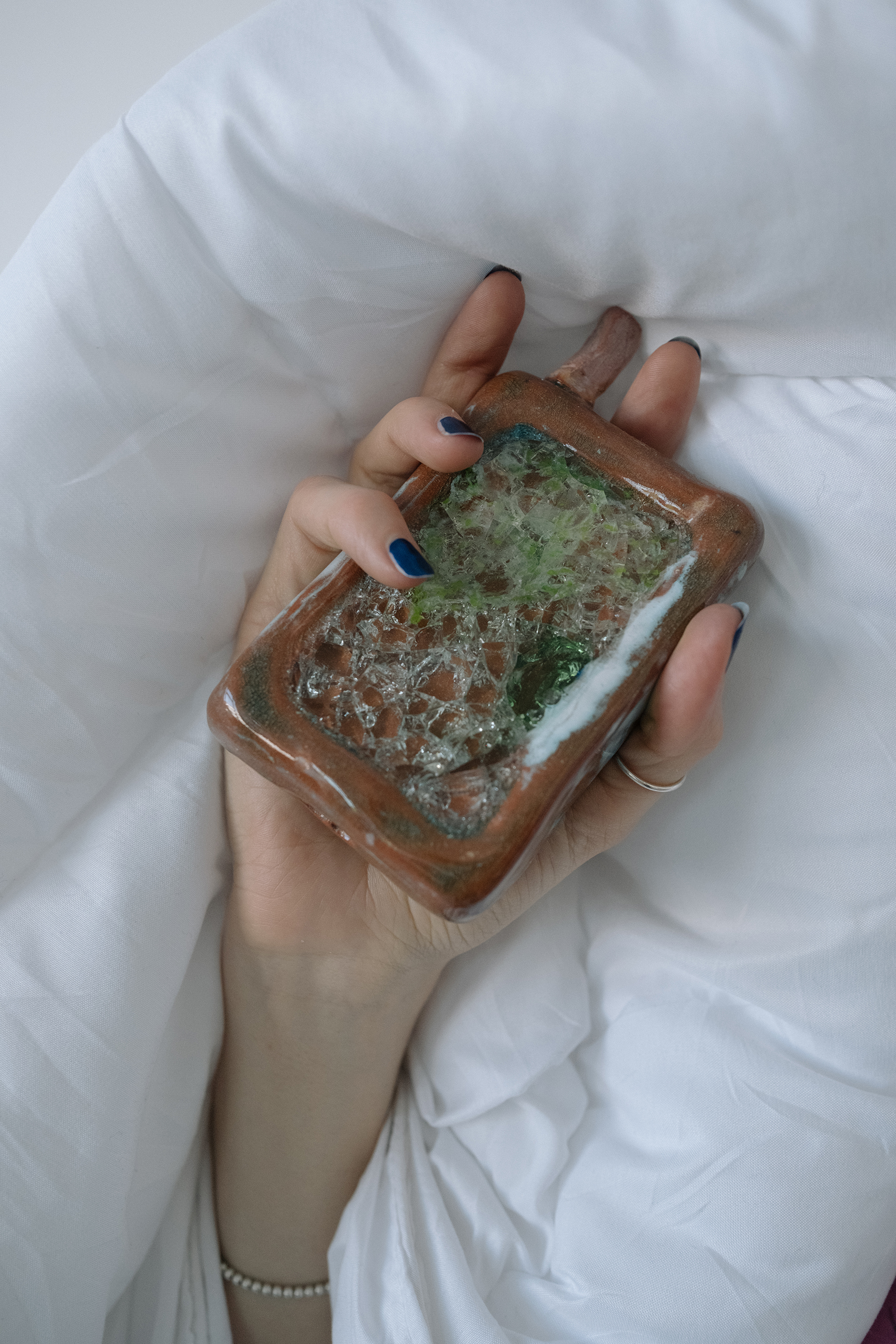
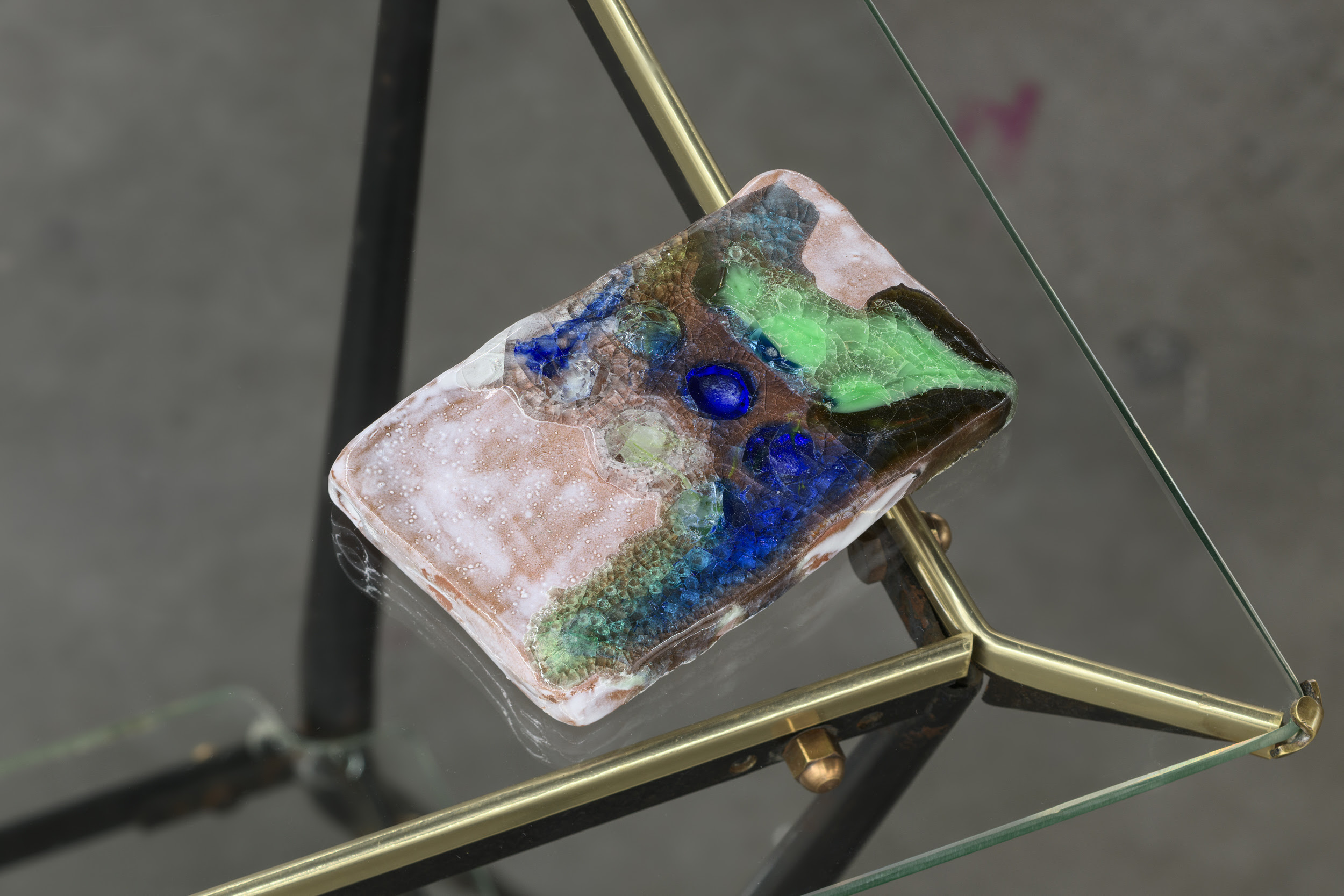
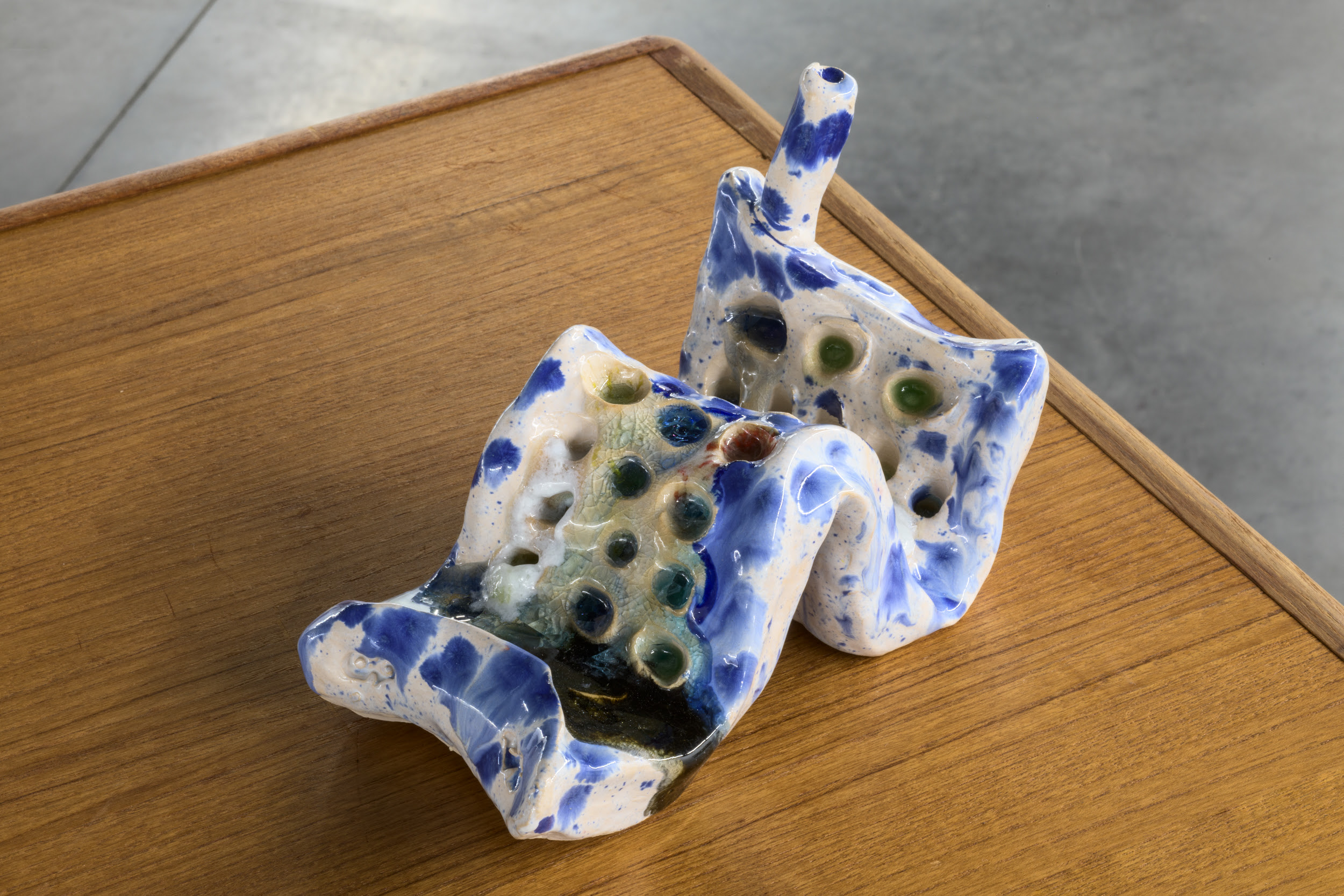
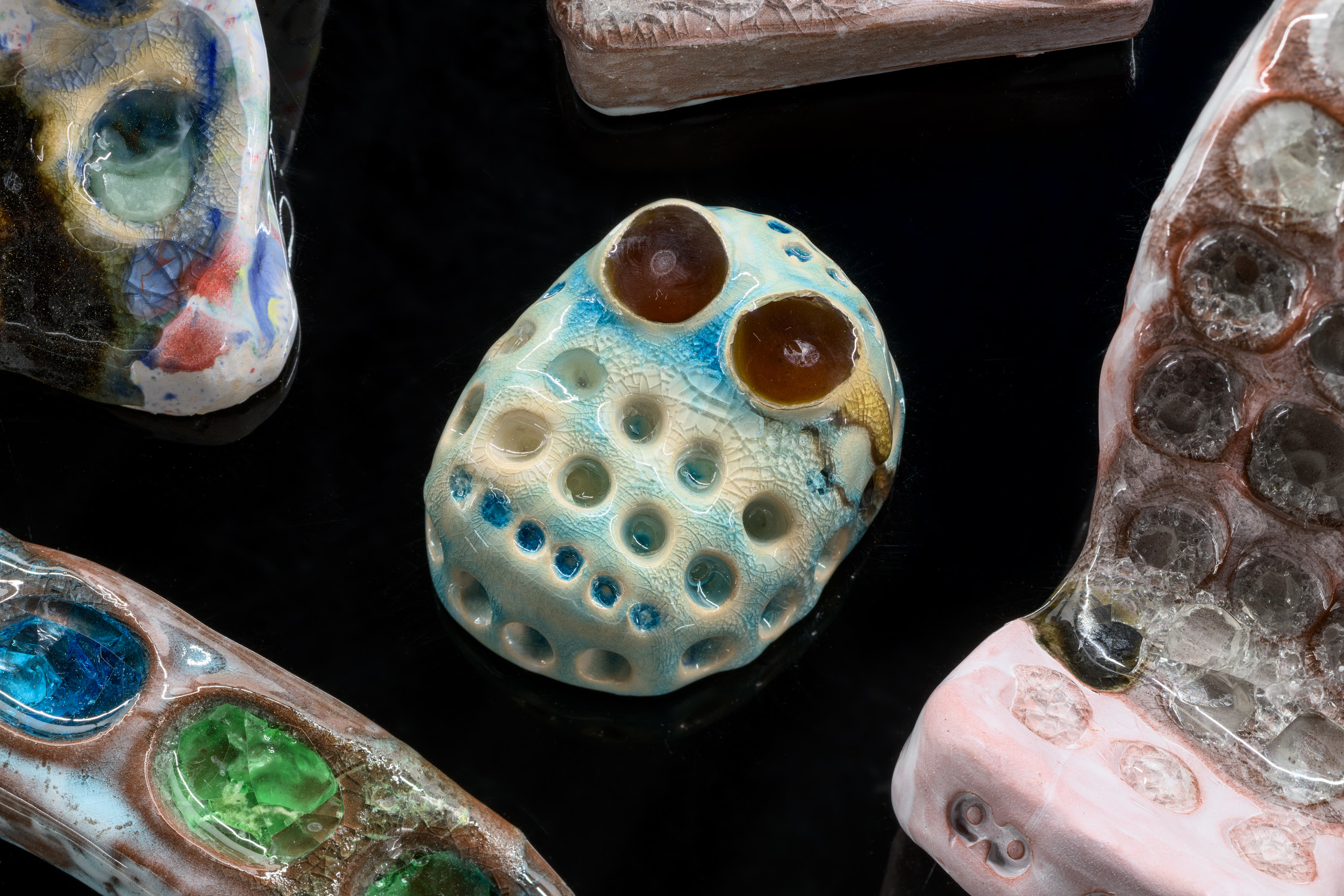
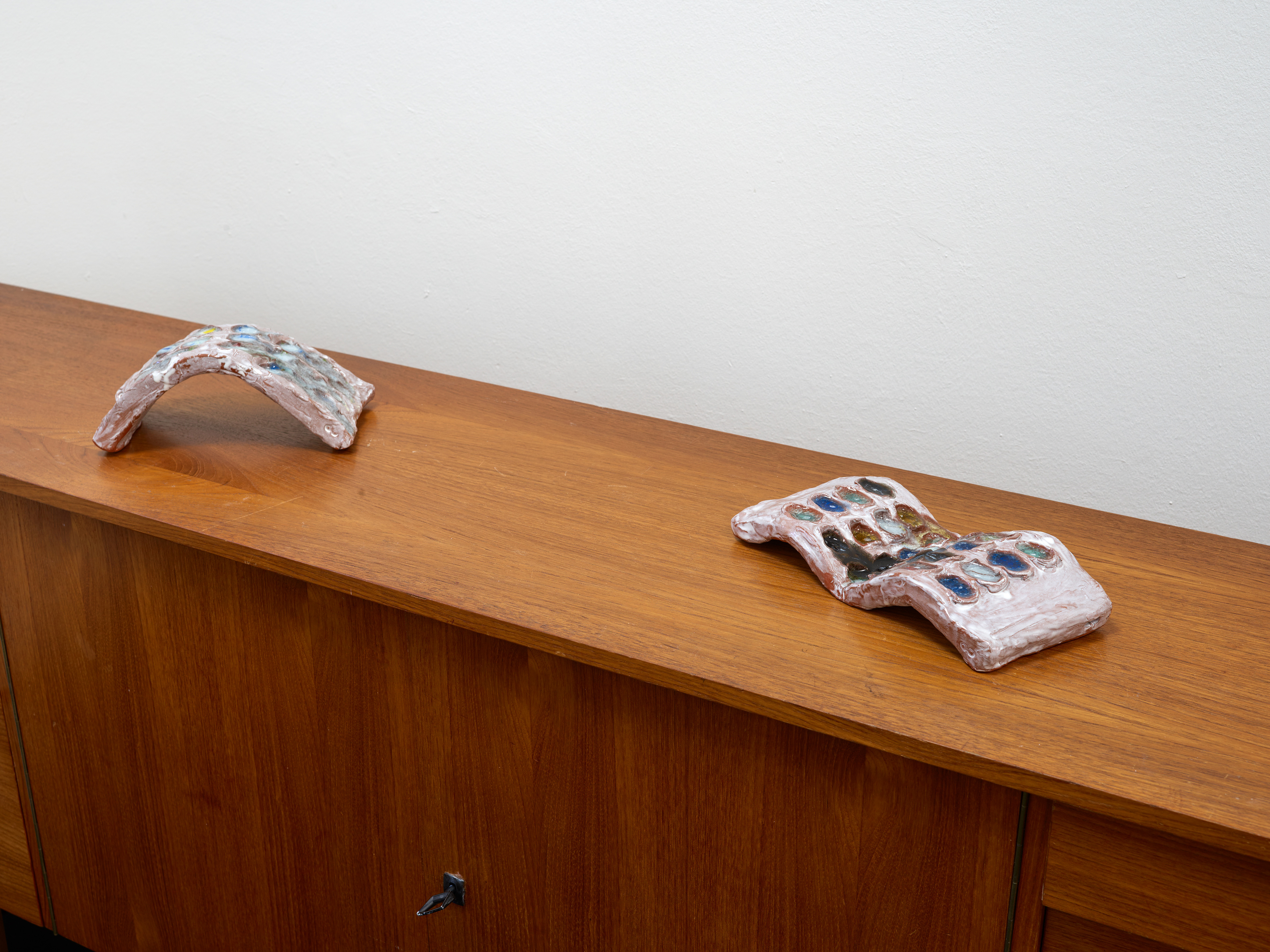
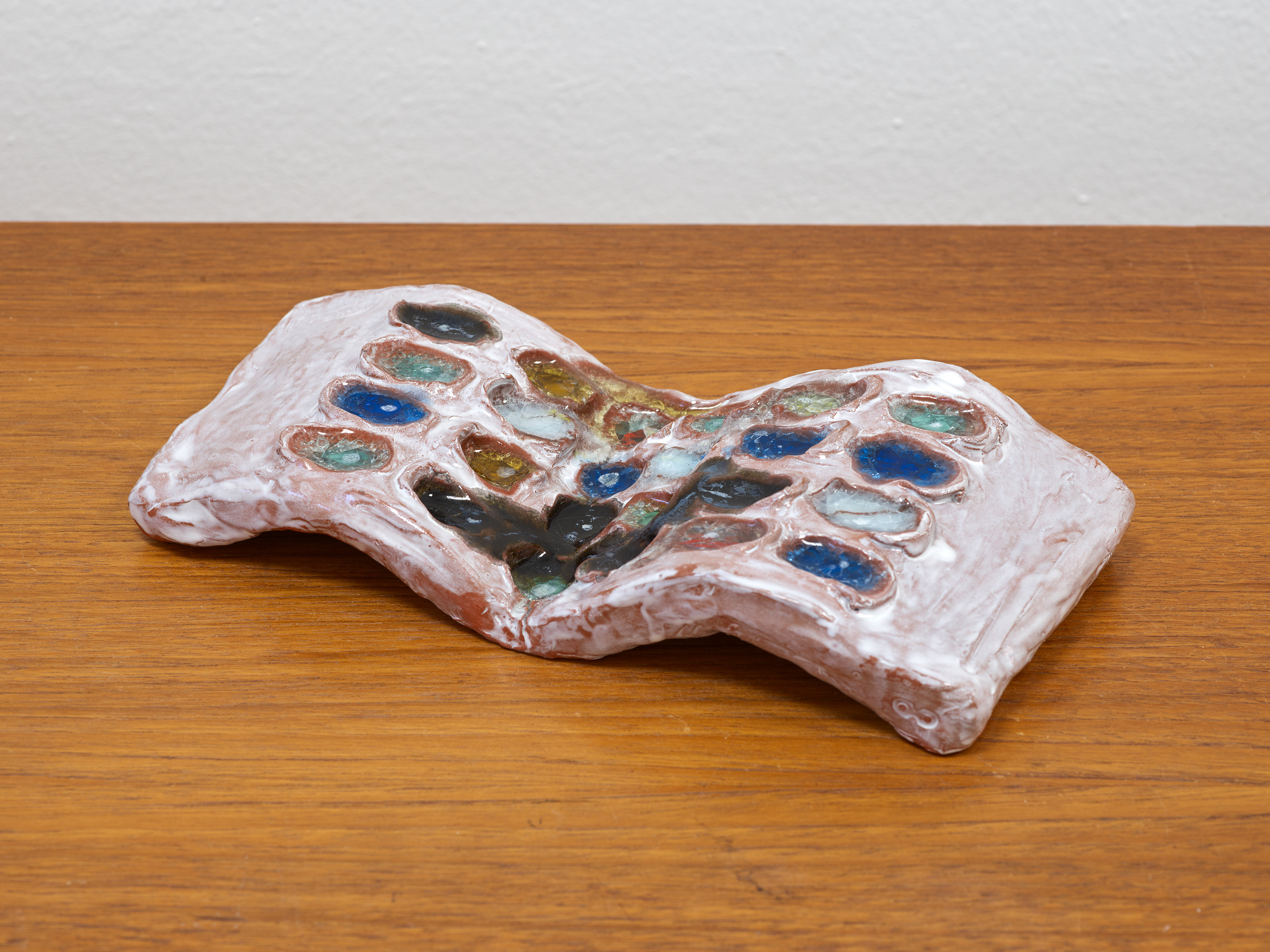
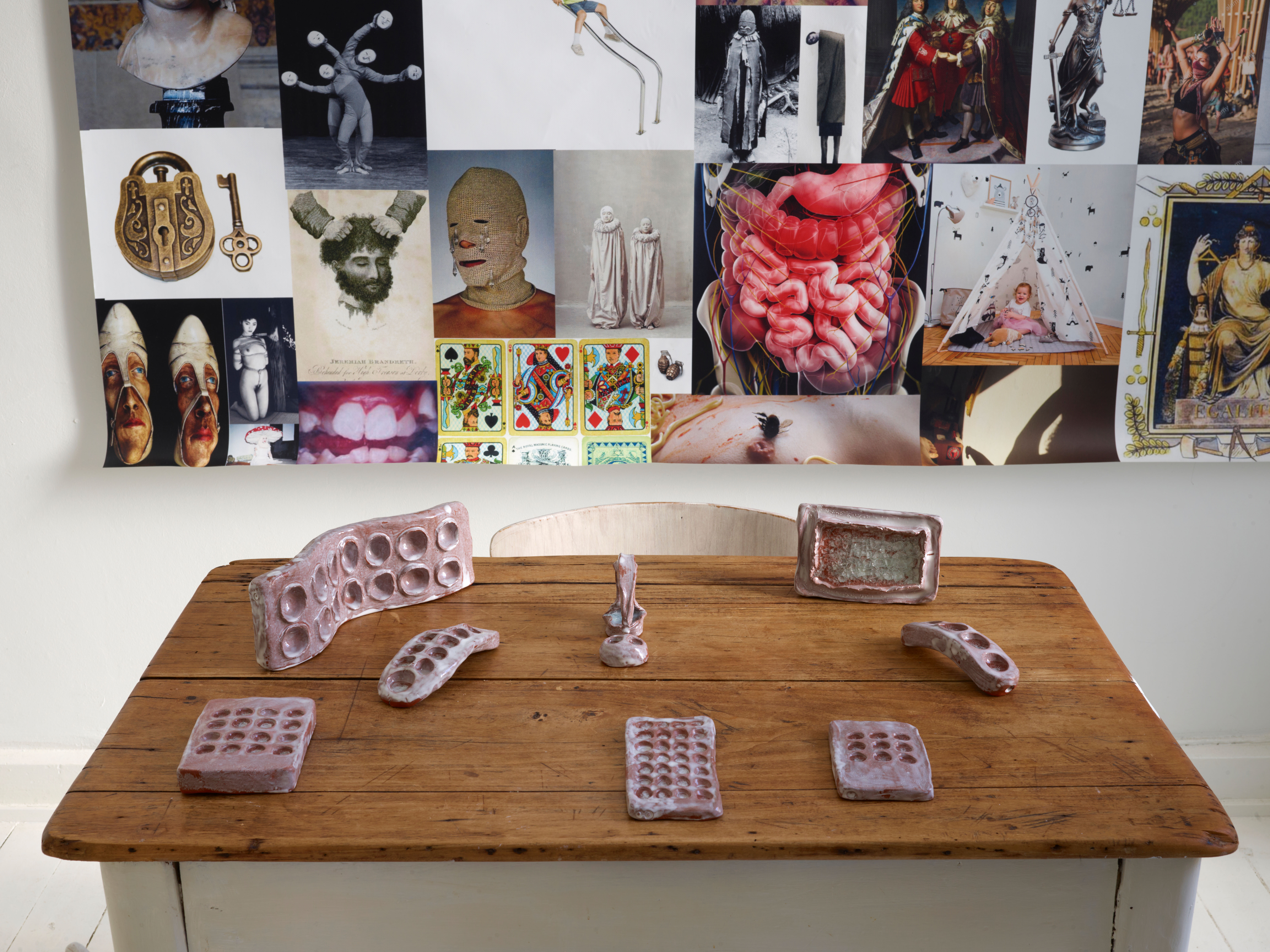
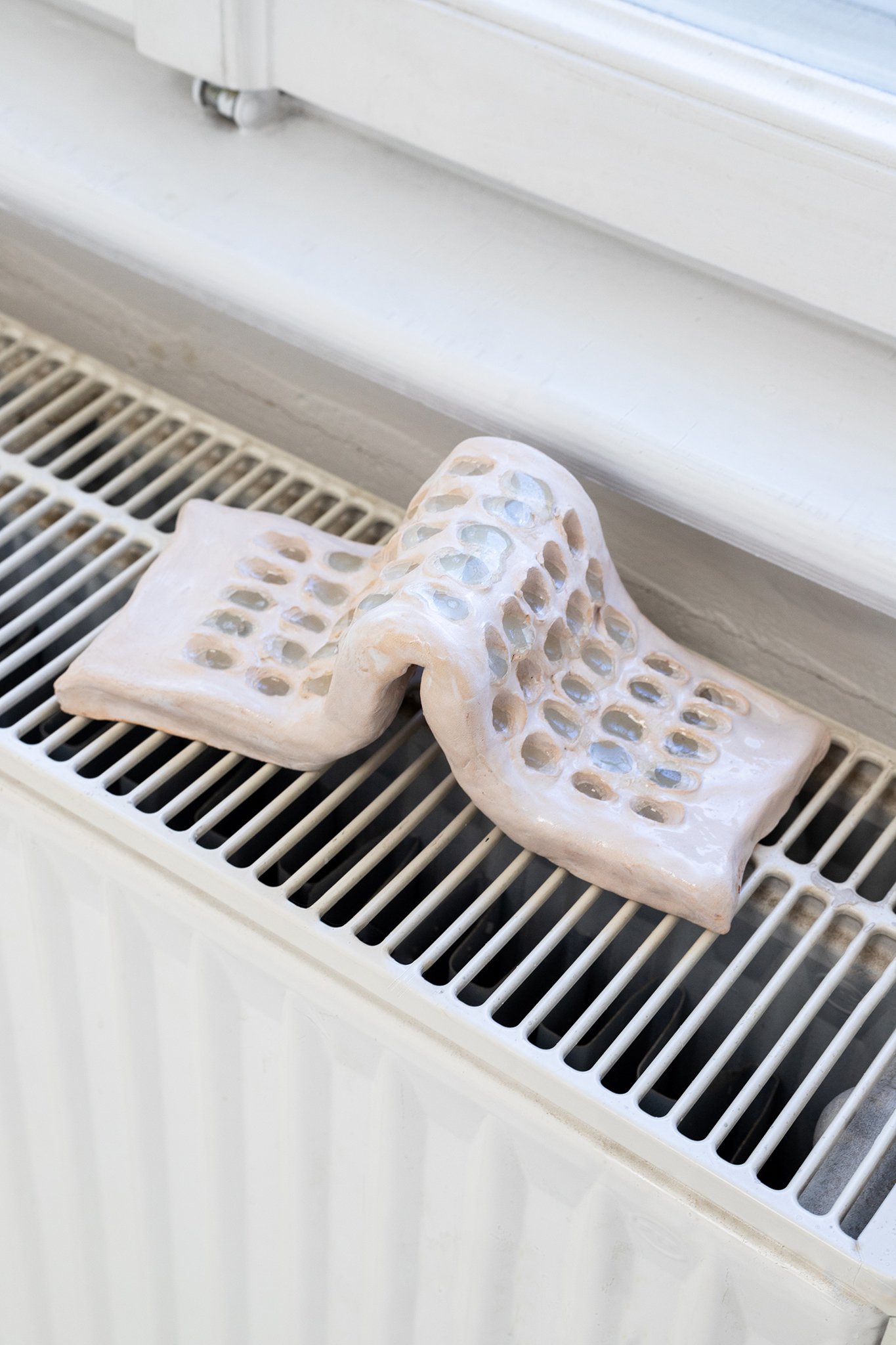
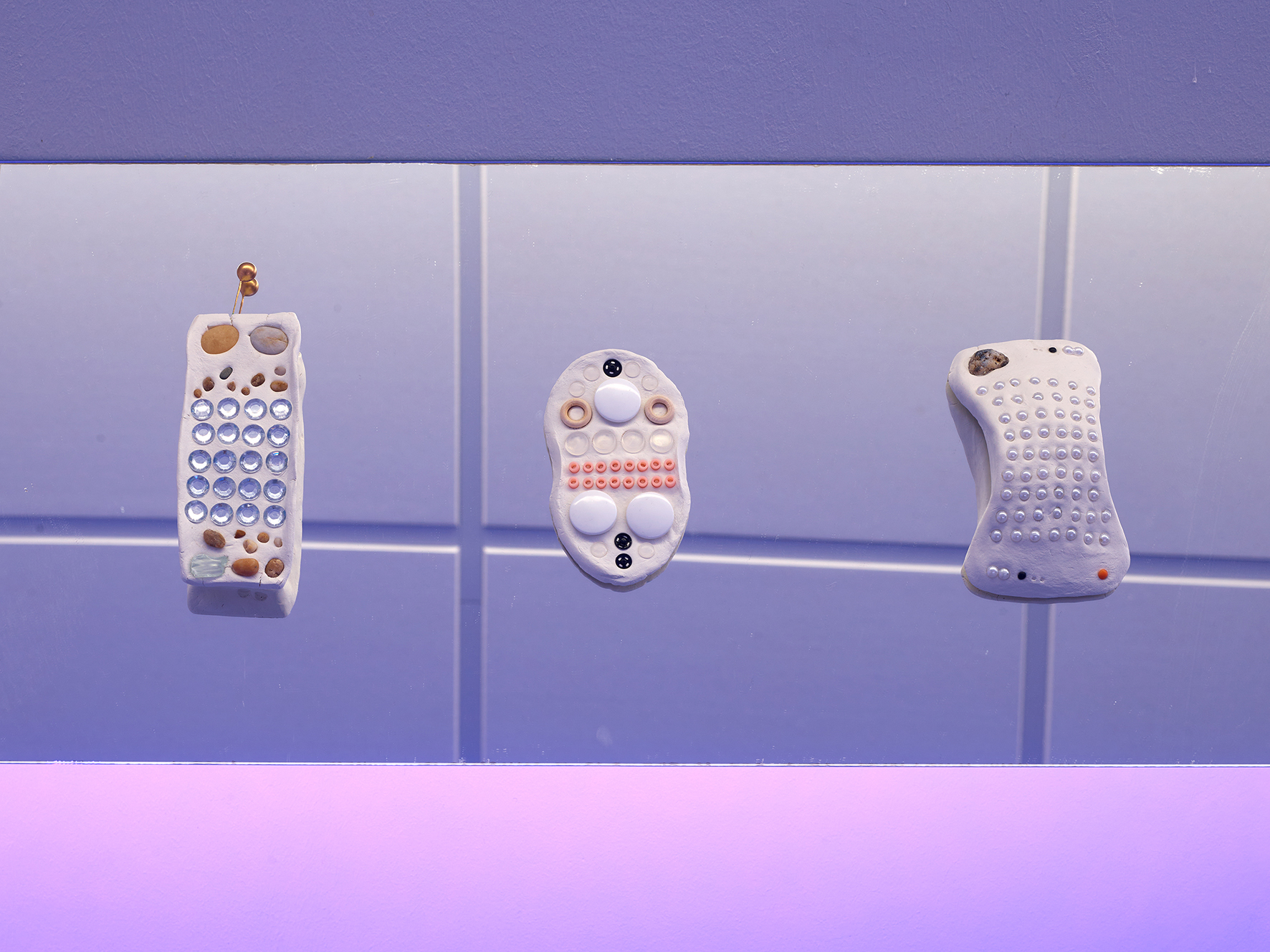
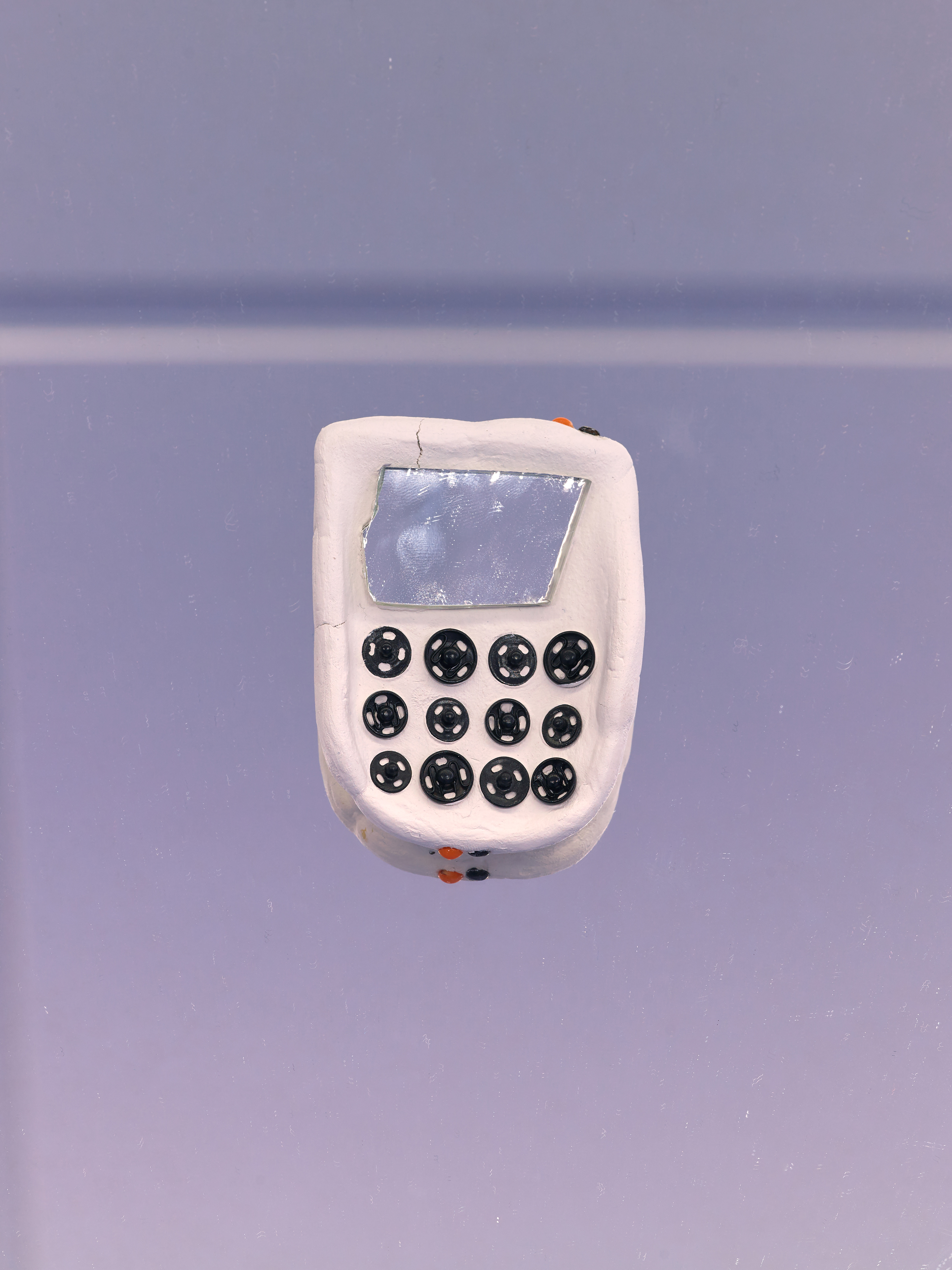
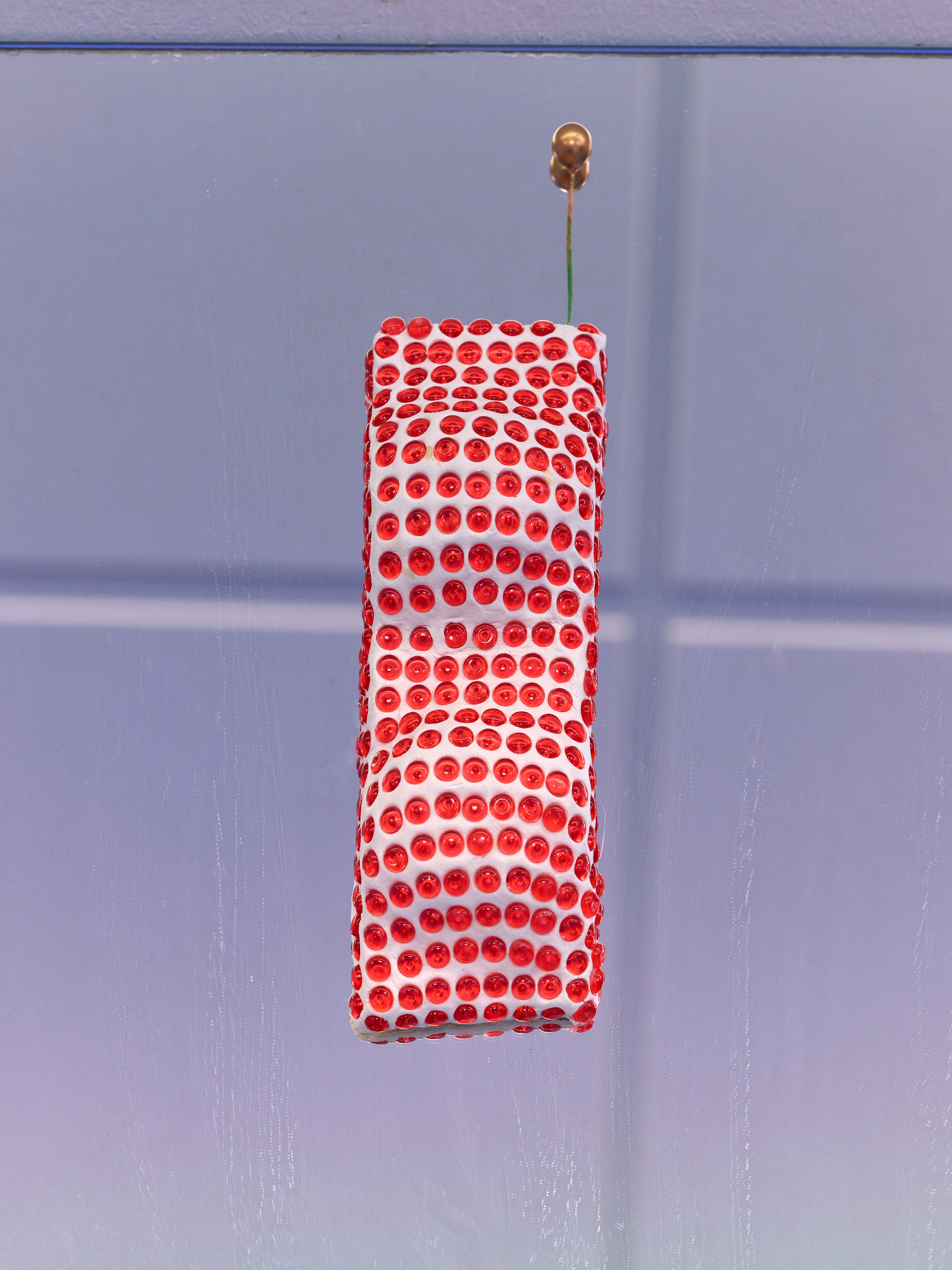
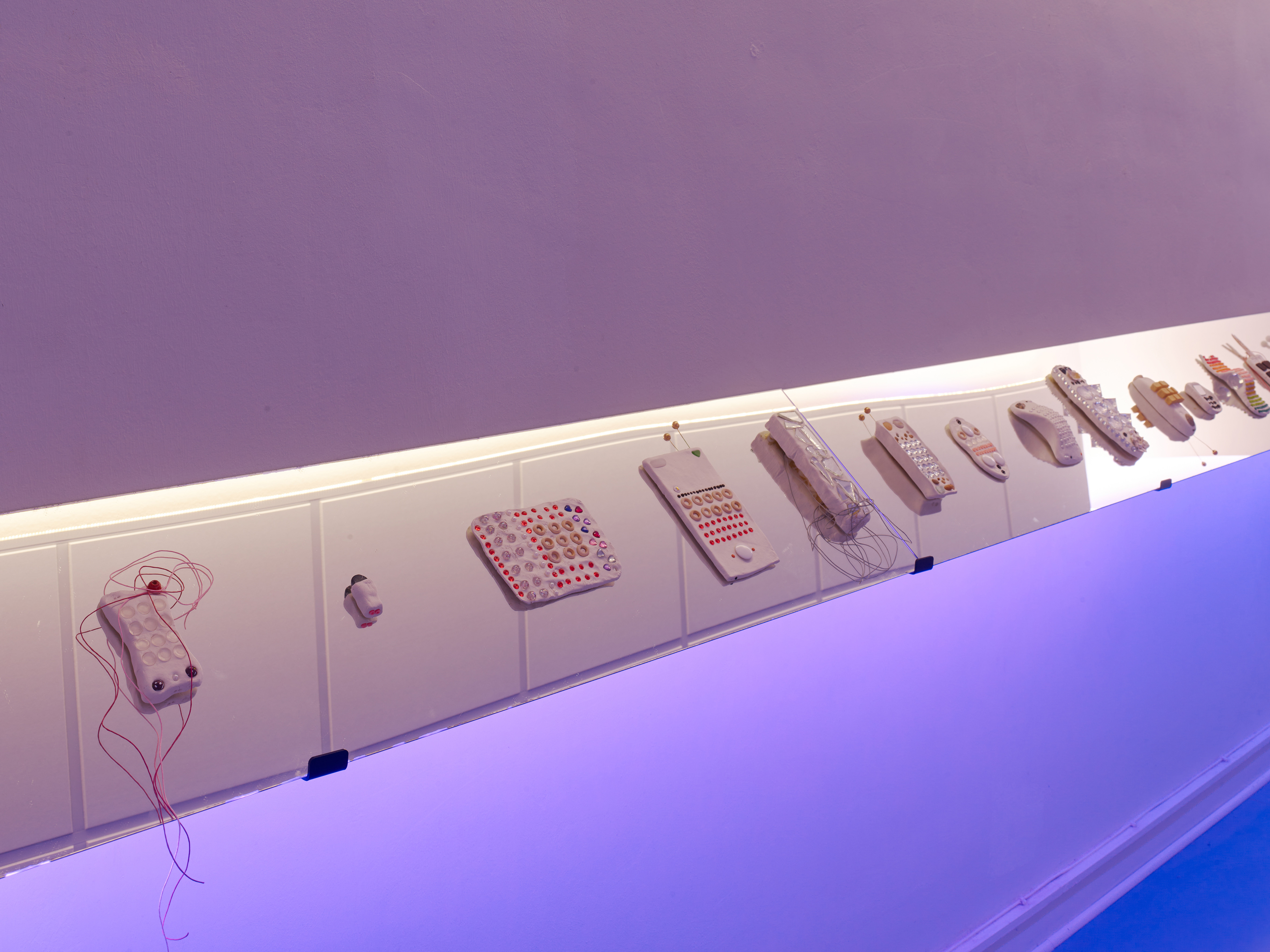
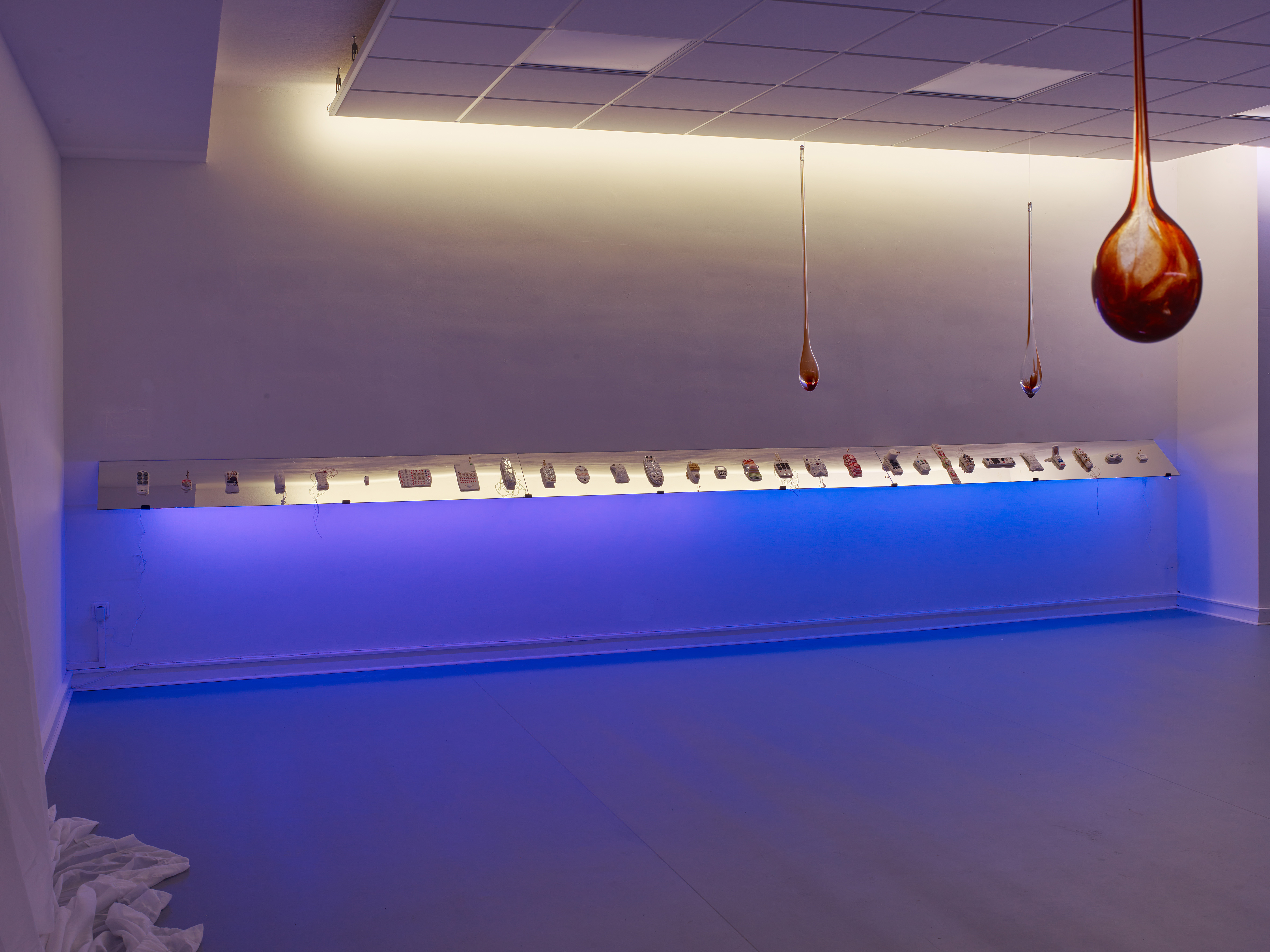
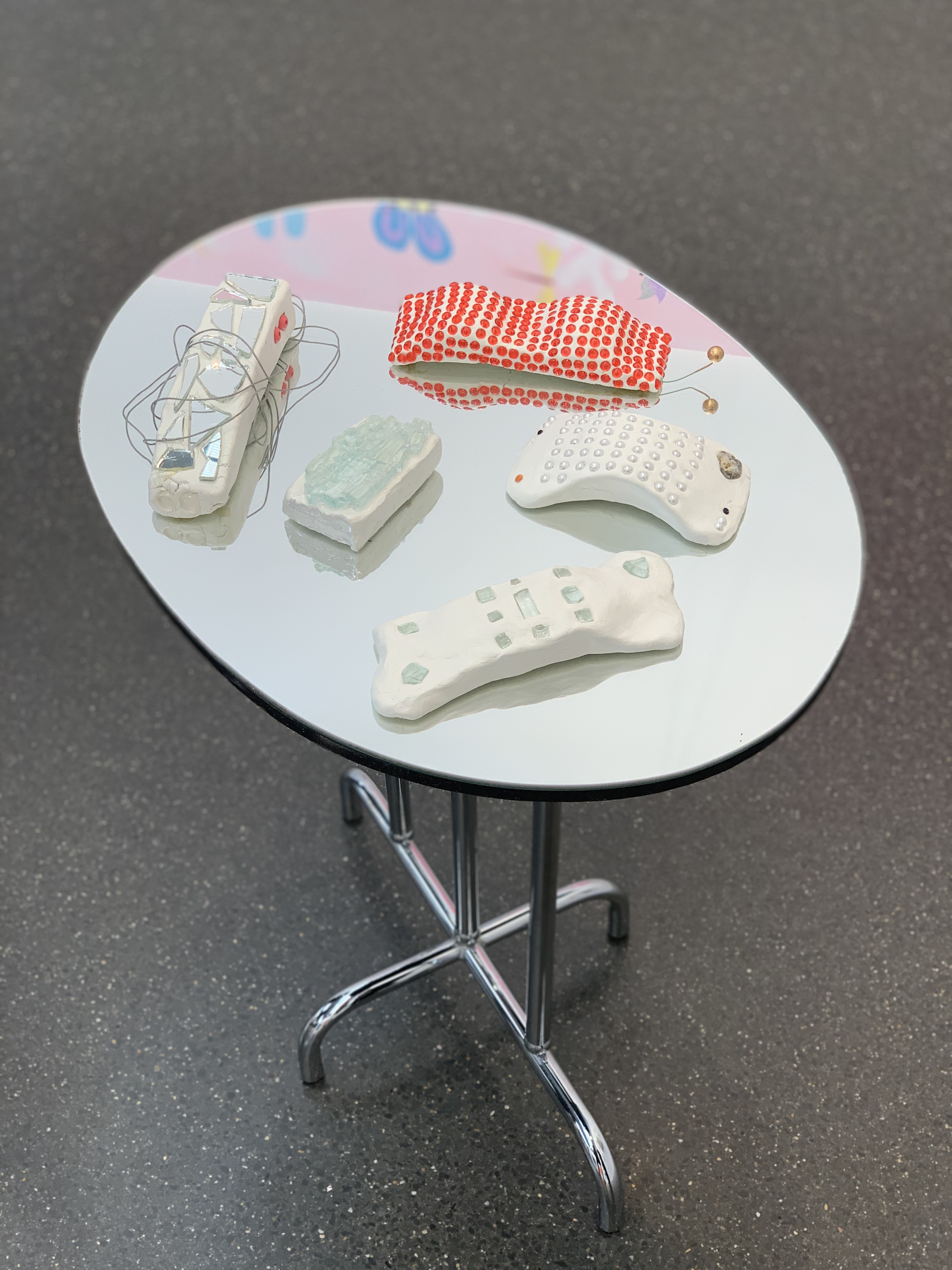
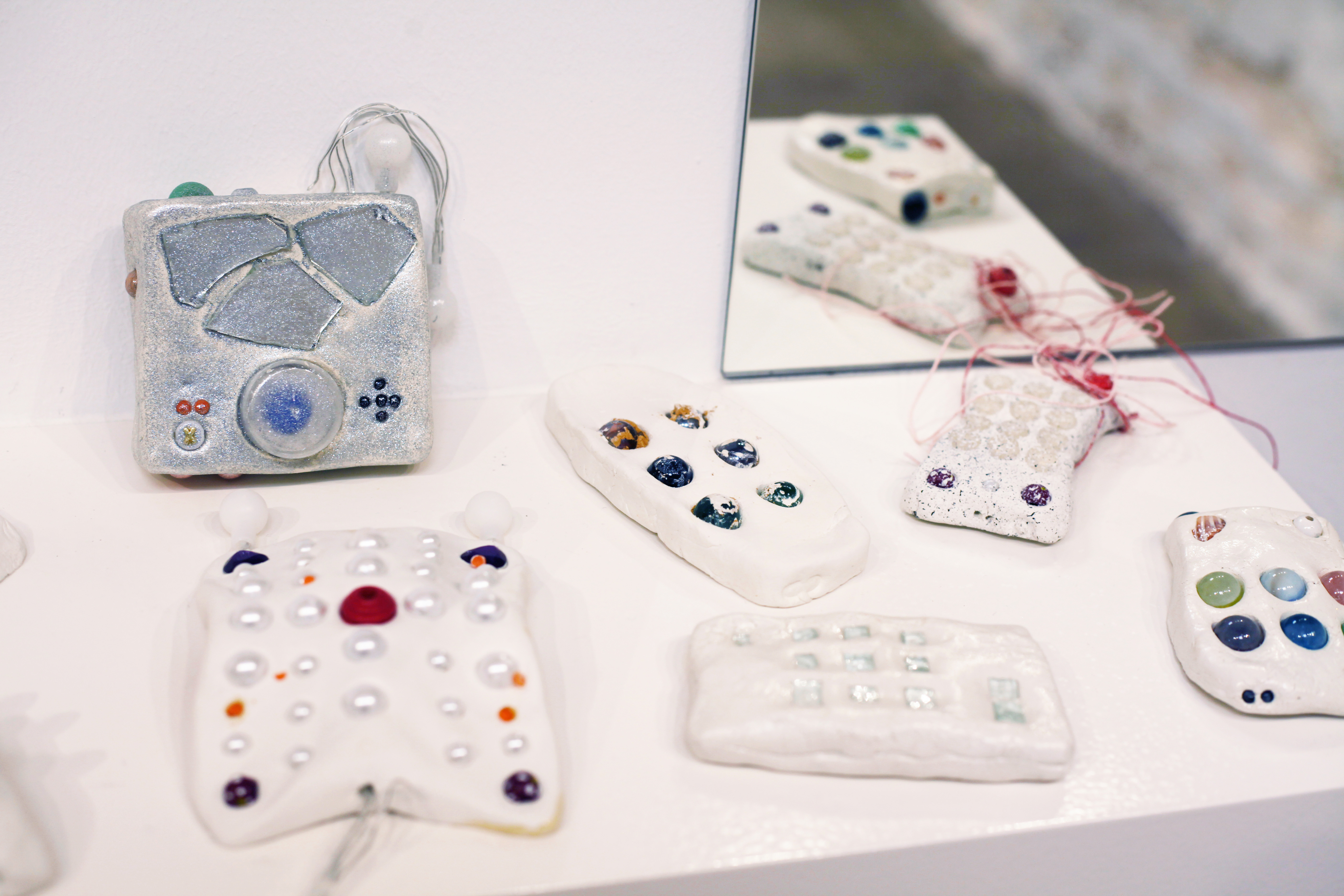
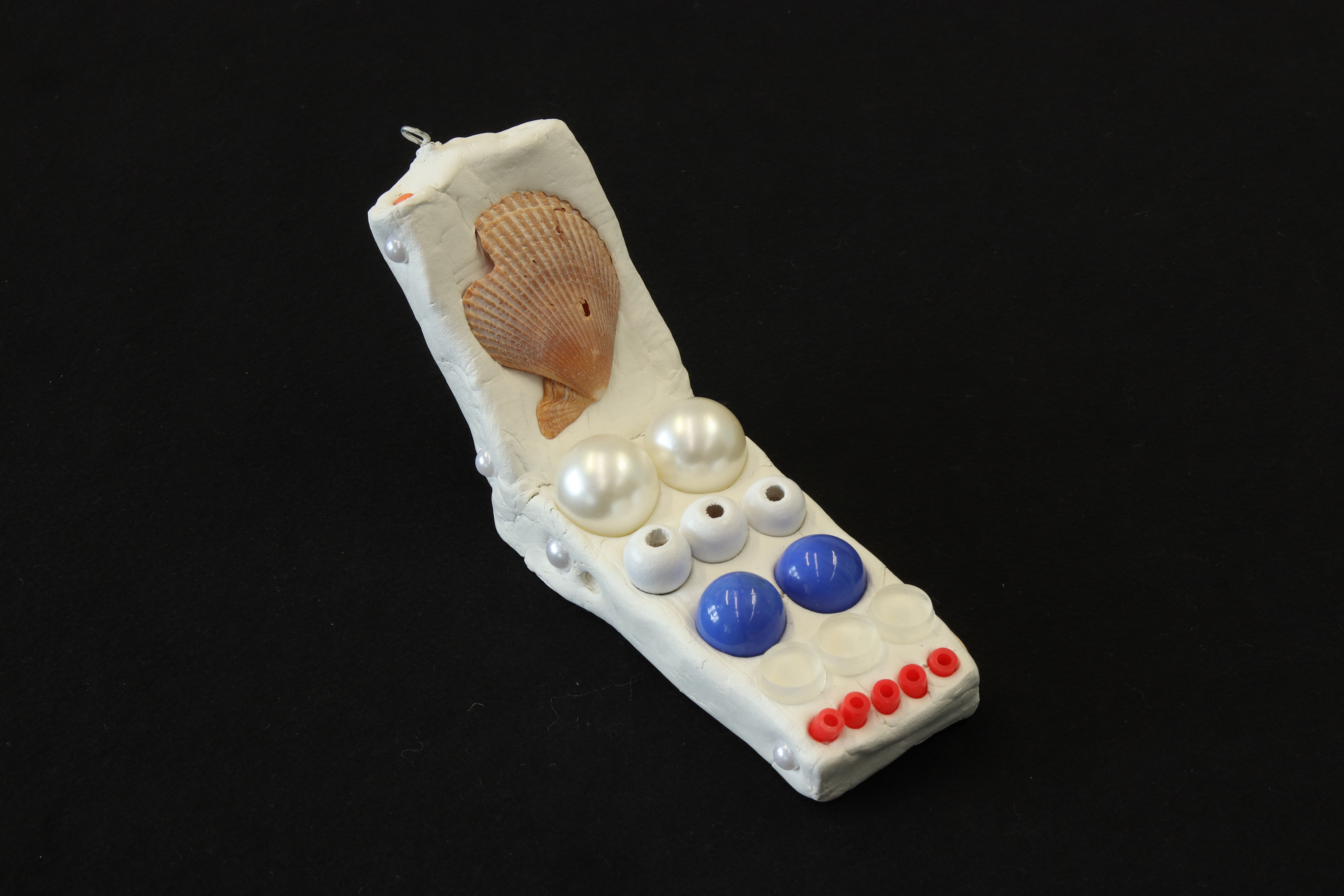
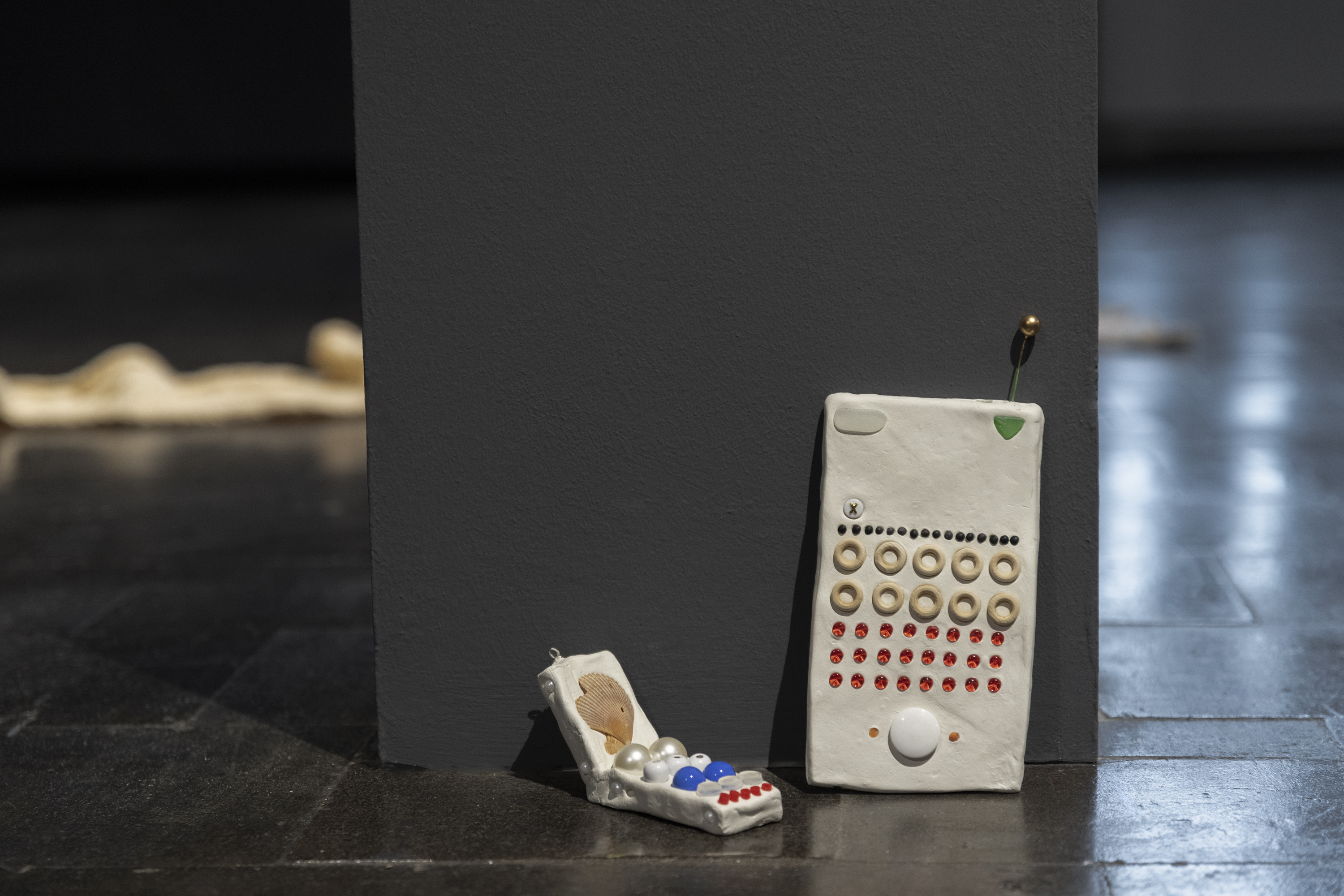
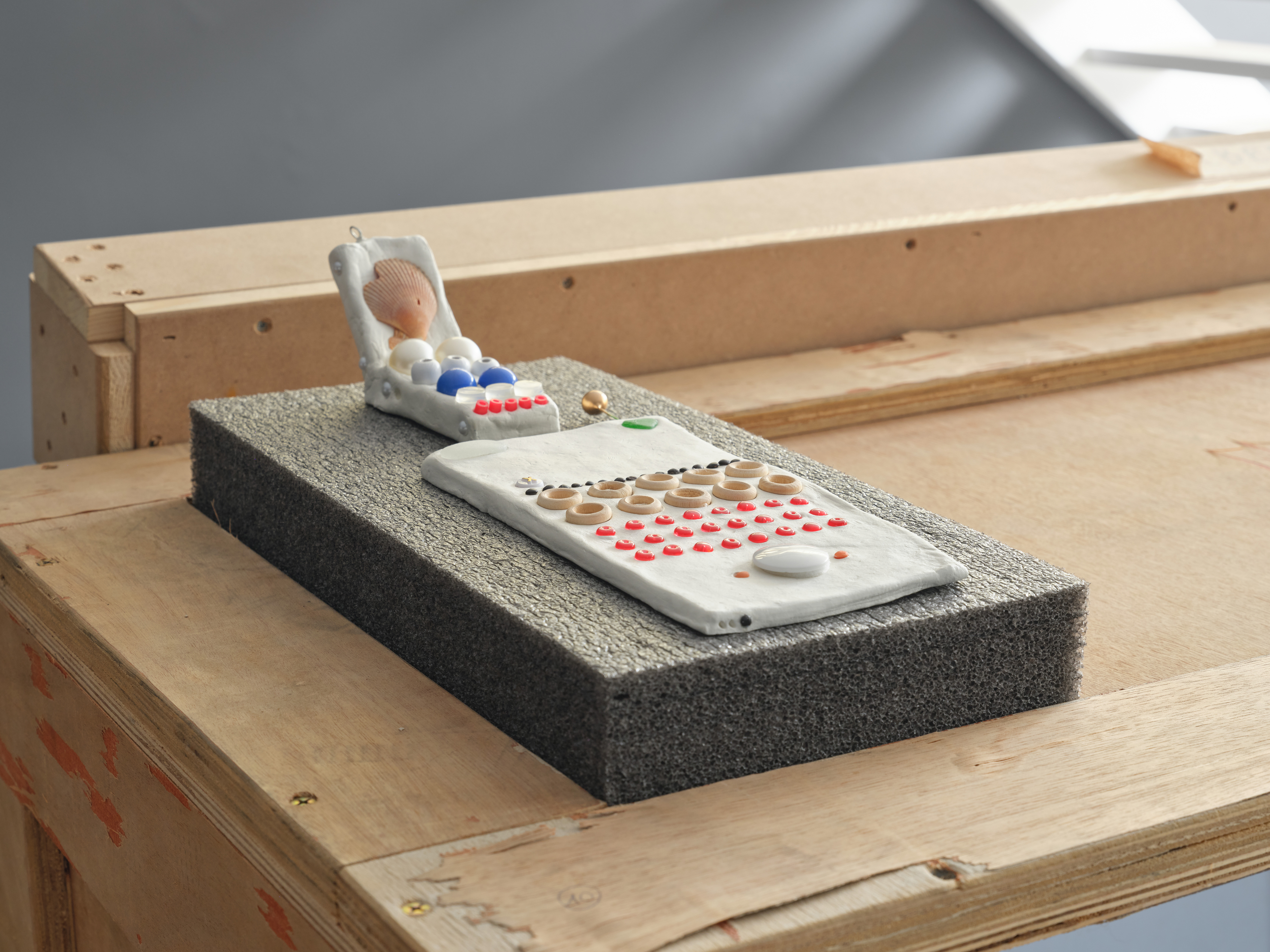
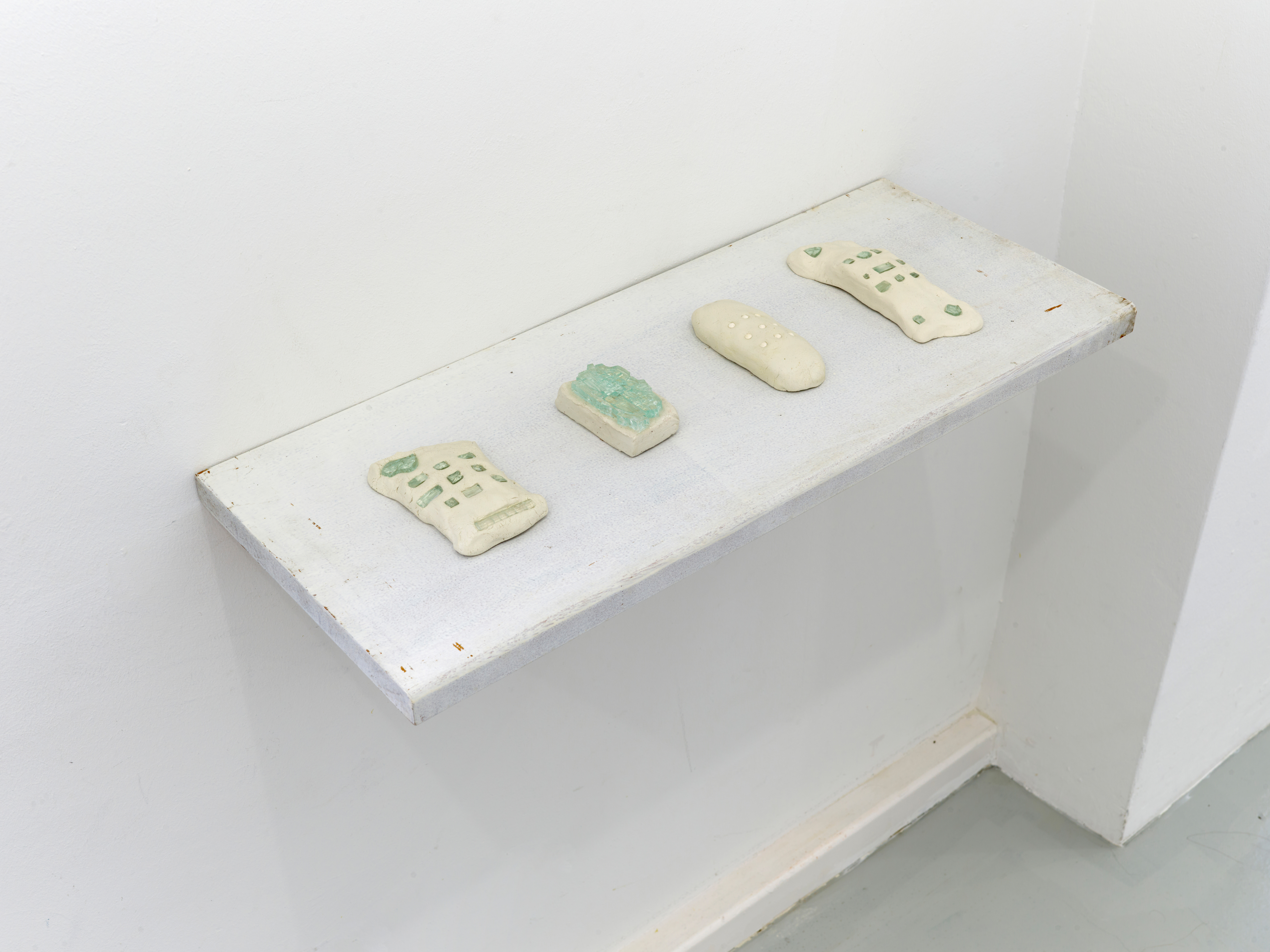
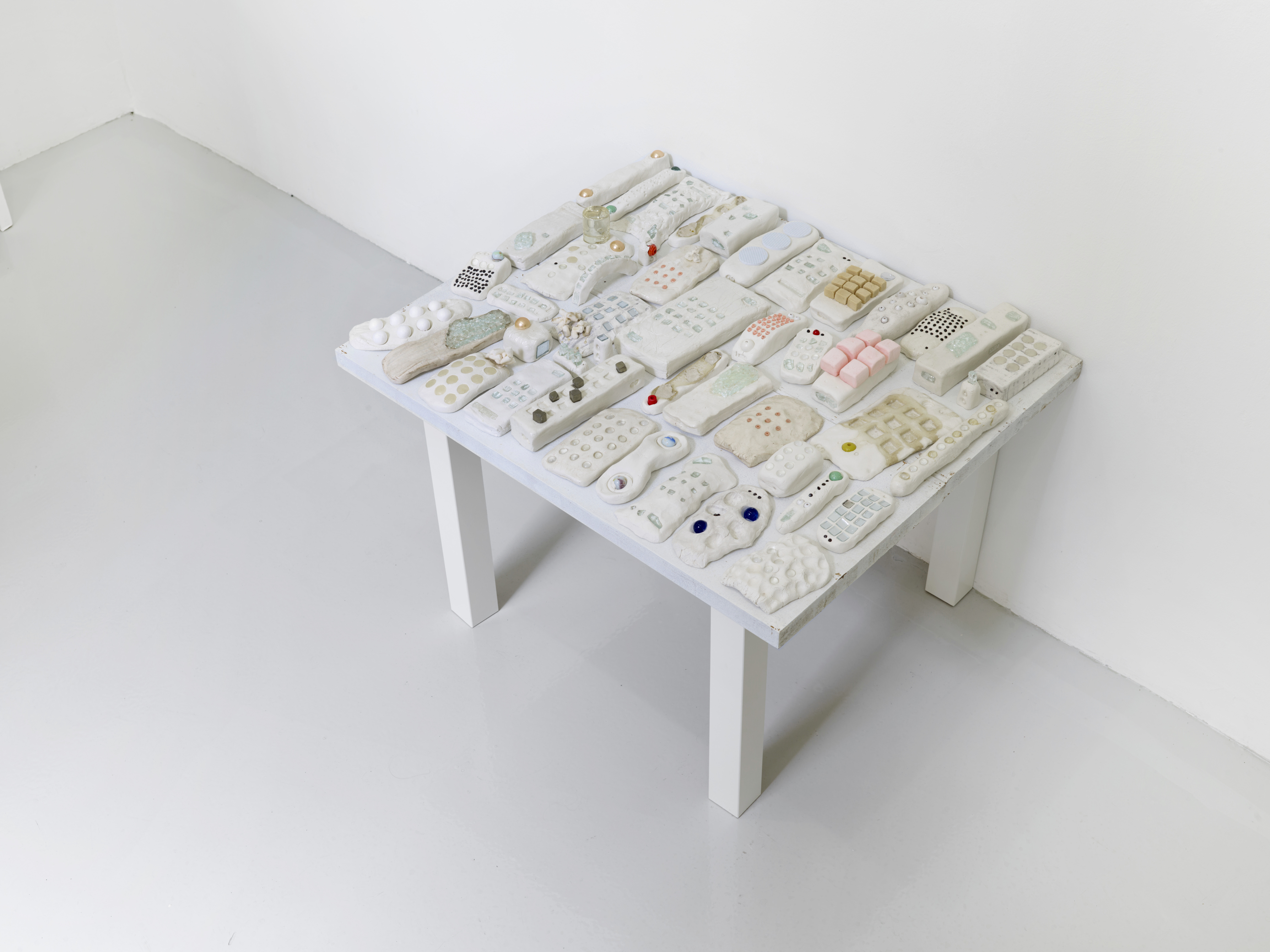
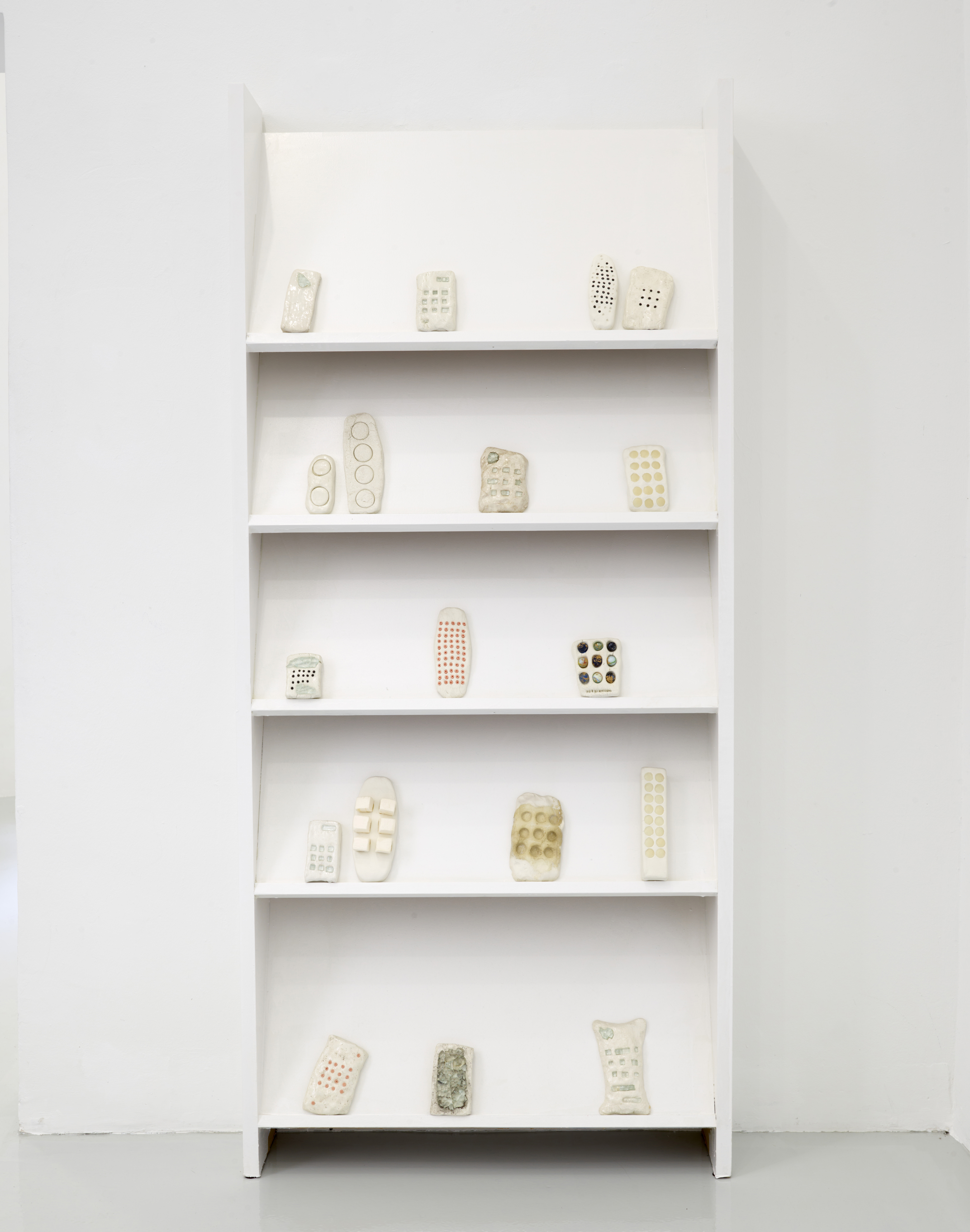
In Isabella Séville Fürnkäs’ ongoing series Remote control, the human urge to individualize is hinted by the material contrast of unglazed and air-dried clay with the excessive use of shells, shimmering pearls, mirrored shards of glass or natural, consumable items like lentils, beans and tofu. With their rudimentary, geometric shapes, recessed indentations or button-like decorations and antennas, these handy objects are reminiscent of the trailblazing invention of wireless remote controls. As the first technical device of its kind and the predecessor to the gadgets of our daily contemporary life, the remote gave people the feeling of being in control of the screen by deciding from a distance about the image being broadcast. Lying in your hand like a magic wand, this technical device puts you in a commanding position over your immediate surroundings via an invisible connection by only pushing buttons. But the force of these intelligent prostheses shifts over time, and the dynamic between subject and technology becomes fragile and increasingly ambiguous, alternating on the verge of autonomy and heteronomy.
In their dysfunctional objecthood, the clay-formed Remote control plays humorously with the illusion of control you feel when you hold something tightly in your hand. A feeling that is only reminiscent in their embellished silhouettes.
- Text by Klara Hülskamp
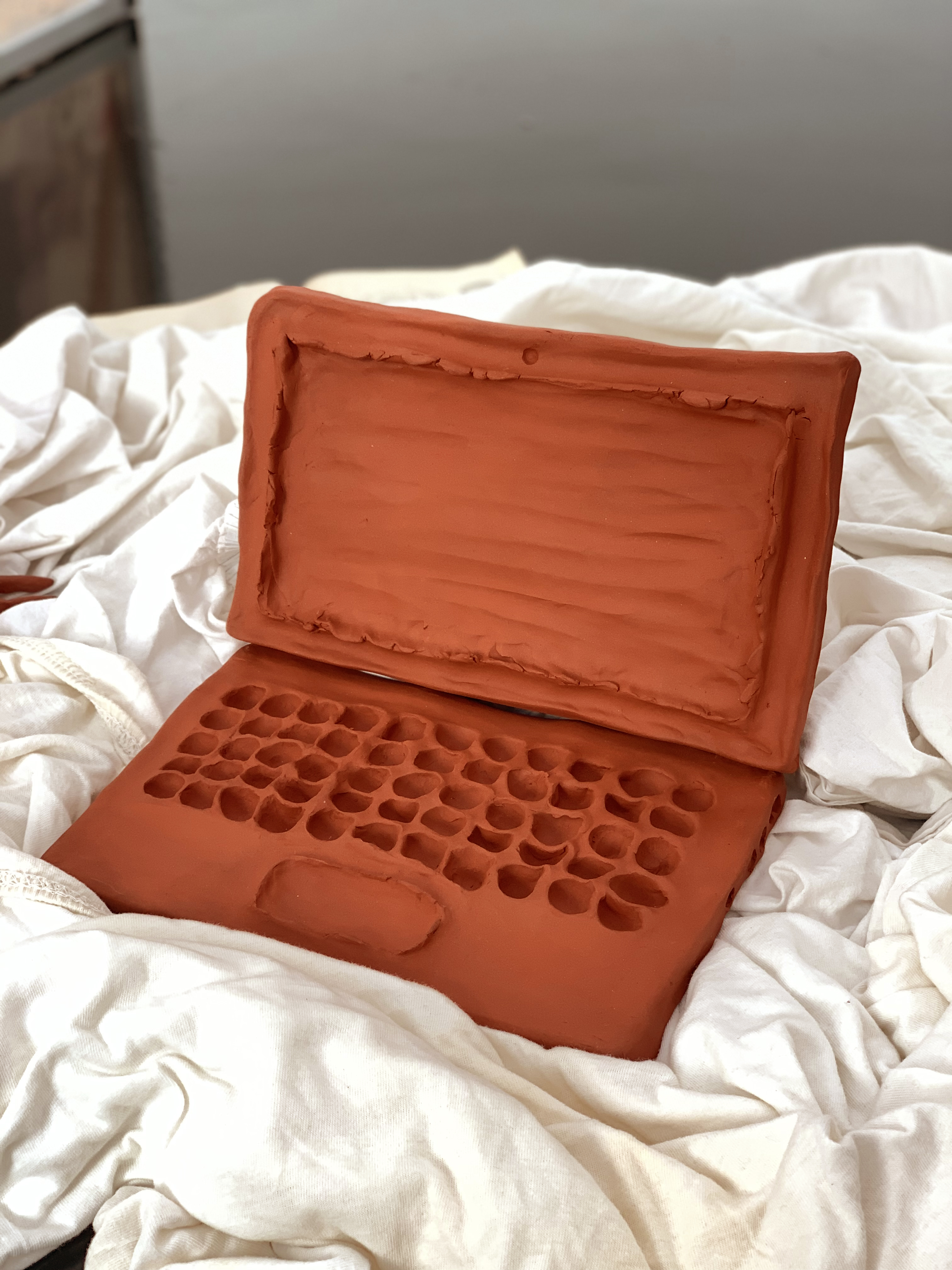
[...] With this approach, Fürnkäs joins the ranks of such artists as the Vietnamese artist Danh Vo or the Georgian artist Tolia Astakhisvili. But unlike them, there is another level to her work: the comic. In the clutter of the house lie a computer modeled out of clay. In the other rooms, mobile phones, also unskillfully modeled out of clay, are piled up in cupboards and drawers. Their clumsy, material-heavy, archaic appearance is in stark contrast to the elegant electronic devices with perfect surfaces, such as those made by Apple. This makes them look ridiculous. And suddenly, thanks to this awkward- ness and ridiculousness of the clay devices, a sense of the enormity, the recklessness, with which we outsource our own inner life, our most intimate longings, dreams and desires from our own un- predictable bodies, susceptible to disturbances and injuries, to the mechanically controlled inner life of the lifeless computer.
Despite the feeling of being involved in something threateningly mysterious, all these productions also provoke smiles that can turn into laughter. Laughter creates distance. And it is this distance that, in the face of the daily complicity that Fürnkäs’ productions so skillfully recreate, enables us to digest the flood of fascinatingly repulsive images we see and possibly also to excrete them. And it is this ability that prevents us from going mad, that distinguishes the human body from electronic devices. [...]
- Text exerpt by Noemi Smolik
Remote control pro, 2023 - 2024
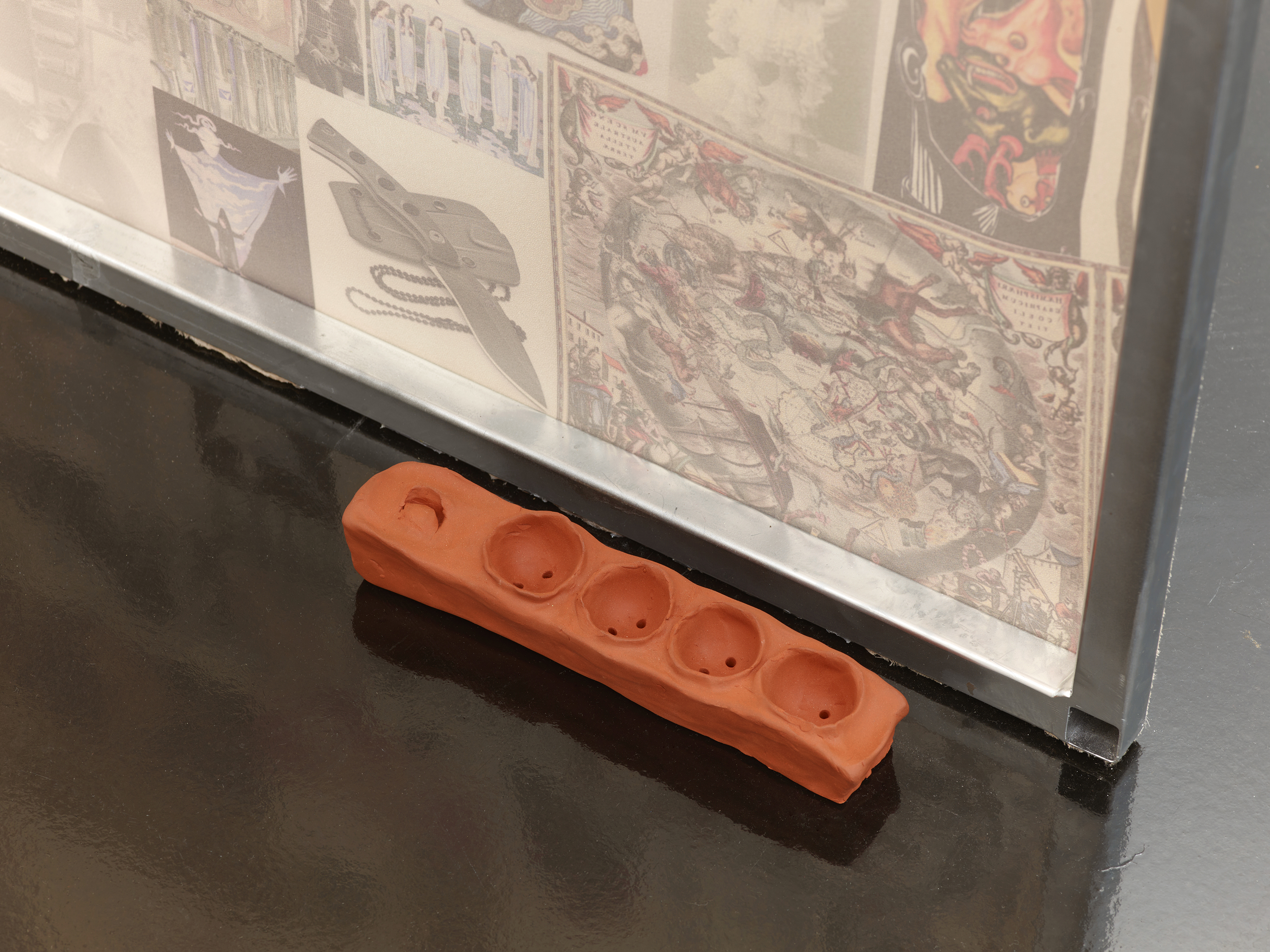
Glazed ceramic, size variable
Remote control, 2023
Modeling clay, glass, tofu, lentils, stones, marbles, pills, mirrors, seashells, marshmallows Approx. 15-40cm
Exhibitions
Kunsthalle Recklinghausen (2025), Live Lab Studios, Düsseldorf (2024), Art Cologne (2024), Tick Tack, Antwerp (2024), The Moment, Berlin (2024), Art-O-Rama, Marseille (2024), Art Düsseldorf (2024), Kunsthalle Recklinghausen (2023), Kunstverein Siegen (2023), Clages, Cologne (2023)